


































Most UK homes use single-phase power, while three-phase power is more common in commercial buildings, workshops, farms, large properties and homes with very high electricity demand.
Understanding the difference between single-phase and three-phase power is crucial for UK homeowners and small businesses to avoid the significant risks of mismatched equipment and the unexpected costs of last-minute upgrades.
This guide will demystify UK power supplies, helping you identify what you have, understand its limitations, and confidently plan for your current and future energy needs.
|
Key Takeaways: |
|
What is a Phase in Electricity?
A 'phase' in electricity refers to the distribution of electrical load in Alternating Current (AC) systems. In the UK, AC voltage and current direction switch 50 times per second. This creates a sinusoidal waveform, which describes the periodic changes in voltage and current over time.
Single-Phase Power: The Standard for UK Homes
Single-phase power is the standard electrical supply for most homes across the United Kingdom. It provides a reliable and sufficient current for everyday domestic life.
Single-phase systems use one live wire and one neutral wire to create a single AC waveform. The typical voltage in the UK is 230V at 50Hz. This can be visualized as a single cyclist pedaling, with power peaks and dips.
This type of supply is common for residential homes in the UK, suitable for lighting, heating, and small appliances. It is ideal for buildings with low electricity consumption, typically less than 20kVA. Most domestic needs, especially with gas central heating, are adequately met by single-phase power.
Three-Phase Power: The Workhorse for Industry and High Demand
When the demands of a property exceed what single phase power can safely deliver, a three-phase power supply becomes the necessary solution. It is designed specifically for high-demand commercial, industrial, and some residential applications.
A three-phase system uses three live wires and typically one neutral wire. It delivers three separate AC waveforms, staggered 120 degrees apart. The typical voltage in the UK is 415V between phases and 240V phase to neutral. This configuration is like a three-person tandem bicycle, illustrating continuous power delivery.
Three-phase power is essential for commercial and industrial facilities, powering large machinery, motors, and high-energy appliances. It is required for heavy loads, industrial equipment, and EV battery charging. Data centres and large businesses needing constant power also rely on three-phase systems.
Do I Have Single-Phase or Three-Phase Power at Home?
Most UK homes have single-phase power, while three-phase power is more common in large houses, commercial buildings, farms, workshops, and homes with very high electricity demand. If you are unsure, you can usually check your electricity meter, fuse box, main cut-out fuse, or supply cables.

Check Your Electricity Meter
A simple way is to look at your electricity meter. If the meter shows one live supply, your home is likely on single-phase power. If it shows three live supply lines, or labels such as L1, L2 and L3, then you probably have three-phase power.
Single-phase meters are more common in standard homes and flats. Three-phase meters often look larger and may show separate readings or markings for each phase.
Look at the Main Fuse or Service Head
Near your electricity meter, you may see the main incoming supply fuse, sometimes called the service head or cut-out fuse. A single-phase supply usually has one main fuse, while a three-phase supply may have three main fuses.
Do not remove covers or touch anything inside. This area belongs to the electricity network operator and can be dangerous.
Check the Consumer Unit or Fuse Box
Your consumer unit may also give clues. A normal single-phase home usually has one main switch. A three-phase property may have a wider distribution board with breakers arranged across three phases, often marked L1, L2, L3 or Phase 1, Phase 2, Phase 3.
However, the consumer unit alone is not always enough to confirm the supply type, especially if the installation has been modified.
Look at Your Electricity Bill or MPAN Details
Some electricity bills or supplier accounts include technical supply information. You may see terms such as:
|
Term |
Meaning |
|
Single-phase |
Standard home supply |
|
Three-phase |
Higher-capacity supply |
|
1P |
Single-phase |
|
3P |
Three-phase |
|
230V |
Usually single-phase domestic supply |
|
400V |
Often linked with three-phase supply |
If the bill does not clearly show this, your energy supplier or Distribution Network Operator can confirm it.
Key Differences: A Quick Guide to Single-Phase and Three-Phase Power
Single-phase and three-phase power differ mainly in how electricity is delivered, how much load they can support, and where they are normally used. Single-phase power uses 2 wires: 1 live wire and 1 neutral wire.
It delivers electricity through one AC waveform, which creates natural peaks and dips in power delivery. In the UK, single-phase power is commonly supplied at 230V, making it suitable for homes, small offices and standard household appliances.
Three-phase power, by contrast, uses 3 or 4 wires: 3 live wires and sometimes 1 neutral wire. It delivers electricity through three AC waveforms, each staggered by 120 degrees. This creates a more continuous and steady power supply, which is better for high-demand equipment.
Three-phase systems can provide up to 415V, making them more suitable for workshops, industrial sites, large heat pumps, powerful EV chargers and other heavy-load applications.
|
Feature |
Single Phase Power |
Three Phase Power |
|
Wires |
2 wires (1 live, 1 neutral) |
3 or 4 wires (3 live, 1 neutral) |
|
Waveforms |
1 AC wave |
3 AC waves staggered 120 degrees |
|
Voltage |
230V |
Up to 415V |
|
Power Delivery |
Peaks and dips |
Continuous and steady |
|
Efficiency |
Less efficient for high loads |
More efficient for high loads |
|
Load Capacity |
Up to 2,500 Watts |
High loads, industrial |
|
Cost |
Cheaper to install |
Higher initial cost, lower maintenance |
|
Use Case Summary |
Homes, small offices, standard appliances. |
Workshops, industry, large heat pumps, powerful EVs. |
Single-phase power is usually enough for normal UK homes, including lighting, fridges, washing machines, TVs, laptops and everyday appliances. Three-phase power is better when electricity demand is much higher, especially where large motors, commercial equipment, high-capacity heat pumps, fast EV charging or larger solar and battery systems are involved.

How to Identify Your Power Supply? (The Safe Way)
You don't need to be an electrician to get a good idea of which power supply you have. This simple, risk-free checklist will help you identify your connection type.
What are the External Visual Clues?
Look at the main electrical intake to your property, where the cable comes in from the street. A single-phase supply typically has one main fuse or breaker. A three-phase supply will have three 100-amp fuses or breakers.
How Can I Check My Meter?
Some modern smart meters or the boxes they are housed in may be explicitly labelled. Look for text that says "3 Phase" or "Three Phase." While not always present, this is a definitive sign if you find it. Single-phase meters typically show two wires connected, while three-phase meters show three or four wires.
What Do Property Type and Voltage Indicate?
Most UK homes are single-phase, typically receiving 230V. Commercial, industrial, and larger homes with heavy machinery are often three-phase, operating at 400V/415V.
When Should I Contact a Professional?
The only 100% definitive way to know is to ask a qualified electrician or contact your Distribution Network Operator (DNO). Your DNO is the company responsible for the electricity network in your region (e.g., UK Power Networks, Scottish and Southern Electricity Networks) and they hold the records for your property's connection.
Actionable Tip
For a quick, remote assessment, take clear photographs of your electricity meter, the service head (where the main fuses are), and your consumer unit (fuse box). You can send these images to a qualified electrician, who can often identify your supply type without needing an initial site visit.

When to Consider Upgrading to Three Phase Power?
Deciding whether to invest in an upgrade from single phase and three phase power depends entirely on your current and future electricity demands. Certain installations are common triggers for considering this significant step.
Do I Need an Upgrade for High-Power Appliances?
Installing an EV charger, large heat pump, or powerful workshop machinery often necessitates a three-phase supply. Some newer UK residences and smart homes may also benefit from three-phase power. This is particularly true for energy-guzzling machines like stair lifts or large electrical motors in a domestic setting.
Is an Upgrade Needed for Business Expansion?
Growing business needs for heavy equipment will almost certainly require a three-phase upgrade. Always consult a qualified UK electrician to assess your specific power needs and the feasibility/cost of an upgrade.
What is the Upgrade Process?
If you determine an upgrade is necessary, the process generally follows three key steps:
- Step 1: Conduct a Load Assessment: An electrician can help you calculate your total electrical load, factoring in your existing appliances and the new equipment you plan to install. This determines if an upgrade is truly needed.
- Step 2: Contact Your DNO: You must apply to your local DNO for a three-phase connection. They will assess the feasibility and provide a quote for bringing the new supply from the street to your property boundary.
- Step 3: Get Electrician Quotes: Once the DNO has approved the work, you will need certified electricians to quote for the internal work. This includes installing a new three-phase consumer unit and running new wiring to the high-load appliances.
Do Solar Panels or Home Batteries Need Three-Phase Power?
In most UK homes, solar panels and home batteries do not need three-phase power. A normal residential solar system can usually work on a single-phase supply, especially if it is a small or medium rooftop system.
However, three-phase power can become useful for larger solar systems, high-demand homes, larger batteries, EV charging, heat pumps, farms, workshops or commercial buildings.
Do Solar Panels Need Three-Phase Power?
For most households, no. A typical UK home solar system can be installed on single-phase power. The solar panels generate DC electricity, and the inverter converts it into AC electricity that your home can use.
|
Solar system type |
Is three-phase usually needed? |
|
Small home solar system |
No |
|
3kW–5kW solar system |
Usually no |
|
Larger solar system |
Sometimes |
|
Commercial solar system |
Often yes |
|
Solar + EV + heat pump |
Possibly |
Three-phase solar becomes more relevant when the solar system is large enough that export limits, inverter size, or load balancing become an issue. Three-phase systems can spread power across three live wires, making them better for high-demand properties and larger solar setups.
Do Home Batteries Need Three-Phase Power?
For most home batteries, no. Many residential batteries are designed for single-phase homes. What matters more is whether the battery inverter matches your home’s electrical supply.
|
Home battery situation |
Is three-phase needed? |
|
Small home battery |
No |
|
Solar battery for a normal home |
No |
|
Large battery system |
Maybe |
|
Three-phase property |
Needs compatible design |
|
Whole-home backup across all phases |
Often needs three-phase-compatible system |
If your property already has three-phase power, you may need a three-phase inverter or a carefully designed single-phase battery setup, depending on how your loads are distributed. The key point is compatibility: battery inverters can be single-phase or three-phase, and the correct choice depends on the existing electrical setup.

Using Portable Solar Power for Backup & Flexibility
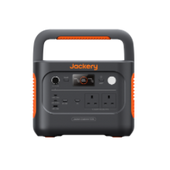
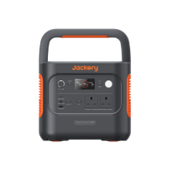
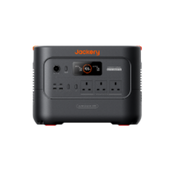
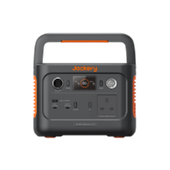
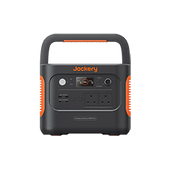
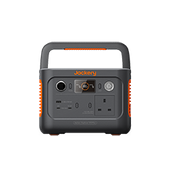
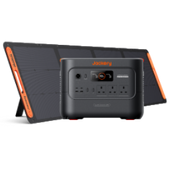
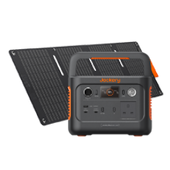
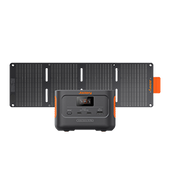
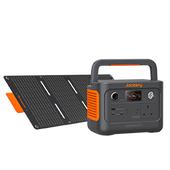
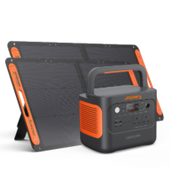
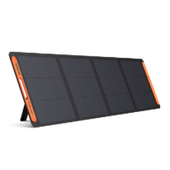
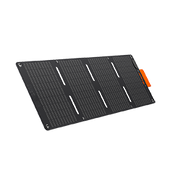
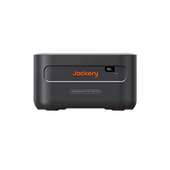
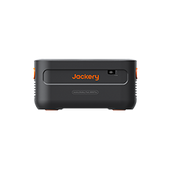
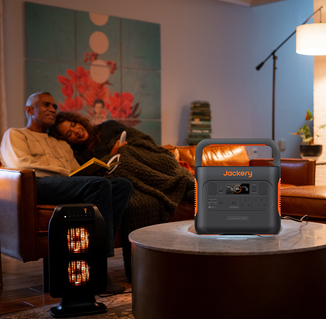
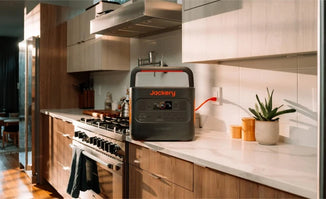
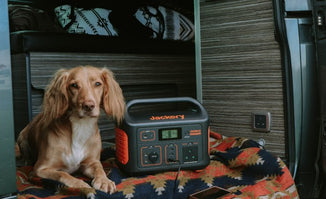
While upgrading your mains supply is a permanent solution for high demand, it doesn't solve the problem of power cuts or the need for electricity away from the grid. Jackery Solar Generators provide a powerful, flexible source of single-phase AC power for backup, on-site work, and off-grid adventures. They are a smart complement to any home's energy strategy.
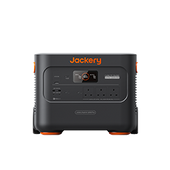
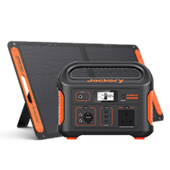
Here we highly recommend the Jackery Solar Generator 2000 v2 or 3000 v2 for home use.
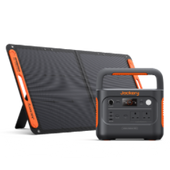
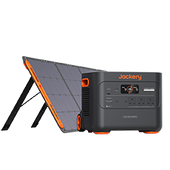
Jackery Solar Generator 3000 v2
Most UK homes use single-phase power, which is suitable for normal household appliances such as fridges, lights, Wi-Fi routers, laptops, TVs, washing machines, microwaves and kettles. The Jackery Solar Generator 3000 v2 fits this type of household backup need well because it provides 230V AC output through UK sockets, without needing a fixed three-phase installation. It is designed as a portable backup power source rather than a whole-house grid-tied system.
 The Solar Generator 3000 v2 is built around the Explorer 3000 v2, which has a 3072Wh battery capacity, 3600W pure sine wave AC output and 7200W surge power. This means it can support many common single-phase household appliances, including a fridge, microwave, kettle, coffee machine, router, lights, laptop, CPAP machine, small heater or power tools, as long as the total load stays within the output limit.
A major advantage is that you do not need three-phase power at home to use it. Many UK households only have single-phase electricity, and upgrading to three-phase can be expensive, unnecessary and dependent on local network availability. Jackery Solar Generator 3000 v2 is plug-and-use for appliance-level backup, so it can be used in flats, terraced houses, semi-detached homes, garages, gardens, campsites and home offices without changing the property’s incoming supply.
If your goal is to keep essential devices running during a power cut, the Solar Generator 3000 v2 is practical. It can power selected appliances directly through its AC sockets. However, it is not a replacement for a full three-phase backup system.
|
Features of Jackery Solar Generator 3000 v2 |
|
|
Combo |
|
|
Capacity |
3072Wh |
|
Cell Chemistry |
LiFePO4 4000 Cycles to 70%+ Capacity |
|
Operating Temperature |
Charge: 0°C~45°C(32°F~113°F) Discharge: -15°C~45°C(5°F~113°F) |
|
Output Ports |
AC Output 3 Ports, 230V~ 50Hz, 13A Max, 3600W Total, 7200W Surge peak USB-A Output 2 Ports, 18W Max, 5-6V⎓3A, 6-9V⎓2A, 9-12V⎓1.5A USB-C Output 2 Ports, 100W Max, 5V⎓3A, 9V⎓3A, 12V⎓3A, 15V⎓3A, 20V⎓5A Car Port 12V⎓10A Max |
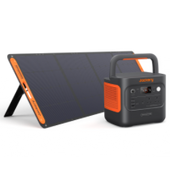
Jackery Solar Generator 2000 v2
The Jackery Solar Generator 2000 v2 is a portable solar generator, not a fixed three-phase home electrical system. This means it does not require a three-phase supply to work. For most UK households with normal single-phase power, it can be used as a flexible backup power source for selected appliances during power cuts, outdoor activities or solar charging scenarios.
This is useful because most UK homes are single-phase. Instead of upgrading the household supply to three-phase just for emergency backup, users can use the Jackery Solar Generator 2000 v2 to power essential devices directly through its built-in output ports.
 The Jackery Solar Generator 2000 v2 has a 2042Wh capacity, equal to about 2.04kWh of stored electricity. This capacity is suitable for common single-phase household essentials such as routers, laptops, phones, lighting, projectors, fridges and small appliances.
Single-phase home appliances in the UK usually run from standard household sockets. The Jackery Solar Generator 2000 v2 provides 2200W AC output and 4400W surge power, which means it can support many common household devices within its rated limit.
Three-phase power is mainly useful for high-demand setups such as large heat pumps, 11kW or 22kW EV chargers, workshops, commercial equipment or large solar and battery systems. Many homeowners do not need that level of electrical upgrade just to keep essentials running during a power cut.
|
Features of Jackery Solar Generator 2000 v2 |
|
|
Combo |
|
|
Capacity |
2042Wh |
|
Cell Chemistry |
LiFePO4 4000 Cycles to 70%+ Capacity |
|
Operating Temperature |
Discharge: 14°F~113°F (-10~45°C) Charge: 32°F~113°F (0~45°C) |
|
Output Ports |
AC Output 2 Ports, 230V ~ 50Hz, 10A Max, 2200W Rated, 4400W Surge peak USB-A Output 1 Port, 18W Max, 5-6V⎓3A, 6-9V⎓2A, 9-12V⎓1.5A USB-C Output 2 Ports, USB-C1: 30W Max, 5V⎓3A, 9V⎓3A, 12V⎓2.5A, 15V⎓2A, 20V⎓1.5A; USB-C2: 100W Max, 5V⎓3A, 9V⎓3A, 12V⎓3A, 15V⎓3A, 20V⎓5A Car Port 12V⎓10A Max |
Safety and Regulations: When to Call a Professional?
Working with mains electricity is not a DIY task. Ensuring safety and legal compliance is non-negotiable.
Golden Rule
All electrical work connected to the mains supply in your home or business must be carried out by a qualified and certified electrician. This is a legal requirement under Part P of the Building Regulations in England and Wales and is essential for your safety and home insurance validity.
What are the Red Flags of an Electrical Problem?
You should call a professional immediately if you notice any of these warning signs:
- Circuit breakers that trip frequently.
- Buzzing or crackling sounds from sockets, switches, or your consumer unit.
- Any signs of scorching or overheating on electrical fittings.
- You are planning any high-load installation, such as an EV charger, hot tub, or heat pump.
Reputable Sources
For official information on new connections and supply upgrades, always refer to guidance from your DNO or national bodies.
Finally, remember that flexibility is a powerful asset. For single-phase homes, portable power solutions like Jackery Solar Generators offer robust backup during outages and the freedom to take power wherever you need it, ensuring you're prepared for anything.
FAQs
The following are the frequently asked questions about the single-phase and three-phase power in the UK:
1. Can I convert my existing single-phase appliances to run on a three-phase supply if I upgrade?
Most single-phase appliances are not designed for three-phase power and cannot be directly connected. They must be plugged into a standard 230V single-phase socket, which can be wired from a three-phase supply by an electrician.
2. How does the cost of electricity differ between single-phase and three-phase connections in the UK?
The unit cost of electricity (pence per kWh) is typically the same for both supply types on a domestic tariff. However, commercial three-phase supplies may have different standing charges or tariff structures.
3. Are there any intermediate solutions if I need more power than single-phase but can't justify a full three-phase upgrade?
Yes, options like smart load management systems can help balance the power usage of high-demand devices like an EV charger and a heat pump. This prevents them from running simultaneously and overloading your single-phase supply.
4. What are the long-term maintenance considerations for a three-phase electrical system compared to a single-phase one?
Three-phase systems and the equipment they power are more complex, often requiring more specialised and regular maintenance checks (EICRs) by a qualified electrician, especially in a commercial setting.
5. If I live in a rural area, is it more challenging or expensive to get a three-phase connection installed?
Yes, it can be significantly more expensive and have longer lead times in rural areas. The cost is often determined by the distance to the nearest existing three-phase network infrastructure.
Final Thoughts
Single-phase power is enough for most UK homes. It supports everyday appliances, lighting, home office devices, kitchen equipment and standard household electricity use. Three-phase power becomes more relevant when electricity demand rises significantly, such as with large heat pumps, fast EV charging, commercial equipment, workshops, large solar systems or high-capacity home batteries.
For solar panels and home batteries, three-phase power is not automatically required. Many residential solar and battery systems work on single-phase supply, but larger installations need proper assessment to ensure safe load balancing, inverter compatibility and grid compliance.


