












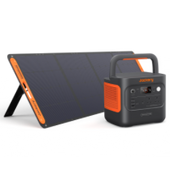

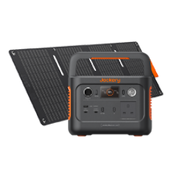


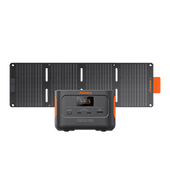



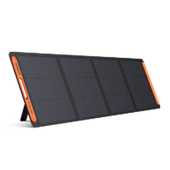
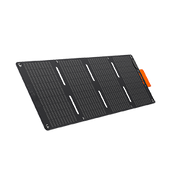


































Unlike pitched roofs, flat surfaces offer unique flexibility in orientation and tilt, allowing for optimised layouts that balance efficiency with structural safety. However, successful installation requires navigating specific challenges, from choosing between ballasted and penetrating mounting systems to calculating the ideal tilt angle for self-cleaning and wind resistance.
This guide explores the essential considerations for solar panels on flat-roofs, including costs, planning permissions, and the critical role of modern energy storage solutions like the Jackery SolarVault 3 Pro Max in maximising your return on investment.
|
Key Takeaways: |
|
Can You Put Solar Panels on a Flat Roof?
It is possible to put solar panels on a flat roof. In actuality, because installers have more room to stand and move equipment, installing solar panels on a flat roof is frequently easier than on a sloped roof. In addition to making excellent use of otherwise unused space, flat roof solar panels may save your annual energy costs by hundreds of pounds.
How Do Flat Roof Solar Panels Work?
The photovoltaic effect of semiconductor materials, like silicon, is used to absorb photon energy from sunlight and convert it into direct current (DC), which is subsequently converted into usable alternating current (AC) for the home via an inverter. This process is the same for solar panels on flat roofs as it is for those on pitched roofs.
|
Analysis of Pros and Cons of Flat Roof Installations |
|
|
Pros |
Cons |
|
|
Differences Between Flat-Roof and Sloped-Roof Solar Panel Installations
The mounting method is the primary distinction between solar panels on a flat roof and those on a sloping roof. Solar panels are mounted on pitched roofs in accordance with the roof's natural slope. Although flat roofs can have flat panels, they are usually put at an angle to minimise shade and maximise efficiency based on roof direction.
|
Comparison Criteria |
Flat Roof Installation |
Pitched Roof Installation |
|
Installation Method |
Requires dedicated mounting structures |
Installed along the roof slope |
|
Tilt & Orientation |
Highly flexible |
Tilt angle limited by original roof design |
|
Space Utilization |
High |
Low; constrained by slope shape and roof ridge |
|
Construction & Maintenance |
Complex |
Simple |
Do You Need Planning Permission for Flat Roof Solar Panels?
England, Scotland, Wales, and Northern Ireland have different planning regulations in the UK. Below are specifics about the content: (This material is only for reference and is not all-inclusive.)
England
Solar panels on a pitched roof are allowed in England under Permitted Development Rights as long as they don't extend more than 200 mm beyond the roof's surface. A separate regulation applies to flat roofs: panels cannot be placed on a wall or roof that faces a roadway and they cannot be higher than the roof's highest point.
Scotland
Permitted development rights apply to the majority of household installations in Scotland. This implies that if the system satisfies specific requirements, you often do not need to seek for planning clearance. Installing solar PV panels on flat or sloped rooftops is usually allowed as long as they
- Do not protrude more than 200mm from the roof surface
- Are positioned to minimise visual impact
- Are not installed above the roof ridge
Wales
Rooftop solar panels are allowed to be installed on a typical Welsh home as long as they don't extend over the farthest margins of the roof, lie above the ridge line or protrude more than 200 mm from the roof plane. As for solar panels on flat roofs, panels more than 1 metre above the roof plane require permission.
Northern Ireland
Flat-roof solar does not require planning approval for the majority of buildings in Northern Ireland since it comes within allowed development. The primary exclusions are:
- Listed buildings and properties in conservation areas
- Some apartment blocks (always check the lease)
- Installations where the panels would project more than 200mm above the highest part of the roof
Note: To ensure that everything is done correctly, it is highly advised that you get in touch with the local planning authority before beginning any sort of work.

How to Securely Fix Solar Panels to a Flat Roof?
The first decision for any flat-roof solar installation is how to fix the mounting system to the roof. Flat roof solar panels are never laid flat against the surface. Panels installed without tilt suffer from water pooling, accelerated soiling, and significantly reduced output. Every flat roof system uses a racking structure to achieve a working tilt angle. There are two main approaches:
Ballasted Mounting Systems
Ballasted mounting methods use the weight of concrete blocks or thick rubber/EPDM ballast pads applied to the roof's surface to secure tilt frames. The frames only rely on gravity and friction; they are not physically attached to the roof structure. The most popular method for residential solar on flat roofs is ballasted systems.
The advantages are significant:
- Protects the Waterproofing Layer: As there are no physical penetrations, the risk of leaks at mounting points is fundamentally eliminated.
- Quick and Reversible Installation: Installation is fast and relatively low-cost, and removal leaves no marks on the roof.
- No Manufacturer Approval Required: Typically, sign-off from the roofing membrane manufacturer is not required, avoiding complex warranty validation processes.
Penetrating Mounting Systems
Penetrating fixings through the roof covering are used to secure mechanically fastened systems directly to the roof structure. This method is stronger by nature and is more appropriate for areas with significant wind exposure or properties where ballast structural loading would be more than capacity. Every penetration site for penetrating fixes needs to be carefully waterproofed; a lead or EPDM flashing boot is often used over each fastening.
The advantages are significant:
- Exceptional Structural Strength: Direct physical anchoring provides superior resistance to wind uplift, ensuring greater stability during high winds or extreme weather.
- Reduced Roof Load: As there is no need for heavy concrete ballast blocks, this system imposes minimal static load on the roof.
|
Fixing Method |
Ballasted Mounting |
Penetrating Mounting |
|
Fixing Principle |
Gravity-based fixing |
Mechanical anchoring |
|
Protection of Waterproofing Layer |
Excellent |
Risk of leakage |
|
Roof Load-Bearing Capacity |
High requirements |
Low requirements |
|
Wind Resistance and Stability |
Good |
Excellent |
|
Installation Speed |
Fast |
More time-consuming |
|
Maintenance |
Requires periodic inspection |
Maintenance focuses on waterproofing |
|
Reversibility |
Very high |
Lower |
|
Suitable Roof Types |
Roofs with flexible waterproofing membranes such as EPDM, GRP (fiberglass), or asphalt felt |
Solid concrete, masonry, or timber roofs, especially those with limited load-bearing capacity or older roofs |
If your flat roof has good load-bearing capacity and utilises a flexible waterproofing membrane, a ballasted mounting system is the preferred choice; however, if load-bearing capacity is limited or the site is in an area exposed to extremely strong winds, a penetration-based mounting system should be selected.
However, it is still recommended to consult a structural engineer and obtain professional advice before installation.
What Angle do Flat Roof Solar Panels Need to Be?
In the UK, the ideal tilt angle for solar panels to maximise yearly energy generation is between 35 and 40 degrees, facing true south. However, real flat-roof constructions seldom ever employ such steep angles.
Installers usually choose a shallower tilt angle of 10° to 15° as the best compromise in the great majority of real-world flat-roof situations. For the following reasons, this range is seen to be the greatest option for overall performance:
- Self-Cleaning Capability: To maintain high power production efficiency, a tilt of at least 10° guarantees that rainwater efficiently washes the panel surface, eliminating dust and dirt.
- Minimal Power Output Loss: A 10°–15° tilt still captures the majority of possible power generation gains (raising output by about 90%–95% compared to a totally flat configuration), although being less than the theoretically optimal angle.
Factors Influencing the Tilt Angle of Flat-Roof Solar Panels
Three important considerations need to be taken into account when figuring out the ideal tilt angle for solar panels on a flat roof:
Inter-Array Shading: Longer shadows are created between the front and rear rows when the tilt angle is greater because the panels sit higher above the roof surface.
Wind Load and Wind Resistance Design: The panel's wind-facing surface area rises with a greater tilt angle, which increases the wind uplift forces it must endure exponentially.
Visual Impact: A steep tilt angle may make the installation appear visually obtrusive from the street or neighboring buildings and could even cause glare or light reflection issues for surrounding properties at certain angles.

How Much Does It Cost to Install Solar Panels on a Flat Roof?
Solar panels, an inverter, installation labour, energy storage batteries, and a specialised flat-roof mounting method are usually included in the overall cost of a flat-roof solar system. For a typical three-bedroom home in the UK, calculate that adding flat roof solar panels would cost about £10,700, including a battery.
The size of the household and the kind of residence determine the costs:
|
Property Size |
System Size |
Number of Panels |
Estimated Cost of Solar Panels and Installation (including Solar Battery) |
Estimated Cost of Flat Roof Solar Panels Mounting System |
Total Cost of Installing Solar Panels on a Flat Roof |
|
1 bedroom |
1.5kW |
4 |
£4,850 |
£300 |
£5,150 |
|
2 bedrooms |
3.0kW |
8 |
£7,500 |
£600 |
£8,100 |
|
3 bedrooms |
4.5kW |
12 |
£9,800 |
£900 |
£10,700 |
|
4+ bedrooms |
6.0kW |
16 |
£13,000 |
£1,200 |
£14,200 |
(Source: fmb)
Data in this table is current as of September 2026 and is for reference only.
Mounting costs are typically between 10% and 35% more for flat roofs than for pitched roofs due to the need for extra mounting structures, which are often ballast-based or mechanically fastened. However, flat roof installation is frequently quicker and safer, which can reduce labour expenses and bring the total cost closer to that of a pitched roof system.
Potential Savings and Return on Investment (ROI)
Your financial gains from installing a flat-roof solar system come from two primary sources: selling extra power back to the grid through the Smart Export Guarantee (SEG) and lowering the quantity of electricity you buy from the grid (savings from self-consumption).
The following are savings and return on investment for various home styles and household sizes:
|
Property Size |
System Size |
Estimated Cost of Solar Panels (including Installation, Battery and Mounting System) |
Average Savings (including Battery and SEG Tariff) |
Average Break-Even Point |
|
1 bedroom |
1.5kW |
£5,150 |
£356 |
13.7 years |
|
2 bedrooms |
3.0kW |
£8,100 |
£712 |
10.6 years |
|
3 bedrooms |
4.5kW |
£10,700 |
£938 |
10.4 years |
|
4+ bedrooms |
6.0kW |
£14,200 |
£1,180 |
11.0 years |
(Source: fmb)
Data in this table is current as of September 2026 and is for reference only.
Overall, the average payback period for flat-roof solar systems in the UK is approximately 10 to 11 years. The payback period depends on your initial investment, electricity consumption, local electricity rates, and whether or not energy storage batteries are installed. Solar panels typically have a lifespan of over 25 years. Once the payback period has passed, the electricity generated by the system is essentially free.
Is Installing Solar Panels on a Flat Roof a Good Choice?
In the UK, installing solar panels on a flat roof is definitely a prudent long-term investment. Solar panels on flat roofs are usually installed on frames, which creates special technical difficulties in contrast to pitched roofs. As a result, before selecting a choice, you should carefully evaluate the following factors:
Although flat roofs provide free space, the effectiveness of space utilisation is directly determined by the arrangement of the solar panels. Low-tilt designs (10°–15°) or East-West layouts are increasingly advised to optimise the available space. In addition to greatly increasing roof area utilisation, these designs enable dense, back-to-back panel layouts that distribute peak power generation throughout the morning and evening.
Roof Capacity to Support Loads
Ballasted mounting techniques increase the roof's dead load significantly (usually by 15–25 kg per square metre). To prevent dangerous installations, a qualified structural engineer must evaluate the roof's load-bearing capability before to installation, particularly for older structures or garage additions.
Design of Drainage Systems
A suitable gutter system or drainage slope must be present on the flat roof itself. In addition to hastening the waterproofing layer's ageing process, persistent pooling water can harm ballasted mounting systems' bases by submerging them for extended periods of time. Make sure the roof drains properly and that mounting frames and ballast blocks don't block drainage outlets before installation.
Demand for Electricity and Energy Storage
Meeting your electricity demands is the ultimate purpose of installing solar power. It is strongly advised to couple the system with an energy storage battery if the house is empty during the day. It is significantly less expensive to store extra daytime energy for usage at nite than to sell it back to the grid at a discount. We suggest the plug-and-play energy storage solution Jackery SolarVault 3 Pro Max.
Jackery SolarVault 3 Pro Max for Flat Roofs
For your flat-roof solar system energy storage upgrade, the Jackery SolarVault 3 Pro Max stands out as a highly competitive choice. Here are the key reasons for this recommendation:

4-Channel Independent MPPT Optimisation
With a robust 4000W PV input capacity and four independent MPPT channels, the system optimises each PV module array individually. This ensures maximum utilization of solar energy, even when partial shading occurs on a flat roof due to tilt angles or row spacing.
Powerful Scalability
It starts with a base capacity of 2.5kWh and can be easily expanded to 15kWh via modular battery packs. It supports the wireless parallel connection of up to three units, achieving a total capacity of 45.36kWh. This allows it to store the majority of green energy generated, even if you install a 6kW (or larger) PV system on your flat roof.
Superior Safety and Weather Resistance
Rated IP65, the unit handles everything from prolonged rain to occasional hail with ease. It features built-in LiFePO4 cells with a cycle life of up to 6,000 cycles and a 15-year design life; backed by a 10-year warranty, it ensures reliable, long-term integration with your flat-roof PV system.
AI-Powered Energy Management
The built-in AI energy management system integrates with major European dynamic electricity pricing platforms to automatically execute "charge-off-peak, discharge-on-peak" strategies. By intelligently coordinating PV generation with household consumption patterns, it significantly reduces annual electricity costs.
Installation Walk-Through for Solar Panels on Flat Roofs
Solar panel installation on a flat roof is a methodical procedure that calls for careful preparation and expert execution. The installation instructions for a flat-roof solar system (using a ballasted mounting technique as an example) are listed below:
Step 1: Site Survey and Assessment
The roof is first thoroughly inspected by a qualified installer or structural engineer. This include determining whether the roof can sustain the weight of the solar panels and ballast, assessing your home's energy usage, and locating any possible shade from surrounding trees or structures.
Step 2: Custom System Design
The installer determines the necessary quantity and size of panels based on your energy requirements and the available roof space. In order to optimise the absorption of sunlight, they also plan the ideal tilt angle and orientation.
Step 3: Preparing the Roof Surface
The installation crew clears the roof's surface of dust, dirt, and obstructions before work starts. Before installation, they also thoroughly check the roof for damage or any leaks and make any required repairs.
Step 4: System Layout Mounting
Installers mark the installation locations on the roof while donning the right safety equipment, such as helmets and harnesses, to guarantee uniform spacing and correct alignment. After that, they place the mounting bases or ballast trays and use ballast weights to properly fix them.
Step 5: Installing Rail
The mounting bases or ballast trays are fastened to aluminium alloy rails. In order to provide a solid basis for the future panel installation, installers utilise specialised instruments to make sure the rails are precisely level and aligned.
Step 6: Installing Solar Panels
Specialised clamps are used to secure the solar panels to the rails. To allow for thermal expansion and contraction and to guarantee airflow beneath the panels, the proper spaces are allowed between them. Cables are then securely routed to the inverter after the panels are wired in parallel or series in accordance with the system design.
Step 7: Electrical Wiring and Inverter
To make wiring easier, the inverter is placed close to the main distribution box. After connecting the solar array's DC output to the inverter, use a recently installed solar circuit breaker to direct the inverter's AC output to the home's main distribution panel. Lastly, make sure the system is well grounded in compliance with local electrical requirements.
Step 8: Maintenance, Commissioning, and Testing
The crew will carry out thorough safety and performance testing after the installation is finished to confirm that the system is producing electricity as intended. You will then be able to track power generating data in real time thanks to the configuration of monitoring software.
FAQs
The following are the frequently asked questions about the solar panels on flat-roofs:
Can solar panels be installed on any flat roof?
The majority of flat roofs are appropriate, however before to construction, a structural study is necessary. The study verifies that the roof can securely support the additional weight of the panels, mounting frames, and ballast.
Is my flat roof strong enough for solar panels?
Depending on the installation technique, a typical photovoltaic system (including panels, mounting structures, ballast, etc.) adds a dead load of 15–50 kg/m² to the roof. For example, concrete ballast systems add about 50–180 kg/m², while clamp-based or lightweight mounting systems add about 15–25 kg/m².
Will a flat roof installation damage the waterproofing layer?
For most concrete flat roofs, concrete blocks or specialised mounting bases are typically used for ballasted anchoring, eliminating the need to drill holes in the roof. The mounting system is held in place by its own weight, thereby protecting the waterproofing layer while ensuring stability against the wind.
What roofs are not suitable for solar panels?
Although a roof is rarely totally inappropriate for solar energy, several features make installation difficult or costly. Inadequate load-bearing capability, structural shadowing from plants or buildings, an unfavourable orientation (north-facing or greatly deviating from east-west), and a roof covering or structure that prevents installation are the four most restrictive constraints.
Can solar panels be installed completely flat?
Although certain manufacturer-approved systems may include them, it is usually preferable to employ a little tilt. This lessens dirt and standing water on the modules and enhances drainage.
What is the best angle for flat-roof solar panels?
A typical practical option is between 10 and 15 degrees. It strikes a compromise between generation, wind loading, ballast weight, shading, and the maximum number of panels that may be installed.
Is a 30-degree angle better?
Although a 30- to 40-degree south-facing tilt may produce more per panel, it might increase wind and ballast needs and necessitate greater row spacing. As a result, it can produce less per square metre of roof.
Can I add battery storage to a flat roof solar system?
Similar to a pitched roof system, battery storage may be added to any grid-tied flat roof solar installation. When storage is added, produced energy may be kept for usage in the evening instead of being exported at reduced SEG rates, which is frequently where storage makes the most economical sense.
Conclusion
Ultimately, transforming a flat roof into a power-generating asset is a wise long-term investment, provided that structural integrity and drainage are prioritised during the planning phase. By selecting the correct mounting method, whether ballasted for waterproofing or penetrating for wind resistance, and optimising the tilt angle, homeowners can achieve a system that is both efficient and durable.
To fully capitalize on this green energy, pairing your array with advanced storage is essential. The Jackery SolarVault 3 Pro Max stands out as a premier choice, offering scalable capacity and AI-driven management to ensure you utilise every watt generated.


