










































As UK energy bills remain a primary concern for households in 2026, finding an affordable solar battery has become the smartest way to achieve energy independence and lock in long-term savings.
With prices dropping significantly, homeowners and renters alike can now easily access cost-effective storage solutions without breaking the bank. Recent regulatory shifts and technological advancements have dramatically lowered the barrier to entry, introducing highly efficient options alongside innovative "plug-in" systems (For example, the Jackery SolarVault 3 Series).
Whether you want to upgrade an existing PV setup or need a simple balcony solution, exploring budget-friendly batteries is your first step toward a cheaper, smarter, and more flexible energy future.
|
Key Takeaways: |
|
l Affordable solar batteries start at around £2,500, while cheaper plug-in batteries can cost as little as £500 to £1,000. l Plug-in batteries typically cost between £500 and £1,000, and they also save you thousands of pounds in professional electrician fees. l The UK offers a 0% VAT discount and targeted Warm Homes grants to make solar batteries more affordable, though policy provisions vary by region. l A typical battery can save approximately £600 to £1,000 in energy costs annually, with a payback period of around 5 to 12 years. l Choosing the right affordable solar battery requires assessing energy needs, ensuring system compatibility, prioritizing modular scalability, and evaluating backup power capabilities for grid outages. l Affordable solar batteries offer low initial costs and higher self-consumption, though they have limitations in power output, lifespan, and emergency backup capabilities. |
Affordable Solar Batteries: What Will the Price Be in 2026?
The primary function of a solar battery is to store extra power produced by solar panels throughout the day. By 2026, solar battery prices in the UK will be much lower than they were in previous years.
Prices for solar storage batteries range from roughly £2,500 to more than £11,000. The cost is around £1,000 per kWh of storage capacity. If you want a battery with a medium capacity of 5 kWh (kilowatt-hour), which is sufficient for a three-bedroom house, expect to invest roughly £5,000.
Furthermore, for people who do not want to change the layout of their home or who live in rental flats, "plug-in batteries"—set to hit the market in 2026—have emerged as a popular, low-cost alternative. A 2kWh-2.5kWh plug-in battery typically costs between £500 and £1,000. It comes out to about £265 to £415 per kWh of storage. This makes them less expensive than normal household batteries, but they are also much smaller.

Factors Influencing the Cost of a Solar Battery
To choose a affordable solar battery that actually matches your budget, you must first understand and examine the major aspects that impact the ultimate cost:
Capacity: The cost of a solar battery increases with its size. For example, the typical cost of an entry-level 4kWh battery is £4,000. Meanwhile, the anticipated cost of a 16kWh increases to £12,000. However, the cost per kWh for high-capacity batteries (e.g., more than 9.5 kWh) is frequently lower than that of smaller-capacity batteries.
Battery Type: Lithium Iron Phosphate (LiFePO4) batteries have become the most popular choice for value due to its long cycle life (usually over 10-15 years with 6,000+ cycles) and greater safety. Although the initial purchase price is slightly more than that of standard lead-acid batteries, the amortised daily cost is substantially cheaper over time.
Expandability and Flexibility: Some inexpensive batteries, such as the Jackery SolarVault 3 series, include a "Lego-style" modular stacking architecture. This allows you to start small and expand your storage system as your solar production or energy requirements increase.
Labour Costs: Standard home wall-mounted or floor-standing batteries must be installed by a trained electrician; labour and compliance expenses generally vary between £500 and £1,000. Labour costs for installing solar energy storage systems will be greater in London and the South East, as they are for most home repair projects.
Brand and Quality: Premium solar battery types are more expensive owing to superior technology, efficiency, and guarantees. Other inexpensive brands are available, but anticipate shorter lifespans and worse efficiency.
Affordable Solar Power Battery Prices: How Much Can a Plug & Play System Save You?
As the UK government formally relaxes laws in early 2026 to completely legalise and promote 'plug-in' solar energy, these low-cost, ready-to-use storage systems have become a valuable tool for many tenants and flat dwellers wanting to offset excessive electricity prices.
So, how much money can these new, cost-effective batteries save compared to typical solar battery systems?
The two have radically different installation techniques as well as initial pricing needs. Plug in battery types with capacities of 2 kWh to 2.5 kWh are commonly priced between £500 and £1,000.
In contrast, standard batteries with the same capacity cost between £2,000 and £2,500. However, typical battery systems frequently start at a capacity of 5 kWh, implying that the initial outlay for a standard arrangement might be over £5,000.
Potential Cost Savings of Plug-in Batteries
Beyond the lower purchase price, plug-in batteries offer several other potential cost savings compared to traditional systems:
- Zero Labor Costs: Installing traditional batteries often entails extra expenses for scaffolding, rewiring, or replacing the inverter with a hybrid model. Plug-in batteries eliminate these hidden costs entirely, saving you thousands of pounds in professional electrician fees.
- Significantly Shorter Payback Periods: The total payback period for a traditional solar-plus-battery system is usually 10 to 14 years. In contrast, plug-in batteries offer an impressively fast return on investment thanks to their low initial hardware costs; the initial outlay is typically recouped within just 2.5 to 5 years.
- Portable Assets: For renters, a plug-in battery is like any other household appliance. When moving out, you simply unplug it, pack it into your car, and take it with you to your next home—continuing to save money along the way.
- Smart Electricity Price Arbitrage: Plug-in batteries can work in tandem with Time-of-Use (ToU) tariffs. They automatically charge from the grid when rates are extremely low (e.g., off-peak rates of 7p/kWh) and discharge power to the home during peak periods (e.g., 25p–30p/kWh).

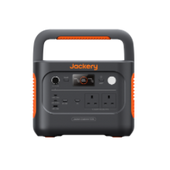
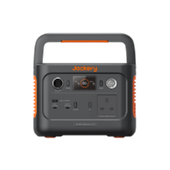
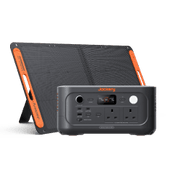
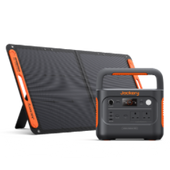
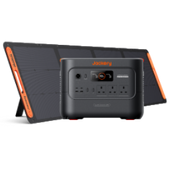
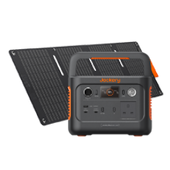
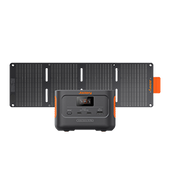
In the 2026 "plug-in" battery market, Jackery SolarVault 3 Series is set to capture the spotlight; not only does it blur the lines between traditional energy storage and portable power solutions, but it also stands out thanks to its powerful intelligent scheduling capabilities.
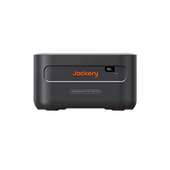
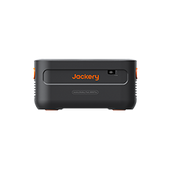
The Jackery SolarVault 3 Series is Jackery’s next-generation home solar storage solution, designed to help households generate, store, and use solar energy more efficiently. The series includes the SolarVault 3 Pro, SolarVault 3 Pro Max, and SolarVault 3 Pro Max AC, offering flexible options for balcony solar systems, existing PV installations, and larger home energy setups. With an integrated inverter, LiFePO4 battery technology, smart energy management, and expandable storage from 2.52 kWh to 15.12 kWh, the SolarVault 3 Series brings solar storage into a compact, modular, all-in-one system.
The system works by collecting solar power from connected panels, storing surplus electricity in the battery, and automatically supplying that energy when the home needs it most, such as in the evening, during peak electricity prices, or during a power outage. The SolarVault 3 Series can optimise solar generation even when panels face different directions or experience partial shading. Its AI-driven energy management helps balance solar production, household demand, battery charging, and electricity tariffs for smarter daily use.
Affordable Solar Battery Prices: Are Subsidies or Tax Incentives Available?
There are several programs and schemes available to help you gain money from your solar battery, albeit the assistance frequently takes the shape of grants, tax advantages, and export payments rather than a single national subsidy. The following are some of the subsidies or tax incentives that might be available:

VAT Discount
The VAT rebate reduces the VAT on solar batteries to 0% and is available to everybody. Previously, most households had to pay 20% VAT when purchasing a solar battery on its own. The government implemented this change in February 2024, and you can take advantage of it until March 2027. After that, the government intends to increase the tariff to 5% for all solar systems.
Warm Homes: Local Grant
The government's Warm Homes: Local Grant gives local authorities in England £500 million to support house renovations such as solar and battery systems. If you reside in one of the 278 local authorities that have received funds, in an energy-inefficient family that is underprivileged, low-income, or gets a means-tested assistance, you might be eligible for up to £30,000 in measures.
Warm Homes Programme
The Welsh Government's Warm Homes Programme is an updated version of the Warm Homes Nest Scheme. Eligible candidates can get completely supported measures including solar and battery systems, heat pumps, and insulation.
You may qualify if you are a homeowner or private renter in a household with an EPC rating of 54 (E) or below, or 68 (D) or lower if someone in your household has a chronic circulatory, respiratory, or mental health problem. Your household must also have a modest income or get a means-tested assistance.
Note: Subsidy and tax incentive policies are subject to change. Please contact relevant local authorities for further information.
Affordable Solar Batteries: What Are the Economic Benefits?
The solar battery ROI UK is determined by comparing the savings you make on your energy bill each year to the total cost of the battery system. A typical home battery saves approximately £600–£1,000 in annual energy costs (depending on usage). Most UK homeowners can achieve an annual return on investment of 8% to 12%.
This translates to a payback period of roughly 5–12 years (for reference only). Your payback period depends on several factors, including electricity rates, battery size, overall usage, and the type of tariff you’re on. It’s also influenced by how much time you spend at the property making use of the energy you generate and store.
How Can You Accelerate the Return on Investment?
To recoup the cost of your affordable solar battery faster, you can maximise its economic benefits through the following strategies:
Maximise Daytime Self-Consumption: Schedule high-energy activities (such as using washing machines, dishwashers, or dryers) during peak solar generation hours. Directly consuming the electricity you generate allows for a faster return on investment compared to selling excess power back to the grid at low rates.
Leverage Time-of-Use (TOU) Tariff Arbitrage: Pair your battery with a dynamic pricing plan. Charge the battery from the grid when rates are lowest at night and discharge it for household use during peak-rate hours; this "buy low, use high" approach significantly lowers overall electricity costs.
Integrate Electric Vehicle (EV) Charging: If you own an EV, try to charge it directly using solar power during the day. EVs can absorb a large amount of surplus solar generation, thereby minimizing idle time for your home storage battery and accelerating the return on investment.
Optimise with Smart Home Energy Management: Battery systems equipped with smart controls can automatically determine the best times to charge, discharge, or export power based on real-time electricity prices, weather forecasts, and household consumption patterns.

How to Choose the Right Affordable Solar Battery for Your Home?
Choosing an affordable solar battery is an excellent way to lower household bills and accelerate the return on your investment. However, "budget-friendly" does not mean simply buying the affordable option available. To find the best fit for your needs, consider the following guide:
Assess Your Energy Consumption Needs
The first step is to evaluate your household's daily electricity usage and your solar panels' generation capacity. For a typical three-bedroom home in the UK, a battery with a capacity of 5 kWh to 10 kWh usually offers the best balance of cost and performance.
Alternatively, check your smart meter data to see how much excess electricity your solar panels generate during the day. Generally, the battery should be capable of storing roughly twice the amount of electricity your solar panels generate daily.
|
Solar PV System Size |
Recommended Battery Capacity |
|
2 kWp |
4 kWh |
|
3-4 kWp |
7 kWh |
|
5 kWp |
10 kWh |
|
6 kWp |
12 kWh |
The data in this table is for reference only. Please consult a professional for precise battery capacity information.
Check System Compatibility
An affordable solar battery must be compatible with your home's existing (or planned) system; otherwise, the hidden costs of retrofitting can be substantial. For households adding a battery to an existing solar setup, an AC-coupled battery (such as the Jackery SolarVault 3 Series) is recommended.
It connects directly to your home's electrical circuit via a dedicated battery inverter, eliminating the need to alter your original inverter and saving you significant modification costs.
Consider System Scalability (Modular Stacking)
When working with a limited budget, a modular design is a key advantage of affordable solar batteries. Prioritise products that allow for capacity expansion by adding "battery blocks"—much like LEGO bricks (e.g., the Jackery SolarVault 3 Series).
You can start with a basic model of around 2 kWh for a few hundred pounds; later, if your household acquires an electric vehicle (EV) or a heat pump requiring more storage, you can simply stack on new modules. This approach keeps your initial financial risk very low.
Look for Backup Power Capabilities
Extreme weather (such as heatwaves) or grid maintenance can lead to power outages. If you want your battery to provide emergency power during an outage, ensure it supports off-grid operation.
Some affordable solar batteries automatically shut down when disconnected from the grid, rendering them unable to provide backup power. Choosing a battery with off-grid capabilities ensures that critical appliances—such as refrigerators, lighting, and communication devices—remain operational during emergencies.

Are Affordable Solar Batteries Worth Buying?
For most people, affordable solar batteries offer excellent value. They allow households to save on energy costs with a relatively low initial investment. However, to determine if they are truly worth it, it is essential to weigh their significant pros and cons:
Advantages of Affordable Solar Batteries
Here is why affordable solar batteries are a worthwhile purchase:
- Lower Initial Investment: Affordable solar batteries make it easy for budget-conscious households to enter the era of energy storage. Currently, entry-level or smaller-capacity storage batteries typically cost between £2,000 and £4,000, with some "plug-in" options available for just a few hundred pounds.
- Significantly Higher Self-Consumption Rates: Without a battery, excess solar energy generated during the day is often wasted or sold back to the grid at a low rate. Affordable solar batteries store this surplus energy for use at night, boosting a household's solar self-consumption rate from the typical 30–40% to over 70–80%.
Disadvantages of Affordable Solar Batteries
Despite their significant advantages, affordable solar batteries also have some downsides—or potential risks:
- Lower Charge/Discharge Power: To keep costs down, affordable solar batteries typically have a continuous power output of only around 2kW to 3kW. This means that if you run a heat pump, oven, and electric kettle simultaneously in the evening, the battery may not be able to handle the full load, requiring you to draw the extra power from the expensive grid.
- Capacity Degradation and Lifespan Limitations: Under long-term, high-frequency use, affordable solar batteries often experience faster capacity degradation than premium models. For instance, the "health" (capacity retention) of some low-cost systems may drop to around 70% after just 2,000 to 3,000 charge cycles.
- Limited Emergency Backup Capability: Most "affordable" solar batteries do not support whole-home backup by default. Furthermore, the switchover from grid power to battery power often involves a delay of several seconds, failing to match the seamless performance of high-end UPS (Uninterruptible Power Supply) systems.
In summary, if your priorities are pragmatic—focused on daily electricity savings, capitalizing on smart pricing plans, and achieving the fastest financial payback—then opting for an affordable solar battery is absolutely worthwhile.
FAQs
The following are the frequently asked questions about the affordable solar batteries:
1. What is the average cost of solar batteries in the UK?
The average cost of solar batteries in the UK ranges from £2,500 and £11,000, depending on the manufacturer, capacity, and installation needs. Prices may vary depending on the individual demands and available incentives.
2. What factors influence the cost of solar batteries in the UK?
The cost of solar batteries in the United Kingdom is determined by factors such as battery capacity, technology type, installation difficulty, brand reputation, and government subsidies. Additionally, market demand and energy prices might influence total pricing.
3. How much are affordable solar batteries?
Depending on their size, cplug-in batteries are reasonably priced (between 500 and 1000 euros), but house solar battery solutions represent increased capacity and backup time.
4. How much does a plug-in battery cost?
A plug-in battery costs between £500 and £1,000 for a 2kWh-2.5kWh unit, which equates to £333 per kWh.
5. What is a plug-in battery?
A plug-in battery is designed to fit into a conventional household socket and charge using grid electricity before supplying power to the rest of your home, as well as specific gadgets, as needed.
6. How long do solar batteries typically last?
Solar batteries typically have a lifetime of 10 to 12 years. That doesn't mean they'll be utterly worthless by then, but they won't be able to retain as much charge as before, and the control circuits may fail.
7. Are solar batteries worth the cost?
Solar batteries are well worth the expense. They allow you to consume more of the power your panels generate, lowering your expenses, while also allowing you to take advantage of time-of-use pricing.
8. How long does it take for a solar battery to pay for itself?
As a preliminary estimate, a smaller 5kWh battery may save a household £600 per year, with a payback time of around eight years. A mid-sized 10kWh system saves roughly £800 per year and pays for itself in around seven years, however a bigger 15kWh-plus system can reduce payback time to around six years due to increased capacity and self-consumption. Your payback period will be determined by your power use, tariff, and how much stored energy you utilise rather than export.
Conclusion
Investing in an affordable solar battery is undoubtedly a pragmatic and financially rewarding move for UK households looking to maximise self-consumption and outsmart volatile grid tariffs. While budget systems come with certain tradeoffs in power output and backup seamlessness, their low entry costs and rapid payback periods offer unbeatable value.
Launching in July 2026, the Jackery SolarVault 3 Series embodies a new energy storage concept by seamlessly integrating LiFePO4 battery safety, convenient "plug-in" expandability, and AI-driven cost optimization into a compact design. By choosing the right capacity and leveraging smart incentives today, you can secure a reliable, future-proof home setup that keeps your bank account full and your lights on.


