





















![[Over £1200 Tier Gift] Bluetooth Speaker with Phone Stand - shipped Separately](http://uk.jackery.com/cdn/shop/files/Portable_Bluetooth_Speaker_with_Phone_Stand_2.png?v=1781595581&width=170)
















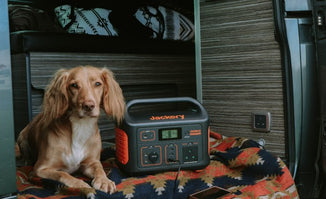


In recent years, a burgeoning trend has emerged, captivating the imaginations of adventurers, minimalists, and those seeking unconventional lifestyles alike: van living.
What was once merely a mode of transportation has evolved into a symbol of freedom and self-sufficiency. Individuals across the globe embrace the idea of transforming vans into mobile homes. This movement represents a departure from traditional notions of homeownership, offering an alternative lifestyle characterized by mobility, simplicity, and a closer connection to nature.
However, at the heart of this nomadic existence lies a fundamental need: reliable power. From lighting and cooking to powering electronic devices, electricity is indispensable for ensuring comfort and functionality on the road. Within this context, the role of Jackery Solar Generators becomes paramount. Keep reading to know the best Jackery for van life.
|
Key Takeaways: |
|
Understand Your Power Needs for Van Life
Before embarking on the journey of transforming a van into a mobile home, it's essential to assess your power needs thoroughly. This initial step lays the foundation for a comfortable and functional living space on wheels.
- Consider the essentials: lighting, cooking appliances, cooling/heating systems, and electronics. Each of these elements requires a certain amount of power to function efficiently.
- Lighting: LED lights are a popular choice for van conversions due to their energy efficiency. Calculate the total wattage,and it will give you an estimate of the power consumption. For example, if you plan to install four 10-watt LED lights, your total lighting power requirement would be 40 watts.
- Cooking Appliances: If you plan to use electric cooking appliances such as induction cooktops or microwaves, determine their wattage. A standard induction cooktop may have a wattage of 1500 watts. Estimate the daily usage duration for each appliance to gauge their power consumption accurately.
- Cooling/Heating: Depending on the climate in which you'll be travelling, you may need heating, cooling, or both. Consider whether you'll be using electric heaters, fans, air conditioners, or other climate control devices, and calculate their power consumption accordingly.
- Electronics: This category includes devices such as laptops, smartphones, cameras, and any other gadgets you'll be using regularly. Determine the power consumption of each device and estimate the total daily usage.

Once you have a clear understanding of the requirements for your van conversion, proceed to compute the total power consumption and storage requirements. To do this:
- Calculate Total Wattage: Add up the wattage of all the appliances and devices you'll be using in your van. This will give you the total power consumption in watts.
- Estimate Daily Usage: Determine how many hours each appliance or device will be in use on an average day. Multiply the total wattage by the number of hours to get the total watt-hours (Wh) consumed per day.
- Consider Battery Capacity: Look for a power storage solution that can comfortably accommodate your daily power consumption. Consider factors such as battery capacity (measured in watt-hours), voltage, and cycle life.
- Factor in Charging Sources: Remember to account for charging sources such as Jackery Solar Panels, alternators, or shore power hookups. These sources will replenish your battery bank, allowing you to continue using electrical appliances even when off-grid.
By carefully assessing your power needs, you can ensure that your van life is equipped with a reliable power system to support you on the road.
|
Appliance |
Power (Watts) |
Usage (Hours/Day) |
Daily Total (Wh) |
|
Compressor Fridge (12V) |
40W – 60W |
~8h (Duty Cycle*) |
320Wh – 480Wh |
|
Diesel Heater (Start/Run) |
40W / 10W |
5h (Winter) |
100Wh – 150Wh |
|
LED Lighting (Full Van) |
15W |
5h |
75Wh |
|
Laptop Charging (Mac/PC) |
60W – 90W |
3h |
180Wh – 270Wh |
|
Phone Charging (x2) |
10W |
3h |
60Wh |
|
Water Pump |
45W |
0.25h (15 mins) |
12Wh |
|
MaxxAir Vent Fan |
10W – 30W |
8h |
80Wh – 240Wh |
|
Starlink / Wi-Fi |
50W – 75W |
4h |
200Wh – 300Wh |
|
Low-Wattage Kettle (AC) |
1,000W |
0.15h (10 mins) |
150Wh |
|
TOTAL (Estimated Daily Average) |
~1,200Wh – 1,800Wh |
||
The Best Jackery Solar Generators for Van Life
Choosing a Jackery Solar Generator for van life in the UK is a practical alternative to building a complex, fixed electrical system. It effectively addresses the specific legal, financial, and environmental constraints of living on the road in Britain.
Building a fixed electrical system in a van requires significant technical knowledge or expensive professional labor. A traditional "split-charge" system requires tapping into your van's alternator and installing busbars, fuses, and heavy-duty cabling. A Jackery is plug-and-play.
Professional electrical installation for a campervan in the UK can cost between £500 and £1,500 in labor alone, excluding components. With a Jackery, you bypass labor costs entirely. You can spend that "installation budget" on a higher-capacity battery (like the 2000 v2) instead of paying for a certified electrician to crimp wires.
|
Features |
Jackery Solar Generator 2000 Plus |
Jackery Solar Generator 2000 v2 |
|
Combo |
Explorer 2000 Plus + SolarSaga 200W |
Explorer 2000 v2 + SolarSaga 100W/200W |
|
Capacity |
2042.8Wh (Base) 12 kWh (Expandable with 5 battery packs) |
2042Wh |
|
Battery Cell |
LiFePO4 4000 cycles to 70%+ capacity |
LiFePO4 4000 cycles to 70%+ capacity |
|
Weight |
61.5 lbs (27.9 kg) |
38.6 lbs (17.5 kg) |
|
Dimension |
18.6 x 14.1 x 14.7 in (47.3 x 35.94 x 37.36 cm) |
13.2 × 10.4 × 11.5 in (33.5 × 26.4 × 29.2 cm) |
|
Noise Level |
≤30dB |
≤30dB 42dB (AC) and 30dB (DC) |
|
Working Temperature |
Discharge: 14°F~113°F (-10~45°C) Charge: 32°F~113°F (0~45°C) |
Discharge: 14°F~113°F (-10~45°C) Charge: 32°F~113°F (0~45°C) |
|
Output Ports |
AC Output 3 Ports, 230V~ 50Hz, 13A Max, 3000W Max, 6000W surge peak USB-A Output 2 Ports, 18W Max, 5-6V⎓3A, 6-9V⎓2A, 9-12V⎓1.5A USB-C Output 2 Ports, 100W Max, 5V⎓3A, 9V⎓3A, 12V⎓3A, 15V⎓3A, 20V⎓5A Car Port 12V⎓10A Max DC Expansion Port Output 32.2V-50.4V⎓97A Max |
AC Output 2 Ports, 230V ~ 50Hz, 10A Max, 2200W Rated, 4400W Surge peak USB-A Output 1 Port, 18W Max, 5-6V⎓3A, 6-9V⎓2A, 9-12V⎓1.5A USB-C Output 2 Ports, USB-C1: 30W Max, 5V⎓3A, 9V⎓3A, 12V⎓2.5A, 15V⎓2A, 20V⎓1.5A; USB-C2: 100W Max, 5V⎓3A, 9V⎓3A, 12V⎓3A, 15V⎓3A, 20V⎓5A Car Port 12V⎓10A Max |
|
Recharging Methods |
AC Adaptor: 2 Hrs 12V Car Adaptor: 25 Hrs 1 x SolarSaga 200W: 14 Hrs 2 x SolarSaga 200W: 7 Hrs 6 x SolarSaga 200W: 2 Hrs |
Emergency Charging (AC) via App: 1.33 Hrs Wall Charging: 1.7 Hrs 400W Solar Input: 5.5 Hrs Car Charging: 24 Hrs |
Jackery Solar Generator 2000 Plus
The Jackery Solar Generator 2000 Plus is a strong contender for van life in the UK, particularly because it addresses the specific challenges of British weather and the "modular" nature of many van setups.

Battery Longevity (LiFePO4)
Unlike older lithium-ion models, the 2000 Plus uses LiFePO4 (LFP) chemistry. This is crucial for full-time van life because it is rated for 4,000 charge cycles to 70% capacity. In practical terms, if you charge it every single day, it can last over 10 years.
High Power Output for "Home Comforts"
With a 3,000W continuous AC output (and 6,000W surge), it handles the heavy-duty appliances that smaller units struggle with. In a UK van context, this means you can comfortably run electric kettles, induction hobs or small heaters.
Efficiency in Low-Light Conditions
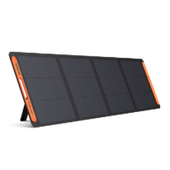
The SolarSaga panels (particularly the 200W variants often paired with this unit) use IBC (Interdigitated Back Contact) technology. This provides better efficiency in the weak, diffused sunlight common in the UK compared to standard panels. While you won't get full wattage on a grey day in the Peak District, you’ll likely harvest more energy than with older solar tech.
Expandability for Winter Resilience
The "Plus" in the name refers to its modularity. You can add up to five E2000 Plus battery packs, expanding capacity from 2kWh to 12kWh.
During the short days of a British winter, solar gain is minimal. Having a larger "bank" allows you to store more energy from a single sunny day or a short hook-up at a campsite to last through several days of rain.
Fast Recharging for "Drive-and-Charge"
UK van lifers often move between locations frequently.
Mains Charging: It can fully charge from a standard UK wall socket in about 1.7 to 2 hours. If you stop at a campsite or a friend's house for a quick tea, you can significantly top up your power.
Solar Charging: With a full 6-panel array, it can charge in 2 hours, though a more realistic 2-panel van setup will take longer.
|
Review from Our User* |
|
The 2000 Plus feels like a fixed installation that happens to have wheels. If you have the space under your bench, the piece of mind from the 3,000W inverter is worth the extra weight. |
Jackery Solar Generator 2000 v2
The Jackery Solar Generator 2000 v2 occupies a specific niche in the lineup, designed for those who need high capacity but prioritize portability and value over the heavy-duty modularity of the 2000 Plus.

Superior Portability
The standout feature of the v2 is its physical design. While it has the same 2,042Wh capacity as the 2000 Plus, it is significantly easier to handle:Weight: It weighs approximately 38.6 lbs. For comparison, the 2000 Plus weighs nearly 61.5 lbs. It is about 41% smaller in volume. This makes it much more practical for tight spaces like a car trunk, a smaller campervan, or a closet. It features a foldable handle that sits flush, creating a flat top surface which is excellent for stacking other gear on top when not in use.
Modern Battery Tech (LiFePO4)
Like the Plus model, the v2 uses LiFePO4 (Lithium Iron Phosphate) chemistry. It is rated for 4,000+ charge cycles before reaching 70% of its original capacity. LFP batteries are inherently more stable and less prone to overheating than the older NMC batteries found in the original "Pro" models.
Fastest Charging in the 2kWh Class
The v2 introduces an "Emergency Charge" mode accessible via the Jackery App:
AC Wall Charging: It can go from 0% to 100% in roughly 1.3 to 1.7 hours.
Solar Input: It supports up to 400W of solar input. While this is lower than the 2000 Plus (which supports up to 1400W), it is often sufficient for casual off-grid use.
Quiet & Smart Operation
Silent Mode: It operates at under 30dB in silent charging mode, making it ideal for use inside a tent or a small van at night.
UPS Function: It features a 20ms Uninterruptible Power Supply (UPS) switch-over, meaning it can act as a seamless backup for a home office or sensitive electronics during a power cut.
|
Review from Our User* |
|
The v2 is the 'sweet spot' for most UK campers. It fits behind a car seat, charges incredibly fast at a service station, and handles a fridge and lights for a long weekend without breaking a sweat—or your back. |
How to Choose the Proper Solar Generator for Van Life?
Choosing a solar generator for van life in the UK is about balancing your daily energy "spend" against the reality of the British climate. Because our sunlight is so variable, you shouldn't just look at the battery size; you need to look at how quickly it can recover that power.

Battery Capacity (The "Fuel Tank")
In the UK, it’s best to follow the "Two-Day Rule": choose a battery that can run your essentials for two full days without any solar input.
If your daily use is 750Wh, aim for a generator with at least 1,500Wh to 2,000Wh capacity. Why? This provides a buffer for those frequent "washout" days where solar generation is near zero.
Solar Input Rate (The "Recovery Speed")
This is often more important than the battery size itself. Look for a unit that supports a high Solar Input Wattage (e.g., 400W to 800W).
In winter, a 200W panel might only produce 20-40W of actual power. If your generator only allows for 100W of solar input, you can't "oversize" your panels to compensate for the weak sun. A unit with high input headroom allows you to plug in more panels to catch every available photon.
Battery Chemistry (LiFePO4 vs. NMC)
For van life, LiFePO4 (LFP) is the non-negotiable standard in 2026. LiFePO4 batteries last for 3,000–6,000 cycles (10+ years), whereas older NMC batteries often drop off after 500–800 cycles. LFP is much more thermally stable, which is a major safety factor when you are sleeping in a small, enclosed space with the unit.
Inverter Rating and "Surge" Power
The inverter determines what you can actually plug into the unit.
Continuous Watts: If you want to use a travel kettle (usually 1,000W) or a hairdryer, your generator needs a continuous output of at least 1,500W–2,000W.
Surge Watts: Appliances with motors (like fridges or water pumps) need a brief burst of high power to start. Ensure the generator has a "Surge" or "Peak" rating that is at least double its continuous rating.
Charging Versatility
Since you are in a vehicle, you need three specific ways to charge:
- AC (Mains): For fast-charging at a friend's house or a campsite before heading off-grid.
- DC (Cigarette Lighter): To charge from your van’s alternator while you drive.
- Solar: For stationary off-grid living.
- Pro Tip: Look for a unit that supports Pass-Through Charging, which allows you to charge the generator and power your fridge at the same time.
|
Feature |
Weekend Trips |
Full-Time Van Life |
|
Capacity |
500Wh – 1,000Wh |
2,000Wh – 3,000Wh |
|
Inverter |
500W – 1,000W |
2,000W – 3,000W |
|
Solar Input |
100W – 200W |
400W – 800W |
|
Recommended Chemistry |
LiFePO4 |
LiFePO4 |
Installation and Setup
Installing a Jackery Solar Generator in your van is a straightforward process, but it requires careful consideration for safety and efficiency. Here's an overview of the steps involved:
1. Selecting the Placement
Choose a secure and well-ventilated location within your van to place the Jackery Portable Power Station. Avoid placing it in direct sunlight or near heat sources to prevent overheating.
Ensure there's sufficient clearance around the power station for adequate airflow to dissipate heat generated during operation.
2. Securing the Power Station
Use mounting brackets or straps to secure the power station in place and prevent it from shifting during travel.
Ensure that the power station is securely anchored to prevent damage or injury in the event of sudden stops or accidents.
3. Connecting Devices
Plug your devices into the appropriate outlets on the Jackery power station. Most Jackery models come with a variety of ports, including AC outlets, USB ports, and DC ports, allowing you to power a wide range of devices simultaneously.
4. Charging the Power Station
Charge the Jackery portable power station using either a wall outlet, car adapter, or solar panels. Follow the manufacturer's instructions for optimal charging methods and ensure that the power source is compatible with your specific model.
5. Monitoring and Maintenance
Regularly monitor the status of your Jackery Portable Power Station using the built-in display or companion app to ensure it's functioning correctly.
Perform routine maintenance checks, such as cleaning the exterior and ensuring proper ventilation, to prolong the lifespan of your power station.

Integrating Solar Panels for Sustainable Power Generation
Jackery Solar Panels offer a sustainable and renewable energy source for powering your Jackery Portable Power Station, making them an excellent addition to your van life. Here are some tips for integrating solar panels efficiently:
1. Selecting Solar Panel Location
Install solar panels on the roof of your van or on a suitable mounting platform to maximize exposure to sunlight.
Ensure that solar panels are positioned at the optimal angle and orientation to receive maximum sunlight throughout the day.
2. Connecting Solar Panels
Connect solar panels to your Jackery Portable Power Station using the provided cables and connectors.
Consider using extension cables or adapters if necessary to reach your desired location for mounting solar panels.
3. Optimising Solar Panel Efficiency
Regularly clean and maintain your solar panels to remove dust, dirt, and debris that can reduce efficiency. Monitor solar panel performance using a solar charge controller or monitoring system to ensure they're operating at peak efficiency.
Adjust the angle and orientation of solar panels as needed to optimize sunlight exposure throughout the day, especially during seasonal changes.
If you have a van for living in, follow these installation and setup tips to effectively integrate a Jackery Portable Power Station and Jackery Solar Panels into your van conversion. Hence providing a reliable and sustainable power source for your adventures on the road.

Living With the Jackery Solar Generator
Living in a van requires thoughtful power management and conservation practices to ensure a comfortable and sustainable lifestyle. Here are some practical tips for optimising your van life experience with a Jackery Solar Generator:
1. Power Management
Prioritise essential devices and appliances to conserve battery power. Consider using low-power alternatives or minimizing usage during periods of limited sunlight.
Utilise energy-efficient LED lighting and appliances to reduce power consumption and extend battery life.
Monitor power usage regularly using the built-in display or companion app to avoid draining the battery unnecessarily.
2. Conservation Practices
Practice energy-saving habits such as turning off lights and unplugging devices when not in use to conserve battery power.
Opt for natural ventilation and insulation techniques to reduce the need for heating or cooling appliances, minimizing energy consumption.
Limit excessive use of high-power devices such as hairdryers or electric heaters, opting for alternatives when possible.
3. Maximising Solar Charging
Position solar panels strategically to maximize exposure to sunlight and keep them clean and free of debris to ensure efficient charging.
Take advantage of sunny days to charge the Jackery Solar Generator fully, storing excess energy for use during periods of low sunlight.
By harnessing the power of Jackery Solar Generators, you can enjoy a comfortable and sustainable van life with all the conveniences of home at your fingertips.
FAQs
The following are frequently asked questions about the best Jackery for van life.
1. Is Jackery good for van life?
With its fast-charging capabilities, the solar generator can be fully charged in under 2.5 hours using 6 Jackery SolarSaga 200W Solar Panels or in just 2 hours via an AC wall outlet. This quick charging time ensures minimal downtime and maximum efficiency, whether you live in a van or go off the grid.
2. Is 400W of solar enough for a van?
The more solar panels the better and thankfully the panels aren't that expensive compared to the batteries or other elements in the electrical system. If you plan on having a 120V fridge like us, we would definitely recommend having a minimum of 400W of solar for full time van life.
3. Will a Jackery run a caravan?
Jackery Solar Generator 2000 Plus is a breakthrough in expandable charging technology, which can support a caravan's power needs for weeks. Expanding capacity from 2 kWh to a fantastic 12 kWh - ideal for caravan, a single Jackery Explorer 2000 Plus power station supports up to 5 add-on battery packs at a time.
4. Is it bad to leave Jackery plugged in all the time?
You can leave the Jackery constantly plugged in and is safe to do so, however Jackery recommends to unplug it after it's fully charged to sustain longevity of the battery. I personally chose to keep my Jackery unplugged and have it set to the side at hand.
Final Thoughts
The Jackery Solar Generators have revolutionized van life by providing a reliable, sustainable, and convenient power solution for adventurers on the road. The transformative impact of Jackery cannot be overstated, as they offer van dwellers the freedom to roam without sacrificing comfort or convenience.
With Jackery, you can power essential appliances, entertainment systems, and electronic devices, enabling a lifestyle characterized by freedom and flexibility.
Whether embarking on a weekend road trip or embracing a full-time nomadic existence, van dwellers can live on their terms, unconstrained by traditional power sources. By harnessing the sun's energy and cutting-edge battery technology, we deliver a reliable and renewable power solution that enhances the van life experience!


