





















![[Over £1200 Tier Gift] Bluetooth Speaker with Phone Stand - shipped Separately](http://uk.jackery.com/cdn/shop/files/Portable_Bluetooth_Speaker_with_Phone_Stand_2.png?v=1781595581&width=170)




















Quick Answer: Experts broadly endorse solar panels as a sensible long‑term investment for suitable UK homes, with a typical payback of 8–12 years. Their top advice: pay upfront if you can, avoid “free” roof lease deals, and make sure you use an MCS‑certified installer. They view solar not as a get‑rich‑quick scheme, but as a steady, tax‑free return of roughly 7% per year — which handily beats most savings accounts.
Key Takeaways
-
A well‑sited 3.5–5 kW system costs £5,000–£11,000 installed, with 0% VAT relief until 31 March 2027.
-
Experts peg the real‑world return at about 7% tax‑free, yielding annual savings of £500–£800 from self‑consumed electricity and SEG payments.
-
Pay cash if possible; loan interest erodes the gain, so only low‑cost green loans are viable.
-
“Free” roof‑lease deals backfire: they keep SEG payments, lock in minimal savings, and complicate home sales.
-
Battery storage adds £3,000–£10,000 and pushes payback out 3–7 years, but raises self‑consumption from 30–50% to 98%; optional if you’re home during the day.
Why UK Homeowners Question Solar Panel Profitability in 2026
Homeowners question solar profitability for several reasons:
-
Break‑even anxiety: A typical £7,000 system needs 8–12 years to pay back, making it unsuitable if you might sell within five years.
-
Grant misinformation: There is no universal grant, only 0% VAT relief (until 31 March 2027), SEG payments, and the means‑tested ECO4 scheme. Many expect a free handout and are disappointed.
-
Feed‑in Tariff confusion: The old Feed‑in Tariff closed in March 2019, yet the phrase still causes confusion.
-
Debt‑fuelled deals: 0% finance with hidden fees or roof‑for‑rent arrangements skim export income. Experts warn these erode returns and complicate home sales.
-
Grid‑tied battery limits: Without a backup gateway, a standard battery shuts down during a power cut.
-
Obsolescence and degradation fears: Modern panels degrade at 0.5% per year (85% output after 25 years), but inverter replacement (£800–£1,500 every 10–15 years) must be factored into the long‑term return.
What Do Leading Experts Say About Solar Panels? A Cautious Endorsement
Consumer‑finance experts treat solar panels like any financial product: run the numbers, ignore the hype, and only jump in if the maths stacks up. They characterise solar as a “steady Eddie” that delivers around 7% annual return, tax‑free. That 7% tax‑free return consistently beats the 7% gross growth typical of stock market investments, because you avoid tax and fees, and the saving is tangible on every bill.
“Pay upfront if possible” is the core expert advice. Borrowing at 6–8% wipes out most of the gain, stretching payback beyond 12 years. Low‑cost green loans — with APRs under 4% — change that equation, but experts urge homeowners to compare at least three MCS‑certified quotes and to read the fine print on any finance deal. Other expert non‑negotiables:
-
Avoid “free” roof‑lease agreements: the leasing company owns the panels, keeps the SEG income, and often slaps a restrictive charge on your deeds that deters buyers.
-
Always use MCS‑certified installers: SEG eligibility and home saleability depend on it.
-
Never sign up after a cold call or door‑knocker pitch: high‑pressure tactics are a red flag.
Experts also recommend using an online solar panel calculator; plug in your location, roof orientation, and daytime usage for a personalised forecast, filtering out the noise to show if your roof is solar‑ready. They welcome the Warm Homes Plan’s intent but stresses simplicity; complex schemes historically fail. They advise checking your EPC, as a higher rating can unlock better mortgage deals and make solar more attractive.
Key Factors That Determine Solar Panel Profitability in the UK
The return hinges on three key factors:
-
Roof orientation: South‑facing, unshaded roof delivers maximum yield; a north‑facing roof is unlikely to generate enough to justify the outlay. Professional shading analysis is essential — a good installer will model obstructions and give an honest annual kWh projection.
-
Daytime occupancy: Using a kWh while generating saves around 24p (typical grid price), while exporting earns only 4.5–15p. A household that runs appliances during daylight hours banks far more savings than an empty house.
-
System sizing: The system must match your real consumption, not an aspirational figure. Oversizing reduces self‑consumption and lengthens payback beyond the 12‑year mark; a 3 kW system on a high‑usage home may leave plenty of grid import still to pay for.
The following table shows how different circumstances nudge the payback timeline.
|
Factor |
Ideal Scenario |
Less‑Favourable Scenario |
Payback Impact |
|
Roof orientation |
South‑facing, <10% shading |
North‑facing or heavily shaded |
Ideal can cut 1–2 years off median; poor orientation can make the entire project non‑viable |
|
Daytime occupancy |
2+ people at home during daylight |
Empty house all day |
Self‑consumption can rise from 30% to over 50%, trimming 2–3 years from payback |
|
System sizing |
Closely matched to 80–110% of annual consumption |
Oversized by >150% |
Oversizing extends payback by 2–4 years |
|
Battery storage |
High evening load, time‑of‑use tariff |
Consistently low usage after dark |
Adds 3–7 years to payback, but raises self‑consumption to 98% |
Property value can rise £1,900–£2,700 (a 0.9–2% premium) according to Solar Energy UK research. That’s a modest but genuine upside, particularly if you’re planning to stay put for a decade. Just make sure your roof has at least 10–15 years of life left — replacing it after panels are mounted costs thousands.

Maximising Returns with the Smart Export Guarantee (SEG) and Battery Storage
To maximise returns, focus on these strategies:
-
Self‑consumption: Using a kWh directly saves 24p; exporting earns a fraction. Shift energy‑hungry chores to daylight hours.
-
SEG rates: The Smart Export Guarantee is a competitive landscape where suppliers set their own tariffs. Top fixed‑rate SEG deals reached 15–16.5p/kWh in 2026 for households that also buy their electricity from the same provider, while stand‑alone export rates can be as low as 3–4p/kWh. To qualify, you need an MCS‑certified installation and a compatible smart meter — cash‑job installs lock you out entirely.
-
Battery storage: Amplifies self‑consumption from the typical 30–50% up to 98%. A home battery can be worth it if your evening load is heavy, but it’s not a must‑have for everyone. If you’re home during peak generation and can schedule appliances, solar alone may pay back faster.
-
Time‑of‑use tariffs: Tariffs like Octopus Agile let you charge a battery overnight at ultra‑cheap rates, then use that stored power during the evening peak when grid prices spike. This “load shifting” works independently of solar, but paired with panels it can push grid imports close to zero.
-
Backup gateway: A battery with a backup‑gateway (often called an emergency power supply or islanding switch) keeps your lights on during a mains outage. Without it, a standard grid‑tied battery shuts down for safety. The extra hardware adds cost but is the only way to turn a solar‑and‑battery system into genuine whole‑home backup — a feature many owners don’t realise is optional until it’s too late.
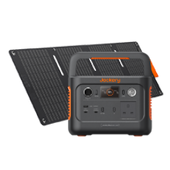
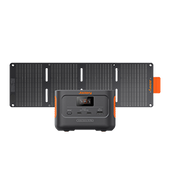
For a portable alternative, a solar generator might be worth considering — check if a solar generator is right for your home.
Upfront Costs, Payback, and Long‑Term Returns – The 2026 Picture
The average 3.5–5 kW residential installation costs £5,000–£11,000, with 0% VAT saving £1,000–£2,200 on the total. This relief runs until 31 March 2027, after which VAT reverts to 5% — a smaller discount but still worthwhile. (Source: GOV.UK VAT Notice 708/6) Typical payback sits in the 8–12‑year band.
Once the system has repaid its initial cost, the remaining 15–20 years of panel life deliver effectively free electricity. Lifetime returns often reach two to three times the upfront investment, giving an annualised return around the 7% experts cite. Adding battery storage brings the total to £8,000–£21,000 and pushes payback out by 3–7 years, but the energy independence and protection from future price hikes can make it worthwhile for heavy evening users. The table below illustrates payback ranges for different configurations.
|
System Configuration |
Typical Cost (with VAT relief) |
Annual Saving |
Approximate Payback |
|
3.5 kW solar only, high daytime use |
£5,000–£7,000 |
£550–£700 |
8–10 years |
|
4 kW solar only, moderate daytime use |
£6,000–£8,500 |
£500–£650 |
10–12 years |
|
4 kW solar + 5 kWh battery, evening load |
£9,000–£14,000 |
£650–£800 |
11–15 years |
|
5 kW solar + 10 kWh battery, time‑of‑use tariff |
£13,000–£19,000 |
£750–£950 |
13–18 years |
Key financial considerations:
-
Cash vs loan: Using cash is strongly advised. A £10,000 loan at 6% APR costs £600 in interest each year, eating most of the £650–£800 annual saving. Even a green loan at 4% still stretches payback, so only borrow if the rate is meaningfully below the 7% solar return.
-
ECO4 funding: For low‑income households in properties rated EPC D–G, ECO4 can fully fund solar panels, but eligibility criteria are strict and the scheme closes on 31 March 2026. Most homeowners won’t qualify, which is why independent advice treats the cash price as the real baseline.
-
Selling before payback: The property premium of £1,900–£2,700 offsets some of the unrecovered cost, and a high EPC rating increasingly matters to mortgage lenders. View solar as a “forever home” investment with a 7‑year horizon, not a quick flip.
Recommended Backup Solution: Jackery SolarVault 3 Series
Jackery’s upcoming SolarVault 3 Series is designed to help UK households store solar energy and provide seamless backup when the grid goes down, connecting directly with your solar array and home circuits for whole-home storage tailored to UK conditions. While full specifications are not yet confirmed, it is being engineered as a scalable solution. For those exploring portable battery systems alongside fixed solar, our guide to solar generators in the UK breaks down the differences.

Frequently Asked Questions (FAQ)
Can solar panels be installed on a flat roof?
Yes, using angled mounting frames or ballasted systems, though output may be slightly lower than on a south‑facing pitched roof.
Do solar panels work on cloudy days?
Yes, modern panels generate electricity from diffuse light. The UK’s moderate climate actually improves panel efficiency compared to hotter countries.
Will solar panels increase my council tax bill?
No, solar panels are exempt from council tax increases as they are considered an energy‑saving improvement.
Should I replace my roof before installing solar panels?
It is strongly advised to replace an aging roof first, because removing and refitting panels later is expensive and disruptive.
What is the carbon payback time for manufacturing solar panels?
Typically one to three years, after which the panels produce clean energy for decades with no direct emissions.


