
















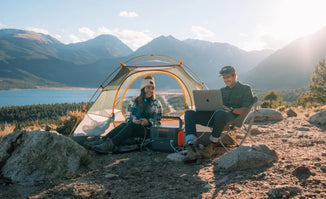


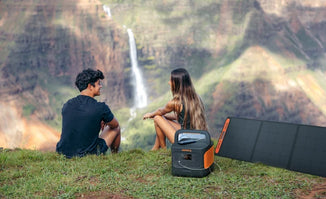












Many people find the idea of living off the grid appealing. It conjures up images of a simpler lifestyle, becoming more in touch with nature, and freed from the high costs and dependencies of modern life.
Choosing the off-grid lifestyle is a big decision. It’s not just about where you live, but also how you live. It's a lifestyle change that will have an impact on every aspect of your life, from the food you consume to the way you produce power.
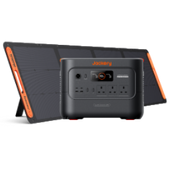
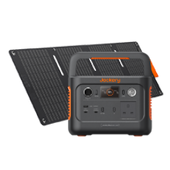
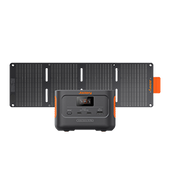
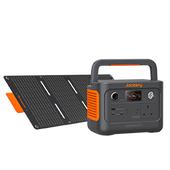
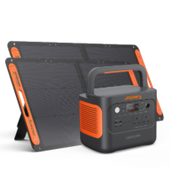
But what does it really mean to live off the grid? And is it as idyllic as it sounds? In this article, we'll explore what it means to live off the grid and give you a checklist of things you'll need to do to make the transition. We highly recommend the Jackery Solar Generator as a reliable power source for off-grid living.
|
Key Takeaways: |
|
What Is Living Off the Grid?
To live off the grid means different for everyone. Generally, living off the grid refers to a lifestyle where people seek to live a simpler life by reducing the resources that they consume while at the same time working towards the preservation of the environment.
In practice, living off the grid can mean anything from growing your own food to generating your own power. It often includes a move away from traditional forms of housing, such as apartments and houses, in favor of more sustainable options like yurts, tiny homes, or even RVs.
Of course, living off the grid is not for everyone. It can be a big lifestyle change, and it's not always easy. But if you're looking for a way to reduce your dependence on resources, lower your carbon footprint, and live a simpler life, it might be the right choice for you.
Environmental Benefits
One of the biggest reasons people live off the grid is to reduce their environmental impact.
Living off the grid generally means using fewer resources, which can greatly impact your carbon footprint. For example, if you generate your own power with solar panels, you'll use less energy from the grid, producing fewer emissions.
Likewise, if you grow your own food, you'll reduce the water and energy required to produce it. And if you live in a small home or RV, you'll be using fewer resources to heat and cool it.
In addition to reducing your own impact, living off the grid can also help preserve the environment around you.
If you choose to live in a remote location, you'll be helping to protect the local wildlife and ecosystems. And if you generate your own power, you'll be reducing the demand for energy from traditional sources, such as coal-fired power plants.
Healthier Lifestyle
Aside from its environmental impact, many people choose to live off the grid in order to lead a healthier lifestyle.
Living off the grid often means eating fresher, healthier food. If you plant and grow your own fruits and vegetables, you'll know exactly what's in them and where they came from. And if you raise your own animals, you can be sure that they've been treated humanely and are free of antibiotics and hormones.
Living off the grid can also help you lead a more active lifestyle. If you have to generate your own power or grow your own food, you'll likely be doing more physical activity than if you were just relying on the resources of the grid. And if you decide to live in a remote location, you'll probably have to walk or bike more which adds to your physical activity.
Cost Efficiency
When you consume a reduced amount of resources, you also tend to spend less money. Many people who live off the grid choose to do so in order to save money. Much like if you generate your own power with solar panels, you may be able to completely eliminate your electric bill. So does growing your own food which means spending less on groceries.
Of course, living off the grid isn't always cheaper. It can be a big investment to install solar panels or build a tiny home. But if you're looking to save money in the long run, it can be a good choice.
Lower Stress and Anxiety
Many people also find that living off the grid can also help reduce stress and anxiety levels. When you're not as reliant on the resources of the grid, you may feel like you have more control over your life. And when you live a simpler life, you may find that you have less to worry about.
Living off the grid can help you connect with nature, which has been shown to reduce stress and anxiety levels. If you live in a remote area, you'll likely have more opportunities to appreciate the beauty of the natural world. And if you generate your own power, you may feel a sense of satisfaction from being self-sufficient.

Challenges of Living Off the Grid
Of course, living off the grid is not without its challenges. One of the biggest challenges is isolation. If you live in a secluded location, you may find yourself feeling lonely or cut off from the world.
And if you're not used to being self-sufficient, you may find the transition to off-grid living to be difficult. You will have to give up some of the amenities that you're used to such as running water and flush toilets. Without regular access to resources, you may have to get creative when it comes to solving problems—which can be a good and bad thing.
But despite its challenges, living off the grid can be a rewarding experience.
How to Live Off the Grid?
If you're looking into living the off the grid lifestyle, there are a few things you can do to get started.
First, assess your needs. Are you looking to save money? Or are you more interested in reducing your environmental impact? Once you know what your goals are, you can start to figure out how to best achieve them.
If your goal is to reduce your impact on the environment, you may want to start by generating your own power with wind turbines or solar panels. If you're looking to save money, you may want to grow your own food or install a rainwater catchment system.
Of course, you don't have to do everything all at once. You can start small by making a few changes to your lifestyle. For example, you could start by composting your food waste or using less water. Or you could install solar panels to offset your energy use.
No matter how you choose to live off the grid, the most important thing is to do what works for you. There is no one-size-fits-all solution, so find what works best for your needs and goals. With a little planning and effort, you can start living off the grid today.
Checklist for Living Off the Grid
When it comes to living off-grid, you have a number of essential items that you need. These priority items include:
- Shelter
- Water Supply
- Food Supply
- Emergency Supplies
- Power Sources
- Septic and Plumbing
- Money
- Community
 Shelter
Without a question, one of the first things that anyone who chooses to live off-grid has to decide is what form of shelter they are going to live in. For those who choose to rough it, a cabin in the woods would be the perfect shelter.
However, those who choose to go half-on/half-off may opt instead to live in an RV. At the same time, those who are looking for the modern style of living off-grid may opt to move into a tiny home in order to reduce their overall carbon footprint.
Water
The human body can go for days without eating, but it cannot last very long at all without a steady supply of potable water. This is why anyone who chooses to live off-grid must have a reliable water source. For those who choose to live in a rural area, this may mean drilling a well. Others may opt to catch rainwater in barrels or build a filtration system in order to purify lake or river water.
Food
The next priority for anyone living off-grid is to have a steady food supply. For some, this may mean planting and maintaining a garden. Others may choose to raise chickens or goats in order to have a constant source of fresh eggs and milk. Still others may opt to hunt and fish in order to supplement their diet. No matter what method you choose, it is important to have a plan in place in case of an emergency.
Emergency Supplies
No matter how well you plan, there will always be the potential for emergencies. This is why it is important to have a supply of food and water that can last for days or even weeks. You should also have a first aid kit on hand, as well as a supply of any medications you or your family members may need.
Power Sources
You will need to have a reliable source of power in order to live off-grid. For some, this may mean installing solar panels or wind turbines. Others may choose to use a generator. No matter what method you choose, it is important to have a backup plan in case of an emergency.
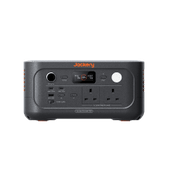
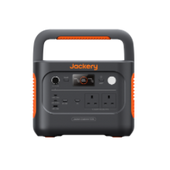
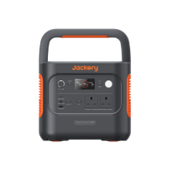
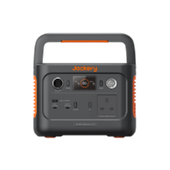
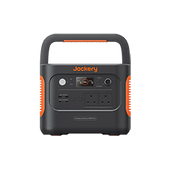
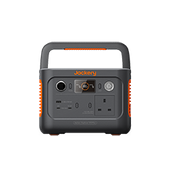
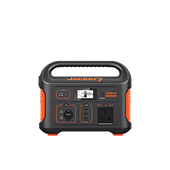
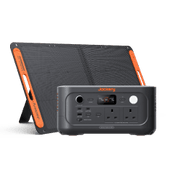
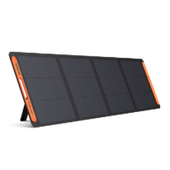
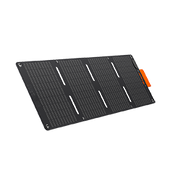
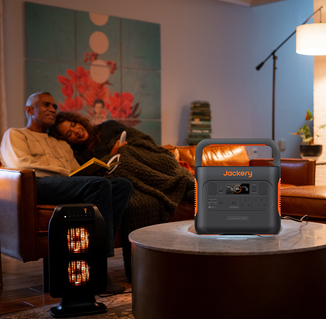
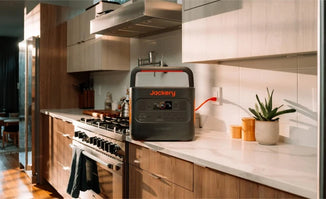
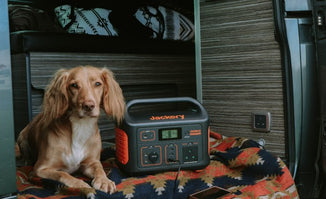
A Jackery Solar Generator can be a great option for those who want to live off the grid in a more modern way. This type of power station uses solar panels during the day to charge up a battery. Once the sun goes down, the battery will then provide power for lights, appliances, and other devices that need it.

Septic and Plumbing
You don't have to live like Fred and Barney from The Flintstones if you live off the grid. To keep your house comfortable and clean, you will still need a good septic and plumbing system. Some people choose to "rough it" (live without running water, plumbing, or power) with an outhouse, but if you live off the grid today, you can have a septic tank to handle your waste and plumbing to handle your water and waste.
Money
If you don't have a salary, you should make sure you can still make money while you're living off the grid. These days, you can easily find a lot of jobs that you can do from home on the internet. All you have to do is pick the one that fits your skills best. You can also take classes online if you want to learn something new or improve the skills you already have.
Community
Last but not least, finding a group of people who have already made the switch to living off the grid and are happy with it could be the last push you need to make your decision to live off the grid permanent. It feels good to know that you are not alone and that everything will be okay when you hear about the battles and how they were beaten straight from the horse's mouth. Get to know people who are having fun living without power or internet.
Jackery Solar Generators for Off-Grid Living in the UK
Living off-grid in the UK presents unique challenges, particularly due to planning regulations, limited winter sunlight, and high installation costs for traditional systems. A Jackery Solar Generator addresses these by acting as a mobile, "all-in-one" power station that bypasses the complexities of a fixed electrical grid.
Installing fixed solar arrays on outbuildings or "Tiny Homes" can require planning permission from your Local Planning Authority (LPA). If the building is lived in permanently, it falls under Use Class C3, which mandates compliance with building regulations. Because Jackery units and SolarSaga panels are portable and non-permanent, they generally do not require planning permission. You can move them as needed, making them ideal for caravans, sheds, or temporary off-grid cabins.
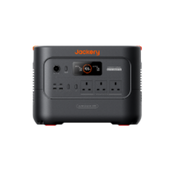
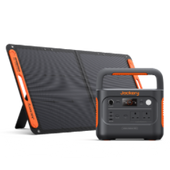
Jackery Solar Generator 3000 v2
The Jackery Solar Generator 3000 v2 is designed to be a definitive "grid replacement" for long-term off-grid living, particularly in the UK. While smaller units are great for weekend trips, the 3000 v2 provides the sustained power and technical specs required to maintain a modern standard of living without a wall outlet.

High-Wattage "Home Standard" Output
Living off-grid doesn't have to mean giving up high-draw appliances.
- 3,600W Continuous Output: Unlike many portable units that cap at 2,000W, the 3000 v2 can run almost any standard UK household appliance, including electric kettles, hair dryers, or even a small induction hob.
- 7,200W Surge Peak: This is crucial for off-grid water pumps or power tools that require a massive burst of energy to start their motors. It handles these "surges" without tripping the internal breakers.
Massive 3,072Wh Energy Reservoir
In the UK, you have to plan for "grey days" where solar generation is minimal. With over 3kWh of storage, you have enough energy to run a high-efficiency fridge for 2 to 3 days even if the sun doesn't come out.
It provides this capacity in a single, compact frame. Unlike the "Plus" series which requires external battery packs to reach high capacities, the 3000 v2 keeps your living space tidy and your setup simple.
Industry-Leading Power-to-Weight Ratio
One of the biggest breakthroughs of the v2 model is its weight. Despite having more capacity and power than its predecessors, it weighs only 59.5 lbs. For comparison, many competing 3kWh units weigh 35-45 kg.
If you live in a van, boat, or cabin, you can actually lift and move this unit without a trolley. It is significantly smaller (about 10cm shorter) than the previous Pro models, making it easier to hide under a bench or in a cupboard.
10-Year Daily Reliability (LiFePO4)
For off-grid living, the battery isn't just a backup—it's your life support. 4,000+ Cycles: By using LiFePO4 chemistry, the 3000 v2 can be fully charged and discharged every single day for over 10 years before the battery capacity drops to 70%.
ZeroDrain Technology: If you leave the unit sitting for a while, it retains 95% of its charge for a full year. This is ideal if your off-grid cabin is a secondary residence or a seasonal escape.
|
Features of Jackery Solar Generator 3000 v2 |
|
|
Capacity |
3072 Wh |
|
Cell Chemistry |
LiFePO4 4000 cycles to 70%+ capacity |
|
Weight |
About 59.5 lbs (27 kg) |
|
Dimension |
16.4 x 12.8 x 12 in (41.6 x 32.5 x 30.5 cm) |
|
Output Ports |
AC Output: 3 Ports, 230V~ 50Hz, 13A Max, 3600W Total, 7200W Surge peak USB-A Output: 2 Ports, 18W Max, 5-6V⎓3A, 6-9V⎓2A, 9-12V⎓1.5A USB-C Output: 2 Ports, 100W Max, 5V⎓3A, 9V⎓3A, 12V⎓3A, 15V⎓3A, 20V⎓5A Car Port: 12V⎓10A |
|
Recharging Methods |
AC+DC (54V) Charging: 1.4 Hrs AC Charging (Mains): 1.8 Hrs Solar Input 1000W Max: 3.5 Hrs 1 x SolarSaga 200W: 22 Hrs Car Charging 12V: 36 Hrs |
|
Working Hours |
Electric Kettle (850W): 16 Times Coffee Maker (550W): 4 Hrs Fridge (90W): 21 Hrs LED Cabin Lights (10W): 260 Hrs Water Pump (60W): 30 Hrs |
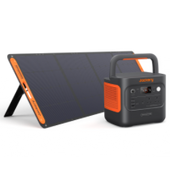
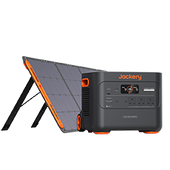
Jackery Solar Generator 2000 Plus
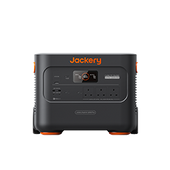
The Jackery Solar Generator 2000 Plus is arguably the most versatile choice for off-grid living in the UK, primarily because it is the only model in the lineup with truly scalable capacity. While the 3000 v2 is an all-in-one powerhouse, the 2000 Plus is a modular system that can grow with your needs. Here is why it’s a top contender for off-grid life:

Unlimited Scalability (The "Expansion" Factor)
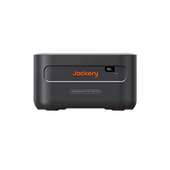
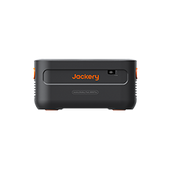
The standout feature of the 2000 Plus is that it isn't limited to its internal battery. You can add up to five Battery Pack 2000 Plus modules, expanding the base 2,042Wh capacity up to 12kWh. In the UK, where the average household uses about 8–10kWh per day, this system could theoretically run an entire off-grid cottage for over two days without any sun.
High-Performance Output
Despite being a "2000" series model, its power delivery is closer to the 3000 series.
- 3,000W AC Output: It provides significantly more continuous power than the Explorer 2000 v2 (2,200W). This extra 800W is the difference between being able to run a microwave while your fridge is plugged in, or having to turn one off to use the other.
- 6,000W Surge: Like its larger siblings, it can handle the heavy startup "kick" of power tools, well pumps, or high-end coffee machines.
Faster Off-Grid Solar Recharging
The 2000 Plus is designed to pull in power as quickly as it spends it.
1,400W Solar Input: It can handle a massive solar array (up to 6 x SolarSaga 200W panels). In the weak UK winter sun, having this much "headroom" for panels is a massive advantage—it allows you to harvest more energy during the very short windows of daylight.
Uniquely, the expansion battery packs can also be charged directly by solar panels, meaning you don't necessarily need to have them plugged into the main unit to top them up.
Financial Flexibility
You can start with just the 2000 Plus unit (saving money upfront) and buy expansion batteries later as your budget allows. The 2000 Plus is compatible with the Jackery Manual Transfer Switch, allowing you to link it directly to your home's electrical panel for a "semi-permanent" off-grid setup.
|
Features of Jackery Solar Generator 2000 Plus |
|
|
Capacity |
2042.8Wh |
|
Cell Chemistry |
LiFePO4 4000 cycles to 70%+ capacity |
|
Weight |
61.5 lbs (27.9 kg) |
|
Dimension |
18.6 x 14.1 x 14.7 in (47.3 x 35.94 x 37.36 cm) |
|
Output Ports |
AC Output: 3 Ports, 230V~ 50Hz, 13A Max, 3000W Max, 6000W surge peak USB-A Output: 2 Ports, 18W Max, 5-6V⎓3A, 6-9V⎓2A, 9-12V⎓1.5A USB-C Output: 2 Ports, 100W Max, 5V⎓3A, 9V⎓3A, 12V⎓3A, 15V⎓3A, 20V⎓5A Car Port: 12V⎓10A |
|
Recharging Methods |
AC + SolarSaga 100W: 1 Hr Wall Charging: 1.3 Hrs 200W Solar Input: 2.8 Hrs 12V Car Charging: 6 Hrs |
|
Working Hours |
Coffee Maker (550W): 2.8 Hrs TV (60W): 23 Hrs Fan (28W): 35 Hrs Phone (29W): 70 Times Water Pump (60W): 20 Hrs |
FAQs
The following are frequently asked questions about the checklist for living off the grid.
1. What do I need for off-grid living?
Off-the-grid living requires establishing independent, self-sufficient utility systems, typically including solar or wind energy with battery storage, private water sources (wells or rain harvesting), and independent waste management (septic or composting toilets). Key requirements involve significant land, initial setup costs, and specialized, sustainable technology to maintain independence from public utilities.
2. Do you need planning if you live off-grid?
There are no regulations prohibiting off-grid living — but the structures that enable it often need permission. Solar panels, compost toilets, and off-grid cabins can still be forms of development.
3. Do you need to pay council tax if you live off-grid?
Council tax is a tax on domestic property, not on the services, like mains electricity or water, connected to it. As long as your off-grid dwelling is considered your main residence, you will likely be liable for council tax.
4. How to live off-grid in the UK with no money?
There are options in the UK to own free land for off-grid living, including community land trusts, permaculture land, and public land. Starting off-grid living in the UK should consider housing, planning permission, electricity systems, water, food supply, drainage and waste disposal.
Final Thoughts
In the end, deciding to go off-grid can be a difficult choice for anyone. There are many pros and cons to the off-grid lifestyle, depending on how extreme you plan on going. However, it is always best to start off small, and then work your way up.
Start by living a modern off-grid lifestyle, and if it feels right to you, then move on to living a half-on/half-off lifestyle, before making the final decision to go completely off-grid. No matter how you choose to start your journey into off-grid living, it is important to make sure that you have all of your basic needs met, including shelter, water, food, emergency supplies, and most importantly, a power source, such as the Jackery Solar Generator.


