








































Could the coming winter bring more rain, stronger winds or colder spells—and what should you do now? The El Niño 2026 UK outlook raises questions about travel, household comfort and possible interruptions to everyday services. A powerful event in the Pacific can influence seasonal weather patterns, but it does not mean uniformly severe conditions across Britain.
This guide explains the latest evidence, practical winter preparation and how to assess backup power for essential appliances. The aim is to help you make useful household decisions, from checking local flood exposure to calculating the battery capacity your priority devices need.
|
Key Takeaways: |
|
Is 2026 an El Niño Year and What Does “Super El Niño” Mean?
Yes, El Niño is established in 2026. For UK households, understanding what has been observed—and what remains a forecast—helps put dramatic winter headlines into perspective.
|
Quick answer: |
|
El Niño may increase the likelihood of wetter, stormier and generally milder conditions in late autumn and early winter. Later in winter, the chance of cold spells could increase. These are possibilities, not guarantees of storms or snow at your location. |
What Is El Niño?
El Niño develops when surface waters in the central and eastern tropical Pacific become unusually warm, alongside changes in winds and atmospheric circulation. These connected changes can influence rainfall and temperatures thousands of miles away.
La Niña is the opposite, cooler phase of the same natural climate cycle. Neither produces identical weather everywhere: the effects depend on location, season and other climate influences.
What Is Known About the 2026–2027 Event
As of 8 October 2026, official assessments describe an established event. The WMO’s update issued on 3 September reported observed Pacific warming and reinforcing atmospheric signals. It forecast further strengthening towards a peak near the end of 2026, with an almost 100% likelihood of conditions persisting through February 2027. The eventual peak strength and end date remain forecast outcomes, rather than completed observations.
The Met Office’s 5 October update emphasised that El Niño changes the likelihood of certain UK weather patterns; it cannot determine individual storms or snowfall events.
Does “Super” Mean More Severe UK Weather?
The phrase “super El Niño 2026–2027” describes exceptionally strong Pacific warming, not a UK weather-warning category. The House of Commons Library explains that the Met Office does not use “super El Niño” as its terminology.
A stronger event therefore does not automatically mean a harsher winter in your town. Local forecasts and official warnings remain the useful guides for decisions about travel, flood preparation and household supplies.

How Could El Niño Affect UK Weather This Winter?
The main concern for El Niño 2026 UK weather is a possible change in the balance of winter conditions: a greater likelihood of wet, windy weather initially, followed by an increased possibility of cold spells later. For households, the useful question is how those conditions could affect their home, journeys and access to essential services.
|
Period |
Evidence to explain |
Practical planning focus |
|
October–November 2026 |
Latest autumn outlook and its uncertainty |
Property maintenance and local alerts |
|
December 2026 |
Updated early-winter rain and wind probabilities |
Travel flexibility and essential-power readiness |
|
January–February 2027 |
Any emerging late-winter cold signal |
Warmth, pipes and access to supplies |
|
Beyond winter |
Updated outlook as the event evolves |
Review plans without extending winter assumptions |
October–December 2026: Rain, Wind and Possible Disruption
The Government Office for Science assessment identifies a slightly increased chance of stronger westerly winds and low-pressure conditions between October and December. These patterns can bring Atlantic weather systems across the UK, increasing the potential for heavy rain and stormy periods. Published on 17 September, the assessment summarises a roundtable held on 23 June, so it should be read alongside more recent forecasts.
The Met Office’s 5 October update supports the broad possibility of wetter, stormier and generally milder conditions during late autumn and early winter. However, this describes a seasonal tendency. It does not mean every week will be wet, or that a particular storm is already predictable.
For households, repeated rainfall can make existing problems more noticeable. Blocked gutters may overflow, poorly drained routes can become difficult to use, and saturated ground can leave less capacity to absorb further rain. Strong winds introduce different concerns, including loose roof coverings, damaged fences and fallen branches.
These conditions can also interrupt everyday routines. A storm might delay trains, disrupt ferries or damage local electricity infrastructure. The government’s preparedness guidance recognises that hazards can overlap: a storm may cause a power cut, which can affect other services. This is a reason to plan for connected disruptions, rather than assume El Niño will cause nationwide outages.
January–February 2027: Could the Risk of Cold Spells Increase?
Later in winter, the atmospheric response may change. The government assessment identifies a slightly increased risk of winds from the north or east and associated cold snaps in early 2027. One possible influence involves the stratospheric polar vortex, a circulation of strong winds high above the Arctic.
The Met Office explains that this circulation can weaken following El Niño’s peak, potentially increasing the chance of sudden stratospheric warming events and subsequent cold weather. The chain of events is not automatic, and neither is its effect on Britain.
An increased chance of cold weather does not establish when snow will arrive, how long it will last or where it will settle. Snow also requires suitable moisture and temperatures through the atmosphere. A cold spell could instead bring dry weather and frost.
Planning for this possibility means considering how your household would cope with difficult travel, frozen pipes or interrupted heating. Specific decisions should follow nearer-term forecasts.
Why the Effects Will Differ Between Households
Two homes experiencing similar weather can face very different consequences. A property with a history of surface-water flooding may be particularly sensitive to intense rainfall, while an exposed coastal home may need greater attention to wind damage and access routes.
For a rural household supplied through overhead electricity lines, storm damage along the connection route may be an important planning consideration. A household on higher ground might be more concerned about icy roads or reaching shops and appointments.
Your journey matters too. Conditions around your home may be manageable while a commute crosses exposed bridges, higher ground or roads prone to flooding. Checking local risks and the routes you depend on gives preparation a clearer purpose than relying on a national seasonal headline.
What El Niño Cannot Tell Us
Atlantic Ocean conditions, the jet stream and other atmospheric influences also shape UK winters. El Niño is one influence within that wider system. A seasonal outlook cannot establish a white Christmas, an exact storm date or a reliable snowfall forecast for your postcode. The Met Office explicitly cautions against interpreting large-scale climate signals as precise local predictions.

Beyond the Weather: Could Food Prices, Energy Costs and Travel Be Affected?
El Niño can affect UK households through international supply chains as well as local weather. Changes in food production, energy demand and transport conditions may have consequences here, although their scale remains uncertain.
Imported Food and Household Shopping
Drought or excessive rainfall in producing countries can damage harvests and disrupt transport, potentially increasing the cost of imports. Coffee, cocoa and rice are among the products identified as exposed in the Government Office for Science assessment.
However, the effects depend on where disruption occurs, available stocks and alternative suppliers. The assessment does not support a confident prediction that UK food prices will double. Households can keep shopping flexible, compare alternatives and reduce waste without buying unusually large quantities in anticipation of shortages.
Energy Demand and Costs
Weather changes overseas could increase demand for liquefied natural gas (LNG), adding pressure to international energy markets. Whether that translates into higher household bills depends on other market conditions and the timing and terms of energy tariffs. El Niño alone cannot predict an individual bill increase.
Local storm-related power cuts are a separate issue: damaged infrastructure can interrupt electricity even when sufficient energy is available nationally. Managing consumption and reviewing tariffs address costs; a household outage plan addresses temporary loss of supply. Neither risk makes blackouts inevitable.
Winter Journeys and Overseas Travel
For UK journeys, allow flexibility around weather warnings and check train, ferry or airline updates before setting off. Consider alternative arrangements for essential appointments if your usual route is vulnerable to disruption.
For overseas trips, check destination-specific forecasts and official travel advice. El Niño’s effects vary considerably between countries, so a general headline offers little guidance about conditions at your destination.

How to Prepare for Super El Niño?
If you’re wondering how to prepare for super El Niño, start with improvements that make your home better prepared for winter generally. Checking local risks and dealing with existing defects can be more useful than buying equipment based on a seasonal headline.
Start with Your Property’s Actual Exposure
Check flood-risk information through the Environment Agency in England, Natural Resources Wales, SEPA in Scotland or nidirect in Northern Ireland. GOV.UK directs readers to the separate national services.
River flooding occurs when watercourses overflow; coastal flooding involves seawater, often during high tides and storm surges. Surface-water flooding happens when rainfall cannot drain away quickly enough, so a home can be exposed even without a river nearby. Check your address and essential access routes.
Complete Maintenance Before Warnings Arrive
From ground level, look for overflowing gutters, damaged downpipes, slipped roof tiles and unstable fences. Remove accessible leaves around private drainage grilles where safe, and secure loose garden furniture before strong winds arrive.
Leave roof repairs, work at height and hazardous tree work to suitable professionals. Report blocked public drains to the council rather than attempting repairs yourself.
|
Property issue |
Action |
Who should handle it? |
|
Accessible leaves around drainage |
Clear safely and monitor |
Occupier, where safe |
|
Damaged roof or high guttering |
Arrange inspection and repair |
Qualified contractor |
|
Loose outdoor belongings |
Secure or store indoors |
Occupier |
|
Defective shared entrance |
Report and arrange repair |
Landlord or managing agent |
Reduce Damage if Water Enters
Protect important documents in waterproof storage and keep digital copies. Identify vulnerable electronics, sentimental items and low-level belongings that could be moved to a higher, dry location before conditions deteriorate. Official guidance recommends protecting documents and storing valuables above potential floodwater.
For properties with known exposure, ask a flood-resilience specialist about suitable barriers, air-brick protection and water-resistant materials. Measures must suit the building and likely entry routes; barriers cannot guarantee protection. Check insurance cover and keep an up-to-date photographic record of belongings.
If You Rent or Live in a Flat
Report leaks, damaged gutters and drainage problems early, keeping dated photographs and written correspondence. Contact the landlord or managing agent about shared areas and responsibility for repairs.
Ask how communal doors and access arrangements work during a power cut, particularly if anyone depends on a lift. Living above ground level does not remove the possibility of disrupted access or shared services.
Use the printable checklist below to record completed checks and outstanding tasks.
Download Super El Niño UK Preparedness Checklist PDF >>

Prepare Your Household for Cold Weather and Interrupted Services
A useful household plan starts with what everyone needs to stay warm, fed and connected if normal routines are interrupted. Preparing for a few days of disruption is general winter resilience advice, not a prediction that El Niño will cause an emergency.
Plan for Warmth, Water and Everyday Essentials
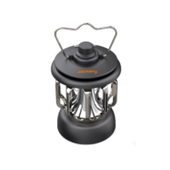
Keep warm layers, socks and blankets somewhere accessible, alongside torches, spare batteries and a battery-powered radio. These provide warmth, lighting and access to updates without depending entirely on mains electricity or a charged phone.
Set aside drinking water and familiar food that needs little preparation, accounting for dietary requirements and the number of people at home. Build supplies gradually into your usual shopping and rotate them before expiry. A small, organised collection of useful items is easier to maintain than equipment nobody knows how to use.
Include Children, Pets and People Needing Additional Support
Adapt the plan to your household. Babies may need feeding supplies and a way to prepare feeds safely if electricity or water is unavailable. Someone with limited mobility may need help accessing supplies or leaving a building when lifts are unavailable.
Keep prescription medicines available through normal repeat-order arrangements. Where treatment depends on powered equipment or refrigerated medicines, agree a contingency plan with the relevant healthcare professional or equipment provider.
Include pet food, drinking water, carriers and any medicines. Choose someone to contact and somewhere suitable to stay if necessary, checking accessibility and whether pets can come. Official guidance recommends planning around household needs during disruption lasting a few days.
Check Communications and Support Arrangements
Digital landlines, telecare alarms and connected monitoring equipment may depend on electricity. Ask each provider what happens during an outage, whether backup is available and how long it lasts. Keep important numbers on paper.
Check eligibility for Priority Services Registers in Great Britain or Customer Care Registers in Northern Ireland. These help providers identify additional support needs; registration should accompany your household plan rather than replace it.
How Much Backup Power Do You Need for a Winter Power Cut?
The right battery size depends on which appliances you need and how long you want to run them. Start with an energy budget for essential tasks, then allow a reserve for longer disruption or higher-than-expected consumption.
Choose the Appliances That Matter First
Prioritise lighting, phone charging, broadband equipment and a laptop if needed for work or communication. Selected refrigeration may also matter, depending on what you store and the likely outage duration.
Separate these needs from appliances such as kettles, ovens and electric heaters. High-power appliances can consume a substantial share of stored energy, particularly when used continuously. Powering your router also cannot guarantee internet access if the external broadband network loses service.
Understand Watts and Watt-Hours
- Watts (W) describe power demand. The combined demand of appliances running together must remain within the power station’s continuous output rating, with suitable allowance for starting surges.
- Watt-hours (Wh) describe energy. A constant 10W load operating for five hours consumes 50 Wh.
Estimated runtime (hours) = battery capacity (Wh) × assumed usable-energy factor ÷ average load (W)
An illustrative 85% usable-energy factor allows for losses when estimating runtime, but it is not a guaranteed efficiency figure. Actual performance depends on the load, inverter consumption, temperature and battery condition. Low-power loads running for many hours can make inverter overhead particularly relevant.

Build an Example Eight-Hour Power Budget
The following figures are illustrative assumptions for an eight-hour outage. Each device operates only for the period shown.
|
Example load |
Assumed consumption |
Operating period |
Energy |
|
Router and fibre ONT combined |
15W |
8 hours |
120Wh |
|
Two LED lights combined |
10W |
5 hours |
50Wh |
|
Laptop |
45W |
3 hours |
135Wh |
|
Phone charging |
30Wh total |
As needed |
30Wh |
|
Total |
— |
— |
335Wh |
At the assumed usable-energy factor, the nominal capacity required is 335 Wh ÷ 0.85 ≈ 394 Wh, before adding a planning reserve.
Refrigeration needs a separate calculation. A fridge’s compressor cycles on and off, so its running wattage multiplied by eight hours may misrepresent consumption. Measure energy over a representative period and check starting demand against the station’s capabilities.
Heating changes the calculation considerably: an illustrative 1,500W electric heater running continuously for one hour consumes 1,500Wh, more than four times the example essentials budget.
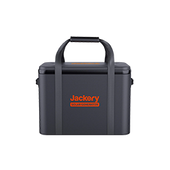
Jackery Portable Power Stations for UK El Niño Preparedness
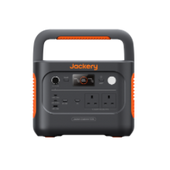
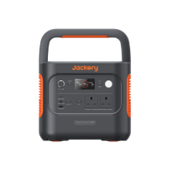
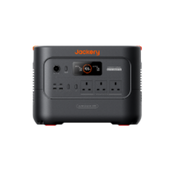
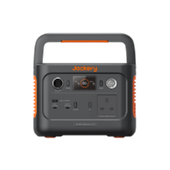
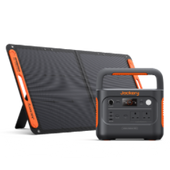
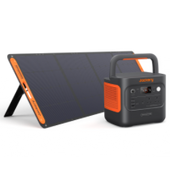
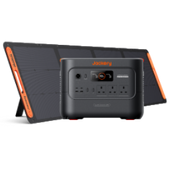
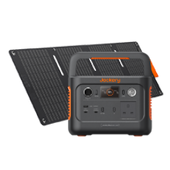
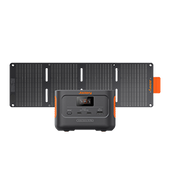
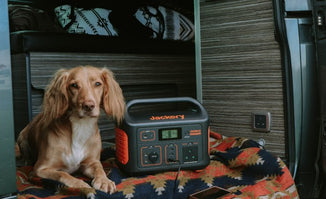
A portable power station stores electricity in a rechargeable battery and supplies compatible appliances through its sockets and charging ports. For the essential-load plan above, the Jackery Explorer 1000 Plus v2 and Explorer 2000 Plus v2 offer two capacity options.

Explorer 1000 Plus v2: A Smaller Essential-Device Setup
The Explorer 1000 Plus v2 suits a plan centred on communication equipment, lighting and occasional laptop use. Its built-in capacity provides room above the illustrative 335 Wh essentials budget, although additional appliances and longer outages increase the requirement.
Its lower weight matters when moving the station between rooms or taking it to alternative accommodation. However, 10.8 kg still requires comfortable lifting. If refrigeration or extended working hours become priorities, calculate those loads before deciding whether the base battery offers enough reserve.
Explorer 2000 Plus v2: More Energy Between Charges
The Explorer 2000 Plus v2 is worth considering when longer operation or fewer charging opportunities justify carrying a heavier unit.
Greater capacity and higher output solve different problems. Capacity extends the energy budget; output determines which compatible appliances can operate together. The larger model may therefore support a broader essential-load plan, but prolonged electric heating can still exhaust its battery quickly.
|
Specification |
Explorer 1000 Plus v2 |
Explorer 2000 Plus v2 |
|
Built-in capacity |
1,024 Wh |
2,048 Wh |
|
Continuous AC output |
1,800 W |
2,400 W |
|
Weight |
10.8 kg |
18.8 kg |
|
Maximum solar input |
400 W |
800 W |
|
Advertised UPS transfer time |
10 ms |
10 ms |
|
Expansion |
Compatible additional batteries |
Compatible additional batteries |
These are manufacturer specifications for the announced UK models. Solar-input ratings describe charging limits, not expected winter generation.
Compare Runtime at the Same Load
Using nominal capacity × 85% ÷ load gives the following illustrative estimates:
|
Constant combined load |
Explorer 1000 Plus v2 |
Explorer 2000 Plus v2 |
|
100 W |
Approximately 8.7 hours |
Approximately 17.4 hours |
These are calculations, not measured product-test results. They assume a fully charged base unit, no recharging and a constant load. Actual runtime varies with inverter consumption, temperature, battery condition and connected equipment.
What to Check Before Choosing
Check each appliance’s running power, starting demand and connection requirements. Refrigerators need particular attention to compressor start-up, while fixed-wired equipment requires a separate assessment.
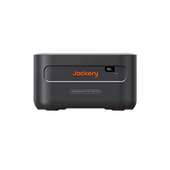
Confirm the exact compatible expansion-pack model rather than assuming any Jackery battery will connect. Compare the complete UK package price, including necessary batteries, panels and cables, and consider where you will store and lift everything.
The UPS function provides automatic transfer, but 10 ms is not zero interruption. Check whether your equipment tolerates that transfer and follow the specified setup. Medical equipment requires advice from its provider about suitable backup arrangements.
How to Recharge and Use Backup Power During a UK Winter?
A backup battery is most useful when it is charged, accessible and ready for the appliances you intend to run. Winter preparation should include a realistic recharging plan, especially when daylight is limited.
Make Charging Part of Your Preparation Routine
Check the battery’s charge periodically and recharge ahead of forecast disruption while mains electricity remains available. Follow the manufacturer’s storage guidance between uses.
Test your intended appliance combination beforehand, including any refrigerator start-up. Check that cables reach safely without creating trip hazards, and make sure other household members understand the controls. A brief test can reveal connection problems before you need the equipment.
Set Realistic Expectations for Winter Solar
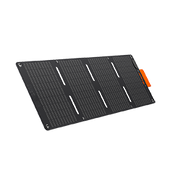
Short daylight hours, cloud cover and shade can substantially restrict winter solar charging. Position compatible panels where they receive available sunlight, following their instructions for secure placement and weather exposure. Keep the power station itself protected from rain.
A maximum solar-input rating describes what the station can accept under suitable conditions. It does not mean panels will continuously deliver that power. Solar can supplement stored energy, but unsettled weather means it cannot guarantee a full recharge each day. Plan essential loads around the energy actually available.
Use the Equipment Safely
Place the station on a dry, stable surface and maintain the ventilation clearance specified in its manual. Keep vents unobstructed and check both operating and charging temperature limits: permission to discharge in cold conditions does not automatically mean charging is allowed at the same temperature.
Connect compatible appliances directly to the station’s designated outputs. Never backfeed household wiring through a wall socket. Fixed-wiring connections and boiler backup require separate checks of electrical compatibility and a suitable arrangement designed and installed by a qualified electrician.

What to Do When a Weather Warning or Power Cut Occurs?
When disruption begins, use local warnings and network updates to guide your next steps. Read the expected impacts, affected area and timing carefully: conditions along your journey may differ from those outside your home.
|
Situation |
What to do |
|
A local warning is issued |
Read the expected impacts and timing, reconsider journeys and complete preparations while it is safe. |
|
Electricity fails |
Check your electricity network operator’s updates, report the outage and prioritise essential battery-powered loads. |
|
Floodwater threatens the property |
Follow official instructions and move people and pets to safety. Follow evacuation instructions promptly. |
|
Disruption continues |
Review remaining water, food, medicines and battery charge. Reassess whether your alternative accommodation plan is needed. |
|
Services return |
Look for damage from a safe position, arrange professional checks where needed and replenish supplies. |
For power-cut information, contact your electricity network operator, which manages the local infrastructure. Call 105 in England, Scotland and Wales, or 03457 643 643 in Northern Ireland, to report an outage. If mobile internet is available, the operator’s website may provide restoration updates. Treat estimated restoration times as estimates when deciding how to use remaining battery capacity.

If flooding threatens, follow instructions from the emergency services and local authorities. Only turn off electricity, gas or water when safe; never touch electrical switches while standing in water. Avoid walking or driving through floodwater, and do not delay an instructed evacuation to collect equipment.
A charged power station can support essential appliances, but it cannot make a flooded or otherwise unsafe property suitable to remain in. Move to safety when required and check on neighbours only when you can do so without putting yourself at risk.
FAQs
The following are the frequently asked questions about the El Niño 2026 UK:
Is 2026 Expected to Be an El Niño Year?
Yes. As of 8 October 2026, El Niño is established. The WMO’s September update forecast further strengthening towards the end of the year, with an almost 100% likelihood of conditions persisting through February 2027. Its eventual peak remains a forecast rather than a completed observation.
Will El Niño Affect UK Weather in 2026?
It can influence the likelihood of particular weather patterns. The Met Office identifies an increased chance of wetter, stormier and generally milder conditions in late autumn and early winter. This does not predict specific storms or mean that every part of the UK will experience severe weather.
What Does El Niño Mean for the UK?
Alongside possible seasonal weather effects, disruption overseas could affect imported food and international energy markets. Coffee, cocoa and rice are among potentially exposed products. However, the scale of any price changes is uncertain, and El Niño does not make widespread shortages or blackouts inevitable.
Will a Strong El Niño Bring a Colder UK Winter?
Not necessarily throughout winter. Early-winter conditions may be relatively mild and unsettled, while later atmospheric changes could increase the chance of cold spells. Neither El Niño’s strength nor its timing guarantees snow, a prolonged freeze or a colder-than-average winter overall.
How Do You Prepare for Super El Niño in the UK?
Check local flood exposure, arrange necessary property repairs and prepare household essentials. Make a contact plan, account for additional support needs and calculate any backup-power requirement. These preparations remain useful for ordinary winter disruption, regardless of how El Niño develops.
How Can You Protect Yourself During El Niño-Related Disruption?
Follow local weather warnings, network updates and emergency-service instructions. Avoid floodwater and damaged electricity infrastructure, reconsider unsafe journeys and follow evacuation instructions promptly. Never touch electrical switches while standing in water, even if you are trying to isolate the supply.
Was Summer 2026 Unusually Hot in the UK?
Yes. The Met Office provisionally identified summer 2026 as the UK’s hottest on record, based on average temperatures across June, July and August. That observation should not be attributed solely to El Niño; longer-term warming and regional weather patterns also matter.
Can a Portable Power Station Run My Heating During a Power Cut?
It may run a compatible electric heater, but runtime can be short: a 1,500 W heater uses 1,500 Wh in one continuous hour, before losses. Gas-boiler controls and pumps need separate compatibility checks; fixed-wired systems require a suitable professional connection arrangement. Never connect backup power through a household wall socket.
Final Thoughts
Preparing for El Niño 2026 UK conditions starts with understanding your home’s exposure and the services your household depends on. Completing repairs, organising everyday supplies and agreeing a practical contact plan will remain useful whatever winter brings.
Where your power budget justifies it, a Jackery Portable Power Station can help maintain selected electrical essentials during an outage. Choose capacity and output around the appliances you need, the time between charging opportunities and a sensible reserve. Keep that equipment within a wider household plan that includes warmth, communication and somewhere safe to stay.
Check local alerts, identify the appliances you need most and calculate their energy requirement before choosing backup equipment.


