



































Tiny houses may be small in size, but their energy needs still matter a great deal. In the UK, more people are looking at tiny homes as a way to simplify life, reduce living costs, and create a more flexible lifestyle.
That is why understanding tiny house power consumption is such a useful starting point. Once you know how much electricity a tiny home typically uses, it becomes much easier to estimate your own needs, control running costs, and choose a power setup that actually fits the way you live.
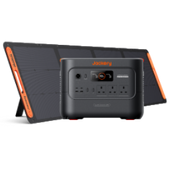
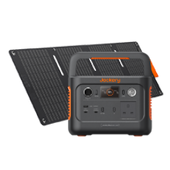
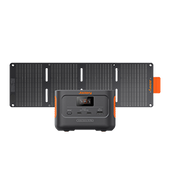
This guide explains the tiny house power consumption in the UK in 2026, how to estimate your energy demand, practical ways to lower electricity costs, and how to choose solar power for a tiny house. It also explores why a Jackery Solar Generator can be a practical option for tiny house living, whether you are off-grid, semi-off-grid, or simply looking for a more reliable backup power solution.
|
Key Takeaways: |
|
Understanding Tiny House Power Consumption in the UK
Tiny house power consumption in the UK does not come down to floor area alone. A small home with LED lighting, a compact fridge, gas cooking and careful heating habits can use surprisingly little electricity. A tiny house that relies on electric space heating, an immersion heater, an electric shower and full-size cooking appliances can use far more than people expect.
For context, a flat or 1-bedroom home is 1,800 kWh of electricity a year, while its “medium” benchmark is 2,700 kWh. That works out at roughly 4.9 kWh per day and 7.4 kWh per day respectively.
So, for a tiny house in the UK in 2026, a sensible working estimate is usually around 3 to 6 kWh per day for an efficient setup with modest electric use, and around 8 to 15+ kWh per day if you depend heavily on electric heating or hot water.
The Basics: Watts, Watt-hours, kWh and Capacity
Before estimating a tiny house’s electricity use, it helps to keep four simple terms clear. A watt (W) measures power at a given moment. A watt-hour (Wh) measures energy used over time. A kilowatt-hour (kWh) is 1,000 Wh, which is the unit used on UK electricity bills. Ofgem gives a simple example: 1 kWh is enough to power a 100-watt lightbulb for 10 hours.
Capacity usually refers to how much energy a battery or power station can store, such as 500Wh, 2kWh or 5kWh. Appliance wattage tells you how quickly that stored energy is used.
For example, a 2,000W appliance uses energy much faster than a 50W appliance. That is why tiny house planning has two parts: how much energy you need across the day and how much power you may need at one time when several devices run together. This matters even more if you plan to use a solar generator or battery system later on.
A quick rule is: Energy used = appliance wattage × hours of use. So a 1,000W microwave used for 15 minutes consumes about 250Wh, while a 2,500W electric heater running for 4 hours uses about 10kWh.
Which Appliances Use the Most Power in a Tiny House?
In practice, the biggest electricity users are usually the ones that create heat. Energy Saving Trust notes that washing machines, dishwashers and tumble dryers are among the most energy-hungry appliances in a typical home, while fridges and freezers also matter because they run all day. Cooking appliances add less to the annual share overall, but they still draw high wattage when they are on.
For a tiny house, the heavy hitters are normally space heating, water heating, showering and cooking. Lighting, TVs, routers, laptops and phone chargers still count, but they are rarely the reason a system feels undersized.
The table below shows realistic UK power figures for common appliances that may appear in a tiny house.
|
Appliance |
Typical power rating |
What it means in a tiny house |
|
Electric shower |
9,000W |
Very high draw. Even a short shower can use a noticeable amount of daily energy. |
|
Immersion heater |
3,000W |
One of the biggest hot-water loads if your tiny house uses an electric cylinder. |
|
Kettle |
3,000W |
Short bursts only, but the wattage is high. Important for inverter sizing. |
|
Tumble dryer |
2,500W |
Major load if fitted; many tiny houses avoid it and air-dry instead. |
|
Electric heater |
2,500W |
Often the biggest day-to-day electricity user in cold weather. |
|
Oven |
2,100W |
High draw while cooking, especially for baking or longer meals. |
|
Washing machine |
2,100W |
Peak rating is high, though it does not pull that amount constantly through the whole cycle. |
|
Oil-filled radiator |
2,000W |
Lower than some fan heaters, but still a substantial heating load. |
|
Hob |
2,000W |
High draw during cooking, especially if multiple rings are used. |
|
Grill |
1,500W |
Moderate to high short-term cooking load. |
|
Microwave |
1,000W |
Easier on total energy than an oven because run-time is usually short. |
|
Toaster |
1,000W |
Brief load, but still relevant for peak power planning. |
|
Fridge-freezer |
about 38W average* |
Low at any one moment compared with heating, but it runs all day and all year. |
*Ofgem’s example says a typical fridge-freezer uses 1 kWh in 26 hours, which equals an average draw of roughly 38W over time. CSE’s listed appliance ratings provide the other wattage figures above. (Source: Ofgem)
How to Estimate How Much Electricity You Need for Your Tiny House?
There are two practical ways to work this out. The first is calculation, where you estimate usage from your appliances before you move in or before you upgrade your system. The second is track and refine, where you measure what actually happens in daily life and then adjust your estimate. Using both methods together usually gives the clearest result.

Method 1: Calculate Your Tiny House Electricity Use
This is the best place to start if you are planning a tiny house from scratch, comparing appliances, or choosing solar and battery capacity.
Step 1: List every appliance you expect to use
Write down the essentials first, not just the obvious big items. In a tiny house, that usually means the fridge, lighting, kettle, cooking appliances, router, laptop chargers, water pump, washing machine and any heating or hot water equipment.
Step 2: Find the power rating or energy-use figure for each item
There are two useful figures to look for:
Power rating in watts (W), such as 60W, 700W or 2,000W.
Energy-use figure, often shown on an energy label as kWh per year, kWh per 100 cycles, or kWh per 1,000 hours, depending on the product. For appliances that cycle on and off, such as fridges and freezers, the label’s annual kWh figure is usually more useful than multiplying the peak wattage by 24 hours.
Step 3: Estimate how long each appliance runs
Now add a realistic number of hours, cycles or minutes per day. This is where tiny house planning becomes personal. A laptop used for remote work all day is very different from one used for an hour at night. A heater running for three winter hours is very different from no heating at all in summer.
A simple way to structure it is:
- Daily-use items: lights, fridge, router, chargers
- Occasional-use items: kettle, microwave, hob, shower
- Weekly-use items: washing machine, dryer, vacuum
If something runs weekly, convert it into a daily average. For example, if a washing machine uses 1.2 kWh per wash and you do three washes a week, that works out at 3.6 kWh per week, or about 0.51 kWh per day on average.
Step 4: Use the formula
The core formula is:
- Daily energy use (Wh) = Appliance wattage (W) × Hours used per day
Then convert watt-hours into kilowatt-hours:
- Daily energy use (kWh) = Appliance wattage (W) × Hours used ÷ 1,000
CSE explains the same principle in practical terms: electricity is billed in kWh, and you can work out usage by multiplying wattage by the amount of time the appliance is on.
Step 5: Add everything together
Once you calculate each appliance’s daily kWh, add them up:
Total daily electricity need (kWh/day) = Sum of all appliance kWh
Then scale it up if needed:
- Weekly electricity need = Daily total × 7
- Monthly electricity need = Daily total × 30
This gives you a usable planning figure for your tiny house, whether you are choosing a grid supply, comparing tariffs, or sizing a solar generator and battery system.
Calculation example for a tiny house
Here is a simple example for a small UK tiny house that uses electricity for daily essentials and some space heating.
|
Appliance |
Assumed use |
Estimated daily energy |
|
Fridge-freezer |
based on Ofgem example |
0.92 kWh |
|
LED lighting |
8 lights × 7W × 5 hours |
0.28 kWh |
|
Wi-Fi router |
10W × 24 hours |
0.24 kWh |
|
Laptop |
60W × 4 hours |
0.24 kWh |
|
Phone charging |
15W × 2 hours × 2 phones |
0.06 kWh |
|
Kettle |
3,000W × 12 minutes total |
0.60 kWh |
|
Microwave |
1,000W × 12 minutes |
0.20 kWh |
|
Washing machine |
averaged across the week |
0.40 kWh |
|
Small electric heater |
2,000W × 3 hours |
6.00 kWh |
If you wanted a rough monthly figure from this example:
8.94 kWh/day × 30 = 268.2 kWh/month
And if you were looking at running cost using Energy Saving Trust’s mid-2025 electricity figure of about 27.03p per kWh, the electricity part would be roughly:
268.2 × £0.2703 = about £72.49 per month
That is only an illustration, not a fixed 2026 bill, but it shows how fast electric heating changes the monthly cost.
Method 2: Track and Refine Your Real Usage
The calculation method is useful, but actual living patterns always reveal more. That is where tracking comes in.
Step 1: Monitor your overall electricity use
If your tiny house is on the grid, a smart meter is the easiest way to start. Energy Saving Trust says smart meters automatically measure how much electricity you use and come with an in-home display to help you monitor and reduce consumption.
Step 2: Watch your daily patterns
Track a few different types of day rather than only one average day:
- A weekday when you are working from home
- A colder day when heating is on more often
- A lighter-use day when you are mostly out
- A laundry or cooking-heavy day
Smart meters can show current usage in near real time. That is especially helpful in a tiny house, where switching on just one heater, oven or kettle can create a visible jump.
Step 3: Identify what is throwing off the estimate
If your real usage is higher than your original calculation, the cause is usually one of these:
- Heating or hot water is running longer than expected
- A fridge, freezer or pump is less efficient than assumed
- Cooking appliances are used more often
- Standby loads are running all day
- Winter conditions are increasing demand
CSE notes that energy monitors help you see which items in the home use the most energy, which makes it easier to spot these problem areas.
How to Reduce Power Consumption in Your Tiny House?
The most effective way to reduce power use in a tiny house is to start with the basics, not the gadgets. In the UK, the biggest electricity drain in a small home is often heat, especially if you rely on electric space heating, electric hot water or energy-hungry cooking appliances.

TIP 1: Improve Insulation First
A tiny house may be small, but poor insulation still leaks heat quickly. Roof and loft insulation reduce heat loss through the roof, which means you do not need to keep heating the space as much to stay comfortable.
In a tiny house, that can mean insulated walls, floor insulation, insulated doors, and paying close attention to cold bridges around windows, vents and joins.
TIP 2: Seal Draughts, But Keep Ventilation Sensible
Draught-proofing is one of the simplest upgrades with a clear payoff. Energy Saving Trust explains that draught proofing blocks unwanted gaps that let cold air in, and its guidance notes that draught-proofing windows and doors can save around £40 a year in Great Britain. Windows, doors, letterboxes and the lower edge of external doors are common weak points.
TIP 3: Use a Smart Meter to See What Is Really Happening
A smart meter is useful because it turns energy use from a guess into something visible. Smart meters give near real-time information on your energy use, while they come with an in-home display that helps you monitor and reduce consumption. In a tiny house, that can quickly reveal whether your heater, kettle, water heater or cooking routine is causing the spikes.
TIP 4: Tackle Heating and Hot Water Habits
If your tiny house uses electricity for heating or hot water, this is usually where the biggest savings sit. Even efficient homes can become expensive to run if heating is left on too long or hot water is used casually.
Heating the space you are actually using, avoiding overheating, using timers sensibly, and not treating electric heating as cheap background power.
TIP 5: Switch Every Bulb to LED
Lighting is not the biggest load in most tiny homes, but it is one of the easiest wins. LEDs are the most energy-efficient type of bulb and use about 80% less electricity than halogen lights, while also lasting much longer. That makes them particularly worthwhile in small spaces where lights may be on for long evenings in winter.
TIP 6: Choose Smaller, Efficient Appliances
Checking energy labels and choosing appliances based not only on rating but also on size. That is especially relevant in a tiny house. A large appliance can still use more energy than a smaller one, even if it has a decent efficiency rating. Fridges, laundry appliances and cooking equipment all deserve a close look before buying.
TIP 7: Cut Waste in Everyday Routines
A lot of power reduction comes from habits rather than hardware. Quick tips include avoiding the tumble dryer where possible, using fewer and colder washes for laundry, not overfilling the kettle, switching appliances off standby and turning off lights when they are not needed.
TIP 8: Use Solar Energy to Offset What You Cannot Avoid
Once your demand is under control, solar starts to make much more sense. Solar panels generate electricity from sunlight, work even on cloudy days, and can lower your electricity costs because the energy they produce is free once the system is installed. If you generate more than you use at the time, battery storage can keep that electricity for later.
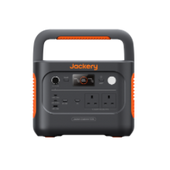
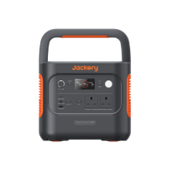
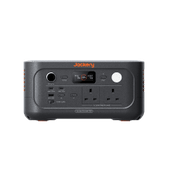
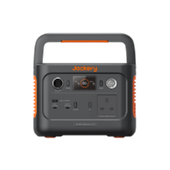
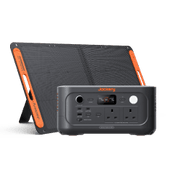
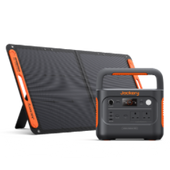
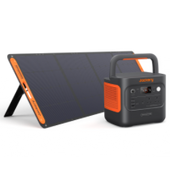
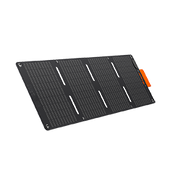
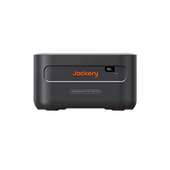
For tiny houses that need flexible backup or a lighter off-grid setup, a Jackery Solar Generator can fit naturally into the picture. Jackery Solar Generators as a combination of solar panels and a portable power station, designed to collect solar energy, store it, and then supply power through AC and USB outputs for off-grid living and home backup.

Power Solution for Your Tiny House: Solar Panel System or Solar Generator?
When choosing a power solution for a tiny house, there are usually two realistic solar-based routes. One is a fixed solar panel system, which is installed on the roof or another permanent structure and can work with an inverter and battery storage. The other is a solar generator, which combines portable solar panels with a portable power station. Both use solar energy, but they suit different kinds of tiny-house living.
Option 1: Fixed Solar Panel System
A fixed solar panel system is usually the stronger long-term option if your tiny house is used as a full-time home and you want to cover part of your day-to-day electricity demand. Solar panels generate electricity from daylight, and how much you save depends on how much of that power you use yourself, whether you have battery storage, and where you live in the UK.
A fixed system also has an advantage if your tiny house is grid-connected. Surplus electricity can be paid for through the Smart Export Guarantee, and licensed suppliers with 150,000 or more customers must offer at least one SEG tariff in Great Britain.
Option 2: Solar Generator
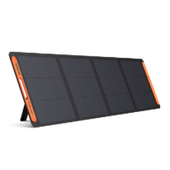
A solar generator is the simpler and more flexible route. A solar generator as a setup that combines solar panels and a portable power station: the panels collect sunlight, the power station converts and stores it, and then supplies usable electricity through its output ports.
For a tiny house, that makes a solar generator especially useful for backup power and essential daily loads. It can cover lighting, routers, phones, laptops, smaller kitchen appliances and selected low-to-medium loads much more easily than heavy all-day electric heating or high-demand hot-water use.
Which One Is Better for A Tiny House?
The better choice depends on how you use the home.
A fixed solar panel system usually makes more sense if you:
- Live in the tiny house full time
- Want regular bill reduction
- Have suitable roof or mounting space
- Plan to add battery storage and possibly export surplus power to the grid under SEG.
A solar generator is often the better fit if you:
- Want a simpler setup with no major installation
- Need power flexibility for a mobile or semi-off-grid tiny house
- Want emergency backup for essential appliances
- Prefer a modular step before committing to a permanent solar system.
Jackery Solar Generators for Tiny Houses
For a tiny house, the right power supply is rarely about running everything at once. It is about keeping the essentials steady, covering daily low-to-medium loads, and having dependable backup when the grid drops out or when you want a more flexible off-grid setup. That is where a Jackery Solar Generator can make sense.
One reason Jackery suits tiny-house use is the balance between capacity and practicality. These systems are easier to introduce than a full fixed solar installation, but they still provide enough stored energy for key household basics such as lighting, routers, device charging, fridge support and selected kitchen appliances.
Another strength is battery longevity and safety. Jackery’s current v2 models use LiFePO4 battery chemistry, and the battery supports up to 4,000 charge cycles, alongside ChargeShield 2.0 protection.
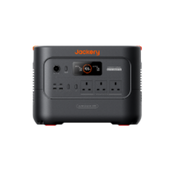
Jackery Solar Generator 3000 v2
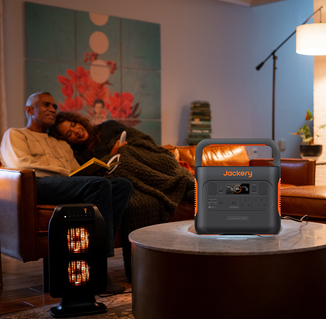
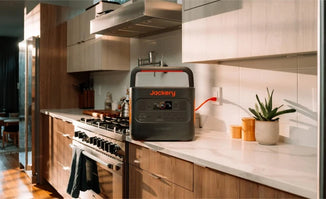
The Jackery Solar Generator 3000 v2 is designed to bridge the gap between a high-performance utility tool and a modern household appliance. By moving away from the "industrial box" look of traditional generators, it serves as a sleek, tech-forward accessory that integrates into your living space while providing robust backup power.

A Modern Home Accessory
The 3000 V2 features a revolutionary compact design that is 47% smaller than previous 3kWh models. Its clean, boxy silhouette and hidden handle design allow it to sit discreetly in a corner, under a console table, or in a utility room without looking like "camping gear."
At just 27dB in Silent Charging Mode, it is quieter than a library. You can keep it in your living room or office without the distracting hum found in older power stations. It acts as a smart home monitor via the Jackery App, allowing you to track energy usage, solar generation, and even schedule charging for off-peak hours to save on electricity bills.
Home Backup Power Supply
When the grid goes down, the 3000 V2 transforms into a professional-grade lifeline for your household essentials. With a sub-20ms switchover time, it keeps your Wi-Fi router, PC, and fridge running without a flicker during a power cut. The 3,600W continuous output (7,200W surge and 3072Wh capacity) is powerful enough to run high-wattage UK appliances like electric kettles, microwaves, and even air conditioners.
Thanks to ZeroDrain technology, it retains 95% of its charge even after a full year in storage, ensuring it's ready the moment you need it.
Jackery Solar Generator 2000 v2
The Jackery Solar Generator 2000 v2 is an excellent choice for UK homes because it balances high-capacity home backup with a portable, compact design. For homeowners, it provides a quiet and emission-free alternative to traditional petrol generators, while its fast-charging capabilities ensure you are quickly ready for the next trip.

Ideal for UK Home Backup
With a 2042Wh capacity and 2200W output, it can run up to 95% of household appliances. This includes critical items during a power cut, such as a refrigerator (up to 72 hours), a microwave, or a coffee maker.
It features a <20ms UPS switchover, meaning sensitive electronics like your WiFi router, computer, or NAS will stay online without interruption if the grid fails.
Unlike petrol generators, this unit produces no fumes and operates at under 30dB in Silent Charging Mode. This makes it perfect for use inside a UK semi-detached home or flat without disturbing neighbors.
Portability and Efficiency
The v2 model is 41% smaller and 35.6% lighter than its predecessor, weighing only 38.6 lbs. This makes it much easier to move between your garden, garage, and vehicle. You can achieve an 80% charge in just 52 minutes using the Flash Charge mode via the Jackery app, ensuring you aren't left waiting hours to top up before an emergency. Utilising LiFePO4 battery technology, it is rated for over 4,000 charge cycles, allowing for over a decade of regular use.
If You Choose a Solar Panel System, How Should You Plan It?
A fixed solar panel system can work well for a tiny house, but only if the design is balanced. In practice, that means planning the solar generation, battery storage and inverter around the way you actually live, not around a hopeful headline number.

Start with Your Electricity Demand, Not the Panels
The first step is to decide what the solar system is meant to do. Is it there to cover your daytime basics, cut grid imports, support evening use with a battery, or take a tiny house mostly off-grid in summer? That answer changes everything. A tiny house with low electrical demand can work with a much smaller system than one using electric heating or heavy cooking loads.
A simple planning formula is:
- Daily solar target (kWh) = the part of your daily electricity use you want solar to cover
Then convert that into an annual target:
Annual solar target (kWh) = daily target × 365
That gives you a realistic starting point for the rest of the design. The key point is that you are sizing the system to your routine, not just filling every bit of roof with panels and hoping for the best.
Plan the PV Input around Roof Conditions and Real Output
When people say PV input, they usually mean the size of the solar array and how much electricity it can realistically produce. In the UK, that depends heavily on roof direction, shading and available space.
A useful planning formula is:
- Required PV size (kW) ≈ annual solar target (kWh) ÷ expected annual generation per installed kW at your site
The exact annual generation figure varies by postcode, roof pitch, orientation and shade, which is why an installer’s performance estimate is more reliable than a generic national average.
Size the Battery for Evening and Backup Use, Not for Bragging Rights
A battery is there to shift solar electricity from the daytime into the evening, improve self-use and reduce reliance on the grid. Solar batteries usually range from 1 to 16kWh, with 5kWh being common in homes without electric heating and 9kWh more common in homes with heat pumps or electric heating.
For a tiny house, the best battery size is often the one that covers your overnight essentials rather than your entire life for several days. A straightforward way to think about it is:
- Battery storage target (kWh) = evening and overnight use you want to cover + a small buffer
So if your lights, fridge, router and device charging total 2.5kWh from late afternoon to morning, you would normally plan the usable battery around that need rather than jumping straight to the largest option available.
Choose An Inverter Rating around Peak Loads
The inverter is what determines how much power the system can deliver at one time, so this part is about simultaneous appliances, not daily energy use. A tiny house may use little electricity overall, but still need a strong inverter if the kettle, induction hob, microwave or another high-draw appliance might run at the same time.
A practical formula is:
- Minimum inverter rating (W) = total wattage of appliances likely to run together
Then add sensible headroom for start-up surges and a less-than-perfect real-world routine. If you expect a kettle and microwave to overlap, the inverter needs to be sized for that. If your tiny house relies on electric heating, the inverter requirement rises quickly.
Do Not Overlook Wiring, Mounting and Roof Structure
Wiring and mounting are not glamorous, but they shape whether the system is safe and whether it performs well. If shading is unavoidable, installers may recommend microinverters or power optimisers so one shaded panel does not drag down the whole array.
FAQs
The following are frequently asked questions about the tiny house power consumption in the UK.
1. How much power does a small house use per day?
A small house in the UK typically uses about 5 to 7.4 kWh of electricity per day. That comes from Ofgem’s low and medium annual benchmarks of 1,800 kWh and 2,700 kWh a year, divided across 365 days. A tiny house can be lower than that if it is efficient, but electric heating can push it much higher.
2. How much does it cost to run 1 kW for an hour?
Running 1 kW for 1 hour = 1 kWh of electricity. On Great Britain’s current price cap for 1 January to 31 March 2026, that is about 27.69p, before the daily standing charge.
3. Can a 1000W solar panel run an AC?
Sometimes, but not reliably as a simple yes. A 1000W solar array rating is based on ideal conditions, while real output changes with sunlight, roof position and shading. Whether it can run an air conditioner depends on the AC’s running and start-up power, plus whether you have a suitable inverter and battery.
4. What wastes the most electricity in a house?
Usually heating and hot water are the biggest overall energy users in a home. Among common household appliances, washing machines, dishwashers and tumble dryers are some of the most electricity-hungry, and fridges and freezers also matter because they run all the time.
Final Thoughts
Tiny house living in the UK can be simpler and more cost-conscious, but it still depends on understanding how electricity is used from day to day. Once you know which appliances draw the most power, how to estimate your real demand, and where energy is being wasted, it becomes much easier to build a setup that feels practical rather than limiting.
Better insulation, efficient appliances, careful monitoring and realistic solar planning can all make a noticeable difference. And for those who want flexible backup or a more portable off-grid option, a Jackery Solar Generator can be a useful part of that setup.


