








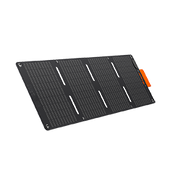

































A household that uses around 150 watts continuously for a fridge, router, laptop and standby devices could absorb much of the output from a small solar kit on a bright day. Another home may export most of the same electricity because nobody is there to use it.
That difference explains why a £400 plug-in solar system can offer a reasonable return for one buyer and poor value for another. Panel position, shading, mounting costs, daytime demand and UK product compliance matter more than the headline wattage alone.
This guide examines what a £400 kit includes, how much electricity it could generate, realistic annual savings, likely payback and whether adding battery storage makes financial sense.
|
Key Takeaways: |
|
Quick Answer: Is £400 Plug-In Solar Worth Buying?
A £400 plug-in solar kit could be worthwhile for a household with a secure, unshaded place for the panels and steady electricity use during sunny hours. The strongest results are likely where daytime generation can cover appliances such as a fridge, router, computer, ventilation system or washing machine.
The £400 headline price may not be the final cost. Mounting hardware, suitable cabling, landlord consent, electrical checks or delivery charges can raise the total. Savings also depend more on how much electricity is used immediately than on the panel’s advertised maximum wattage. Surplus generation has less value if it cannot be used or exported under a suitable tariff.
Accessibility is a major advantage. Renters, flat owners and households without a suitable roof may gain a route into small-scale solar that conventional rooftop systems do not offer. However, a shaded balcony, an awkward panel angle or a home left empty throughout the working day can result in much slower payback.
Buyers should also confirm that any product is compliant with the applicable UK plug-in solar requirements. The government’s 2026 framework is designed around an interim product specification covering electrical safety, plugs, mounting, fire protection and product labelling; a cheap imported kit should not be assumed compliant simply because it works elsewhere in Europe.
A plug-in solar 400 pound kit is a small generation system, not a substitute for a full rooftop array.
|
Household situation |
Likely verdict |
|
Home occupied during the day |
Potentially worthwhile |
|
Sunny balcony or garden |
Stronger fit |
|
Heavily shaded flat |
Usually poor value |
|
Renter with landlord permission |
Worth considering |
|
Household seeking full energy independence |
Too small |
|
Home with high daytime base load |
Better savings potential |
|
Property empty throughout working hours |
Longer payback likely |
What Is the £400 Plug-In Solar Kit Everyone Is Talking About?
The phrase £400 plug-in solar does not refer to one official UK product or a government-set price. It emerged from recent consumer reports about small solar kits expected to reach major retailers for roughly £400–£500. Coverage has linked the figure especially closely with anticipated Lidl products, although Amazon, B&Q, Currys and other retailers have also been involved in discussions about bringing compliant plug-in solar to UK households.
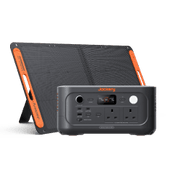
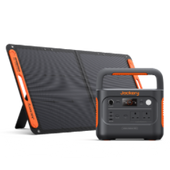
A typical entry-level kit may include:
- One or two compact solar panels.
- A microinverter.
- Solar and AC connection cables.
- Basic mounting components.
- An app or simple generation monitor.
The panels produce direct-current electricity. A microinverter converts it into alternating current that is compatible with the household supply. Once connected through the product’s approved UK method, the solar electricity is available to appliances operating inside the property. A fridge, router or computer may consume the output first; any unused generation depends on the product configuration, metering and applicable export arrangements.
These kits are much smaller than conventional rooftop arrays. A two-panel system may have a maximum output of several hundred watts, whereas a typical domestic rooftop installation is measured in several kilowatts. The smaller kit can reduce daytime grid consumption, but it is unlikely to cover high-demand appliances continuously or provide whole-home electricity.
The plug-in solar 400 pound label should therefore be treated as an entry-price shorthand. It may exclude upgraded mounting, delivery, landlord-approved fixing work, optional monitoring or other property-specific costs.
What Should a £400 Plug-In Solar Package Include?
A low headline price is only useful when the package contains everything needed for its advertised installation method. Two listings may both cost around £400, yet one may include mounting hardware and monitoring while the other supplies only panels, an inverter and basic cables. Buyers should read the component list rather than relying on labels such as “complete kit” or “plug and play”.

A credible £400 plug-in solar package should normally include:
- One or two solar panels, with clear wattage, dimensions and weight.
- A compliant microinverter matched to the panels and permitted system output.
- An approved AC connection cable designed for the product’s UK connection method.
- Solar DC cables and connectors supplied or explicitly approved by the manufacturer.
- A monitoring app or local indicator showing generation, operating status and faults.
- Shutdown and isolation instructions for maintenance or emergencies.
- A UK installation and safety manual, rather than instructions written only for another European market.
- Mounting components suitable for the advertised use, such as balcony, garden, wall or flat-roof installation.
The listing should also state whether the package is intended for permanent mounting, seasonal use or repositioning. Panel size matters: a kit may be electrically simple but still require two people to lift and secure safely.
Items That May Cost Extra
Additional costs can include:
- Balcony brackets for a compatible railing.
- A ballasted garden or flat-roof frame.
- Wall or fence mounting hardware.
- Longer manufacturer-approved cables.
- Weatherproof cable routing through doors or walls.
- A professional electrical assessment.
- Dedicated socket or circuit alterations.
- An energy meter or extra monitoring accessories.
- Delivery surcharges for large panels.
- Landlord, freeholder or planning documentation.
- Battery storage.
A £400 kit without suitable mounting may therefore cost considerably more before it generates electricity.
|
Listing detail |
What to check |
|
“800W system” |
Does this describe panel capacity or inverter output? |
|
“Plug and play” |
Is the connection method approved for UK use? |
|
“Complete kit” |
Are brackets, fixings and cables included? |
|
“Balcony solar” |
Which railing materials, shapes and dimensions are supported? |
|
“Smart monitoring” |
Does it work directly, or require a separate meter? |
|
“Expandable” |
Can buyers add panels, a larger inverter or battery storage? |
|
“Weatherproof” |
Which components are protected, and what IP rating applies? |
|
Warranty |
Is support provided by a UK business or only an overseas seller? |
Is Plug-In Solar Legal in the UK in 2026?
British plug and socket rules were designed mainly for appliances that draw electricity from the mains, not equipment that feeds electricity back into a household circuit. Under BS 1363, a standard plug could not be approved for connecting an electricity-generating device to a socket outlet.
That created several concerns around imported or improvised systems:
- Live or exposed plug pins after disconnection.
- Reliable loss-of-mains and anti-islanding protection.
- Overcurrent and fault protection.
- The effect of generation on an existing ring final circuit.
- Cable, plug and socket temperatures.
- Interaction with the local distribution network.
- Safe mounting, labelling and shutdown instructions.
A kit sold for Germany, the Netherlands or another European country should therefore not automatically be assumed suitable for Britain. Different plugs, wiring arrangements, product standards and network requirements may apply.
What the Government Is Changing
On 24 March 2026, the government announced plans to make plug-in solar systems below 800W available to UK households without requiring an electrician, provided they meet tailored safety requirements. It also committed to working with Ofgem, Distribution Network Operators and industry bodies on the relevant grid and wiring arrangements.
A formal consultation then ran from 16 to 30 June 2026. It proposed:
- A narrow amendment to the Plugs and Sockets etc. (Safety) Regulations 1994.
- An Interim Product Specification setting minimum technical and safety requirements.
- A route for approving a BS 1363 plug used with compliant plug-in solar.
- Rules covering electrical design, fire protection, mounting, labelling and consumer information.
The government published its response on 16 July 2026. More than 85% of respondents supported the proposed Interim Product Specification, and the government stated that it intends to proceed with the regulatory amendments and a refined specification. Consumer guidance is expected alongside the commencement of the new rules.
Retailers including Amazon, B&Q, Currys and Lidl have supported the planned market, alongside other businesses such as Screwfix and Wickes. Their involvement does not mean every product currently advertised is compliant; retailers will still need to supply equipment that satisfies the final UK requirements.
For buyers considering a 400 pound plug-in solar kit, the safest approach is to wait for clear UK compliance labelling, approved connection instructions and confirmation that the product meets the applicable specification. A low price, a Type G plug or previous use elsewhere in Europe is not enough on its own.

How Much Electricity Can a £400 Plug-In Solar System Generate?
A £400 plug-in solar kit may be advertised as 400W or 800W, but that figure describes its maximum rated power under test conditions. It does not mean the system produces that amount continuously from morning to evening.
Watts VS. Kilowatt-Hours
Watts measure power at a particular moment. Kilowatt-hours measure the total energy generated over time.
For example, an 800W kit operating at its full rated output for one hour would generate 0.8kWh. Real output rises and falls throughout the day because of cloud cover, season, panel temperature, orientation, angle, shading and inverter limits.
UK solar estimates should therefore be based on annual energy rather than peak wattage alone. The MCS calculation method uses panel capacity, postcode region, pitch, orientation and a shading factor to estimate yearly output.
The figures below are cautious illustrations rather than guarantees:
|
Installation |
Example annual generation |
Main limitation |
|
400W, south-facing and unshaded |
300–400kWh |
Strong seasonal variation |
|
400W, east- or west-facing |
240–350kWh |
Shorter high-output window |
|
800W, south-facing and unshaded |
600–800kWh |
Daytime household demand |
|
800W, east–west arrangement |
500–700kWh |
Lower peak but broader generation |
|
Shaded balcony installation |
Highly variable |
Obstruction and poor angle |
A south-facing, shade-free installation generally offers the highest annual yield. East- and west-facing panels can still perform usefully, while spreading generation across the morning and afternoon. Heavy shading may have a larger effect than orientation alone.
Location also matters. The same kit may generate more in southern England than in northern Scotland, and a vertically mounted balcony panel will have a different seasonal profile from one installed at a moderate tilt. PVGIS can estimate average monthly and annual production using local solar radiation, weather and module data.
What Can a £400 Plug-In Solar Kit Realistically Power?
During suitable daylight conditions, a small system can contribute towards:
- A broadband router and home-network equipment.
- A laptop, monitor and phone charging.
- Background household demand from standby devices.
- Small kitchen or office appliances used one at a time.
- Part of a fridge or freezer’s daytime electricity use.
- A washing machine cycle when solar output is high enough, although grid electricity may still fill any shortfall.
It is not designed to run high-power appliances independently. Kettles, ovens, electric showers, immersion heaters and many space heaters draw several times the output of a typical 400–800W kit.
Nor does ordinary plug-in solar provide whole-home backup during a power cut. Without compatible battery storage and an approved backup arrangement, it is primarily a daytime bill-reduction system rather than an emergency power supply.
How Much Could £400 Plug-In Solar Save Each Year?
The value of £400 plug-in solar depends on how much generated electricity the household uses immediately. Multiplying total annual generation by the full electricity price will overstate the saving whenever some power is exported without payment or receives a lower export rate.
Use this basic formula:
- Annual saving = solar electricity used directly × avoided import price
Where eligible export receives compensation, calculate it separately:
- Total annual value = direct-use saving + eligible export value
Three Realistic Self-Consumption Scenarios
Consider an illustrative 800W system generating 650kWh per year. The following example uses an import price of 25p per kWh and an export rate of 5p per kWh. These are calculation assumptions, not current tariff guarantees; replace them with the rates shown on your own energy contract.
|
Directly used solar |
Direct use |
Surplus |
Direct-use saving |
Example export value |
Total annual value |
|
40% |
260kWh |
390kWh |
£65.00 |
£19.50 |
£84.50 |
|
70% |
455kWh |
195kWh |
£113.75 |
£9.75 |
£123.50 |
|
90% |
585kWh |
65kWh |
£146.25 |
£3.25 |
£149.50 |
The 40% scenario may represent a property that is often empty during daylight. At 70%, moderate daytime demand absorbs most production. A 90% rate becomes more plausible where the home has a continuous background load or appliances are deliberately scheduled for sunny periods.
At a £400 purchase price, the simple payback in these examples ranges from roughly 2.7 to 4.7 years, before adding mounting, delivery, maintenance or performance degradation. Actual results may fall outside that range.

Appliances That Improve Direct Use
Useful daytime loads include:
- Fridges and freezers.
- Routers and home-office equipment.
- Ventilation systems.
- Aquariums and pet-care equipment.
- Washing machines and dishwashers.
- Dehumidifiers.
- Low-power daytime EV charging.
- Compatible battery charging.
High self-consumption does not mean running every appliance at once. The aim is to match flexible demand with the hours when the panels are producing.
Why Advertised Savings Can Be Misleading
Promotional estimates may assume:
- Every generated unit replaces full-price imported electricity.
- No shade and ideal panel orientation.
- No inverter or cable losses.
- All surplus export is paid.
- No extra mounting or electrical costs.
- No gradual panel degradation.
- Perfect alignment between generation and household demand.
Government publicity in June 2026 referred to established rooftop solar installations saving households up to £480 per year. That figure concerned typical full rooftop systems, not a small £400 plug-in kit, and should not be reused as the expected saving from balcony-scale solar.

Payback Calculator: How Long Could a £400 Kit Take to Recover Its Cost?
Simple payback shows how many years it may take for the financial value of the generated electricity to equal the initial cost.
Use this formula:
Simple payback = total installed cost ÷ annual financial value
The total installed cost should include the kit, delivery, mounting equipment and any electrical work. Annual financial value should combine savings from electricity used directly with any eligible export income.
|
Total cost |
Annual financial value |
Simple payback |
|
£400 |
£50 |
8.0 years |
|
£400 |
£75 |
5.3 years |
|
£400 |
£100 |
4.0 years |
|
£550 after mounting extras |
£75 |
7.3 years |
|
£650 after electrical work |
£75 |
8.7 years |
The table shows why the 400 pound plug-in solar headline can be misleading. A kit that costs £400 on the product page may have a much longer payback once brackets, weatherproof routing or electrical changes are added.
For example, a household saving £75 per year would recover a £400 purchase in just over five years. If mounting raises the cost to £550, the same annual benefit produces a payback of about 7.3 years.
What Shortens Payback?
Payback becomes faster where the household has:
- A low final installation cost.
- Strong, unshaded solar generation.
- A high electricity import price.
- High daytime self-consumption.
- A long product lifespan.
- Flexible loads moved into sunny hours.
- Low maintenance and replacement costs.
Using a washing machine, dishwasher or home-office equipment during solar hours can increase the share of generation that replaces imported electricity.
What Lengthens Payback?
The calculation becomes less attractive where there is:
- Expensive bespoke mounting.
- Low daytime electricity demand.
- Heavy shade or frequent obstruction.
- Poor panel orientation.
- Early inverter or component replacement.
- A house move before the cost is recovered.
- A low import tariff.
- Large amounts of surplus generation with little or no export value.
A simple payback calculation also ignores the time value of money, future tariff changes, panel degradation and possible repair costs. It is best used as a comparison tool rather than a guaranteed return date.
Recent UK modelling has produced different results according to system size, tariff assumptions and direct consumption. Carbon Brief estimated roughly 400kWh of annual generation for a small plug-in system, while consumer calculations commonly show that payback changes sharply when the share used within the home is adjusted.
For hardware-only kits with suitable sunlight, a payback of around five to ten years is a more cautious planning range than assuming every £400 system will recover its cost within two or three years. Poor mounting conditions or substantial extras can extend it beyond that range.

£400 Plug-In Solar VS. Full Rooftop Solar
A £400 plug-in solar kit and a conventional rooftop system both generate electricity, but they serve different needs. The smaller option prioritises accessibility and low upfront cost. Rooftop solar is designed to produce a far larger share of a household’s annual electricity.
|
Factor |
£400 plug-in solar |
Conventional rooftop solar |
|
Initial cost |
Low |
Much higher |
|
Typical scale |
Around one or two panels |
Multi-panel array |
|
Installation |
Designed for simpler setup |
Professional installation |
|
Annual generation |
Limited |
Much higher |
|
Suitable for renters |
Potentially |
Rarely |
|
Roof access |
Not necessarily required |
Usually required |
|
Export potential |
Limited |
More significant |
|
Battery compatibility |
Product-dependent |
Broad range of options |
|
Portability |
Sometimes movable |
Fixed |
|
Bill reduction |
Modest |
Potentially substantial |
|
Best use |
Reducing daytime base load |
Wider household generation |
Plug-in solar should not be viewed as a cheaper substitute for rooftop solar in terms of total output. An 800W plug-in system may generate several hundred kilowatt-hours per year, while a typical domestic rooftop array can be several times larger. That difference affects how much electricity can be used, exported or stored.
Its main advantage is access. A renter with landlord permission, a flat owner without exclusive roof rights or a household unwilling to commit several thousand pounds may still be able to offset part of its daytime consumption. A sunny garden, terrace or secure balcony can be enough, provided the mounting and connection method meet UK requirements.
For homeowners with a suitable roof and enough budget, the comparison should focus on long-term value rather than the lowest entry price. A larger rooftop installation may have a higher initial cost but can generate more energy, support broader battery options and reduce a greater proportion of annual grid imports.
A small kit can also act as a trial. Monitoring one or two panels for a year helps reveal the property’s solar exposure, daytime electricity demand and willingness to shift appliance use. That evidence may make a later decision about rooftop panels or battery storage more informed.
The better option is therefore determined by the household’s objective. Choose plug-in solar for a modest, accessible starting point; compare full rooftop solar where higher generation and deeper home integration are the priority.
Should You Buy a Battery with a £400 Solar Kit?
Usually, not at the beginning. A battery can store surplus midday electricity for use after sunset, but it does not increase the amount of solar energy generated. With a small £400 plug-in solar kit, the battery may cost several times more than the panels and save only a modest amount of otherwise exported electricity.
Storage becomes more useful where daytime demand is low, evening consumption is predictable and surplus export has little value. Charging power and system compatibility matter too: a battery must be able to detect surplus generation and accept it efficiently rather than relying on frequent manual switching.
The proposed UK plug-in solar rules should not be treated as permission for socket-connected batteries. The government consultation specifically excludes plug-in battery storage and solar products integrated with batteries, so each storage product must follow its own approved UK connection route.
|
Setup |
Main advantage |
Main financial limitation |
|
£400 solar without battery |
Lowest entry cost |
Surplus may be unused or exported |
|
Small solar plus portable battery |
Flexible appliance use |
Often requires manual charging and load management |
|
Integrated solar-storage system |
Better control over when energy is used |
Higher upfront cost |
|
Full home battery |
Greater capacity and power |
May be excessive for a small panel kit |
When a Battery May Help
Storage deserves consideration when:
- The property is empty during the sunniest hours.
- Export earns little or nothing.
- Evening base load is consistent.
- The battery can also charge on a time-of-use tariff.
- The household expects to add more panels later.
When It May Not Be Worthwhile
A battery is harder to justify when most solar generation is already consumed directly, the kit produces little surplus or the sole aim is to store electricity worth only a few pence per day. Weak communication between the battery, solar system and household meter can further reduce useful savings.

When the Jackery SolarVault 3 Pro Max Makes More Sense
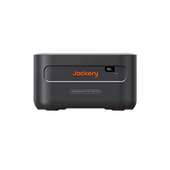
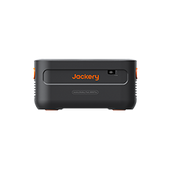
The Jackery SolarVault 3 Pro Max belongs to a broader household-storage category rather than serving as a simple accessory for a basic two-panel kit. It uses modular LFP storage starting at 2.52kWh and supports expansion to 15.12kWh within one tower.
Four MPPT charge controllers allow compatible solar inputs with different orientations, while AC coupling can support integration with an existing PV system. Smart-meter-based energy management, app monitoring, backup functions and output of up to 2,500W make it better suited to planned household storage and future expansion.
|
Household goal |
Better fit |
|
Test small-scale solar cheaply |
£400 plug-in kit |
|
Offset fridge, router and standby loads |
Plug-in solar without battery |
|
Save daytime solar for evening |
Compatible storage system |
|
Add storage to existing rooftop solar |
AC-coupled home battery |
|
Need modular capacity and backup |
Jackery SolarVault 3 Pro Max-type solution |
Who Should Buy £400 Plug-In Solar—and Who Should Skip It?
A £400 plug-in solar kit makes the most sense when a household has a suitable installation location, uses electricity during daylight and values a lower-cost entry into solar more than maximum annual generation. It is less convincing where shade, permissions or unrealistic expectations undermine the likely benefit.
A Stronger Fit For
Plug-in solar may suit:
Renters with landlord permission who cannot install a conventional rooftop array.
Flat owners without exclusive roof access but with a secure balcony, terrace or garden area.
Households with sunny balconies, especially those facing south, south-east or south-west.
People working from home, where laptops, monitors, routers and other equipment create a useful daytime load.
Homes with steady background consumption from fridges, freezers, ventilation or connected devices.
Buyers seeking a low-cost introduction to solar before considering a larger system.
Households likely to move the equipment later, provided the kit is designed for safe removal and reuse.
People willing to monitor generation and shift flexible appliance use towards sunnier hours.
For these users, the kit’s value comes from accessibility and direct self-consumption rather than large export income.
A plug-in solar 400 pound system may be poor value for:
- North-facing or heavily shaded properties.
- Homes left empty during most daylight hours.
- Anyone expecting whole-home backup during a power cut.
- Buyers unable to mount the panels securely against wind and movement.
- Properties with no safe or approved cable route.
- Households expecting the same bill reduction as a multi-panel rooftop installation.
- Buyers relying on an uncertified imported kit without clear UK instructions.
- Renters or flat owners who cannot obtain landlord, freeholder or managing-agent consent.
The decision should start with the property rather than the price. A well-positioned £400 kit can reduce a modest amount of daytime grid use. The same equipment on a shaded balcony or unsuitable railing may generate too little electricity to justify the cost.
Buying Checklist: What to Confirm Before Ordering
Before buying a £400 plug-in solar kit, check the complete installation rather than focusing only on the product price.
|
£400 Plug-in Solar Kit Buying Checklist |
|
The most important figure is the total installed cost. A £400 kit may remain close to its advertised price on a suitable balcony with included brackets, while another property may need several hundred pounds of extra equipment.
Buyers should also confirm that the product documentation matches the final UK rules rather than relying on a generic “plug-and-play” description.
FAQs
The following are the frequently asked questions about the £400 plug-insolar:
1. What is £400 plug-in solar?
£400 plug-in solar is an informal label for a small solar kit expected to cost roughly £400–£500. A typical package contains one or two panels, a microinverter, cables and monitoring. It is designed to reduce daytime grid use rather than replace a full rooftop solar system.
2. Are £400 plug-in solar panels available in the UK?
The government announced in March 2026 that compliant plug-in solar products would be made available in UK shops. Following a June consultation, it confirmed in July 2026 that it intends to proceed with regulatory amendments and a refined Interim Product Specification. Availability will depend on retailers launching products that meet the final UK requirements.
3. Is plug-in solar legal in the UK?
The government is creating a legal route for compliant plug-in solar devices, but not every imported or existing kit is automatically suitable. Products must meet the applicable UK technical and safety specification before they can be sold and connected through the approved plug-in method.
4. How much electricity can a 400W plug-in solar kit generate?
A well-positioned, unshaded 400W system might generate roughly 300–400kWh per year in a favourable UK location. East- or west-facing panels, vertical mounting and shading can reduce output. The 400W rating describes peak power, not continuous production.
5. How much can plug-in solar save each year?
Savings depend on generation, daytime self-consumption and the household’s electricity tariff. For example, using 300kWh directly at an import price of 25p per kWh would save about £75 per year. Export payments, where available, should be calculated separately.
6. Can I install plug-in solar myself?
The planned UK framework is intended to allow qualifying systems below the stated limit to be installed without an electrician, provided the product meets the approved specification and all mounting, connection and safety instructions are followed. Electrical alterations, new circuits or unsuitable sockets still require professional assessment.
7. How long does a £400 plug-in solar system take to pay for itself?
At an annual financial value of £75, a £400 kit has a simple payback of about 5.3 years. Lower generation or extra mounting costs could extend this to eight years or more. A cautious planning range is approximately five to ten years, depending on location and self-consumption.
8. Is £400 plug-in solar better than rooftop solar?
Not in terms of total generation. Plug-in solar offers a cheaper, more accessible starting point for renters, flat owners and homes without suitable roof access. Rooftop solar costs more but normally produces much more electricity, supports broader battery options and can reduce a larger share of household grid demand.
Final Thoughts
A plug-in solar 400 pound kit can be a worthwhile entry into solar where the panels receive strong sunlight and the household uses electricity throughout the day. Its appeal lies in accessibility rather than scale: it may suit renters, flat owners and buyers unable to install a conventional rooftop array.
Before ordering, calculate the total cost after brackets, delivery and any electrical work, then compare expected generation with daytime consumption. Battery storage should only be added where there is a measurable surplus to shift into the evening. Above all, wait for clear UK compliance information and approved installation instructions.


