



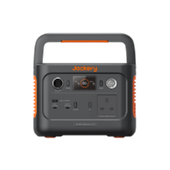


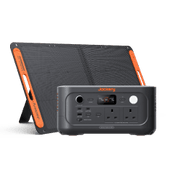
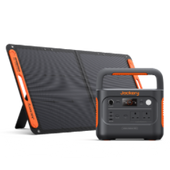
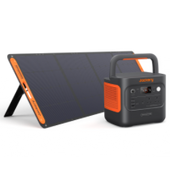
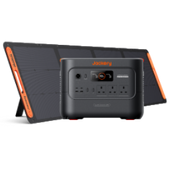
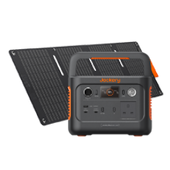


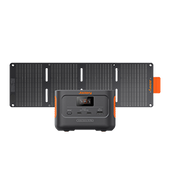
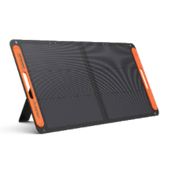
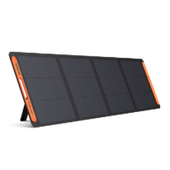
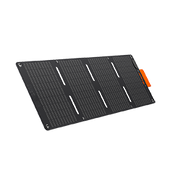
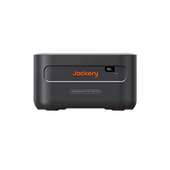
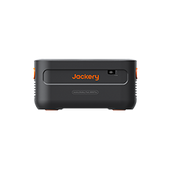





















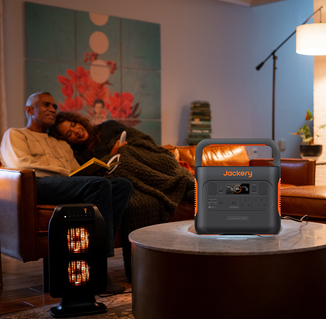






A balcony panel that lowers daytime electricity use and a portable power station that keeps a fridge or router running in a blackout may both be called “solar solutions”, but they solve different problems.
Plug-in solar is about feeding small-scale solar electricity into a home circuit for immediate use. A solar generator stores energy in a battery and supplies appliances plugged into the unit. That difference matters in the UK, where socket-connected plug-in solar rules were still developing after the government consultation issued on 16 June 2026 and closed on 30 June 2026.
This guide compares the two options by use case: bills, backup, renting, camping and long-term home storage.
|
Key Takeaways: |
|
Plug-In Solar vs Solar Generator: The Quick Answer?
A plug-in solar system and a solar generator both use solar panels, but they are built for different jobs.
- A plug-in solar system usually means solar panels connected to a microinverter, which feeds electricity into a home electrical circuit for immediate use. Its main purpose is to reduce how much electricity the home draws from the grid while the sun is shining. It is normally fixed or semi-fixed, for example on a balcony, wall, shed roof or garden frame.
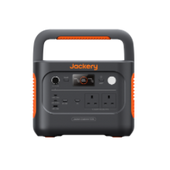
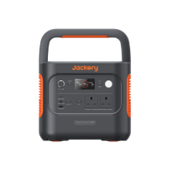
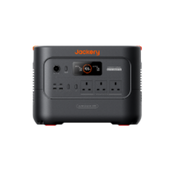
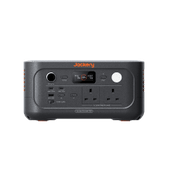
- A solar generator works differently. It combines solar panels with a portable power station that contains a battery, inverter and output sockets. Instead of feeding electricity into the home circuit, it stores energy and supplies appliances plugged directly into the unit. This makes it useful for backup power, camping, caravans, garden offices, worksites or outdoor events.
The biggest difference is timing and connection. Plug-in solar is mainly about using solar electricity instantly at home. A solar generator is about storing electricity and using it wherever the unit can be safely placed.
|
Feature |
Plug-in solar |
Solar generator |
|
Main purpose |
Reduce daytime grid use |
Store portable electricity |
|
Connection |
Home electrical circuit |
Appliances connect to the unit |
|
Battery included |
Usually no |
Yes |
|
Works during a power cut |
Normally no |
Yes, for connected devices |
|
Portability |
Limited |
High |
|
Best suited to |
Daytime home consumption |
Backup, outdoor and off-grid use |
|
UK regulatory issue |
Yes, rules are developing |
Normally treated as portable equipment |
|
Typical scale |
Small household generation |
From small electronics to high-power appliances |
Choose plug-in solar if your goal is to lower daytime grid use at home, and choose a solar generator if you want stored, portable power for devices and appliances.
What Is Plug-In Solar and How Does It Work?
A plug-in solar system is a small solar setup designed to send electricity into a home circuit for use by appliances running at that moment. It should not be confused with a full rooftop solar installation, which is usually larger and professionally installed, or with a solar generator, which stores power in a portable battery.

The normal energy path is:
Solar panels → microinverter → household circuit → appliances operating at that moment
The panels first produce DC electricity from daylight. A microinverter then converts that DC power into AC electricity, which is the type used by normal household appliances. The electricity enters the home circuit, and appliances in use at the time can draw from that locally generated power before taking any remaining electricity from the grid.
For example, if a plug-in solar system is generating 500W and the home is using 700W, the appliances may use the 500W solar output first and take the remaining 200W from the grid. If the system is generating more than the home needs at that moment, a basic plug-in solar setup usually does not store the unused electricity unless a separate battery is added.
That is why daytime use matters so much. A household with someone working from home, running a fridge, router, laptop, washing machine or dishwasher during sunny hours may benefit more than a home that is mostly empty all day.
What Is Included in a Plug-in Solar Kit?
A typical plug-in solar kit may include:
- One or more compact solar panels;
- Mounting equipment;
- A microinverter;
- A connection cable;
- A monitoring device or app, depending on the system;
- Safety and isolation features required by the applicable UK specification.
The exact contents vary, so buyers should check whether mounting parts, monitoring and safety components are included rather than judging the kit by panel wattage alone.
Where Could Plug-in Solar be Installed?
Plug-in solar is usually considered for smaller spaces where a full rooftop system is not suitable. Possible locations include a balcony, patio, garden, shed wall or roof, garage, flat roof or fence, provided the mounting is secure and wind loading has been properly considered.
External changes may need permission from a landlord, freeholder or local authority. This is especially important for flats, rented homes, listed buildings and properties in conservation areas.
What Is a Solar Generator and How Does It Work?
A solar generator is a portable power system that stores electricity and supplies it to connected devices or appliances. Its typical energy path is:
Solar panels → charge controller → battery → inverter → appliance sockets

Solar panels produce DC electricity from daylight. A solar charge controller manages how that electricity charges the internal battery. The battery stores the energy, and the built-in inverter converts it into AC electricity for appliances that use a standard plug. Many units also provide USB outputs for phones, tablets, cameras and other small devices.
A solar generator package normally includes a portable power station, a rechargeable battery, a solar charge controller, an inverter, AC sockets, USB outputs and, in some bundles, portable solar panels.
The terminology can be confusing. Strictly speaking, the portable power station is the battery-and-inverter unit. It is commonly called a solar generator when it is supplied with, or used alongside, solar panels. It does not create electricity on its own; it needs an input source. Besides solar panels, many models can also be charged from a household socket, vehicle socket or another supported charging source.
The main difference from plug-in solar is that the energy is stored first, then used by appliances connected directly to the unit.
What Can a Solar Generator be Used for?
A solar generator is useful when portable or backup electricity matters more than feeding power into a home circuit. Common uses include:
- Home power-cut preparation;
- Fridges, lighting, routers and communication devices;
- Camping and caravanning;
- Garden offices;
- Mobile trades and outdoor work;
- Photography, filming or event equipment;
- Appliances in sheds, cabins and places without a mains connection.
Larger models, such as the Jackery Solar Generator 3000 v2, are more relevant for higher-demand backup or outdoor appliance use, while smaller units may suit lighter charging and travel needs.
Plug-In Solar vs. Solar Generator: The Main Differences
Plug-in solar and solar generators both use solar energy, but they are designed for different purposes. Plug-in solar usually feeds electricity into the home to reduce daytime grid use, while a solar generator stores power in a battery for later use through its own outlets. The differences become clearer when comparing connection method, storage, portability, power-cut performance, output and typical costs.

1. Plug-In Solar vs. Solar Generator: Immediate Consumption vs Stored Electricity
The biggest difference is what happens to the electricity after it is produced. A plug-in solar system normally offsets electricity being used at that moment. If the panels are producing power while the fridge, router, laptop or washing machine is running, that solar electricity can reduce the amount drawn from the grid.
A solar generator stores electricity first. The solar panels charge the battery inside the portable power station, and the electricity is used later when an appliance is plugged into the unit. This makes it more flexible for evening use, outdoor work, camping or emergency backup.
2. Plug-In Solar vs. Solar Generator: Connection to the Home
Plug-in solar interacts with the household electrical installation and, indirectly, the public grid. This is why UK safety requirements, connection methods and developing plug-in solar rules matter.
A solar generator usually powers appliances directly through its own AC sockets, USB ports or DC outputs. It should not be connected to a home circuit using an unsafe male-to-male cable, improvised backfeeding lead or DIY arrangement. That kind of connection can create electric shock and fire risks, and may endanger engineers working on the network during an outage.
3. Plug-In Solar vs. Solar Generator: Use During a Power Cut
Grid-connected solar equipment normally shuts down when the grid fails unless the system has an approved backup arrangement. This anti-islanding behaviour helps protect the electricity network.
A solar generator can keep supplying devices plugged directly into it, because it is not relying on the home circuit. Runtime depends on three things: battery capacity, appliance wattage and conversion losses. A simple estimate is:
- Battery capacity × usable efficiency ÷ appliance wattage = estimated runtime
For example, a 3,000Wh portable power station with around 85% usable AC efficiency gives about 2,550Wh of usable AC energy.
|
Power-cut appliance |
Example wattage |
Plug-in solar during outage |
Solar generator with 3,000Wh battery, assuming 85% usable AC energy |
|
Wi-Fi router |
10W |
Normally off if grid is down |
About 255 hours |
|
LED lamp |
8W |
Normally off if grid is down |
About 318 hours |
|
Phone charging |
15W |
Normally off if grid is down |
About 170 hours |
|
Laptop |
60W |
Normally off if grid is down |
About 42.5 hours |
|
55-inch TV |
120W |
Normally off if grid is down |
About 21.3 hours |
|
Fridge-freezer |
120W running load, intermittent |
Normally off if grid is down |
Roughly 20–36 hours depending on compressor cycling |
|
Microwave |
1,200W |
Normally off if grid is down |
About 2.1 hours of active heating |
|
Kettle |
2,000W |
Normally off if grid is down |
About 1.3 hours of active boiling |
These figures are estimates, not guarantees. Fridges cycle on and off, microwaves run for short bursts, and appliances with motors may need extra surge power at start-up.
4. Plug-In Solar vs. Solar Generator: Portability
Plug-in solar panels may be removable, but they are designed to remain in a good solar-producing position: mounted on a balcony, garden frame, shed, garage or wall. Moving them every day reduces convenience and may affect safety if mounting is rushed.
Solar generators are designed to move between places. They can be used at home, in a garden office, beside a caravan, at a campsite or on a worksite. Larger models around 3kWh offer more capacity, but they can still be heavy, so portability is relative.
5. Plug-In Solar vs. Solar Generator: Power Output
Many buyers compare the wrong numbers. An 800W plug-in solar system and a 3,000Wh solar generator are not the same type of measurement.
Panel wattage shows the maximum rated solar panel output under test conditions. Microinverter output shows how much AC power can be supplied at one time. Battery capacity, measured in Wh or kWh, shows how much energy can be stored. Continuous AC output shows what the power station can run steadily. Surge output covers short start-up loads.
|
Specification |
Plug-in solar example |
Solar generator example |
|
Solar panel capacity |
400W–800W typical small setup |
200W–1,000W portable solar input depending on model |
|
AC output route |
Via microinverter into home circuit |
Via built-in AC sockets |
|
Storage capacity |
Usually 0Wh unless battery added |
500Wh, 1,000Wh, 2,000Wh, 3,000Wh+ |
|
Continuous AC output |
Often limited by microinverter rating |
Commonly 500W–3,000W depending on model |
|
Surge output |
Less relevant for home circuit offset |
Important for fridges, tools and pumps |
|
Best comparison metric |
Annual usable solar generation |
Battery capacity and output rating |
6. Plug-In Solar vs. Solar Generator: Savings vs Resilience
Plug-in solar is mainly a bill-reduction tool. Its value comes from using solar electricity as it is generated instead of buying that electricity from the grid.
A solar generator is mainly an energy-access and resilience tool. It may reduce grid use if charged from solar and used instead of mains electricity, but its financial return depends heavily on charging habits, appliance use and how often backup or portable power is needed. Backup value cannot be judged only through payback calculations, because keeping a router, fridge, phone or medical device running during an outage may have value beyond annual savings.
Assumptions for the table below: UK electricity import price 24.5p/kWh, basic plug-in solar generation 700kWh/year, 70% direct self-use, solar generator solar-charged and used 250kWh/year, and product/installation costs shown only as simple example scenarios.
|
Metric |
Plug-in solar example |
Solar generator example |
Integrated home solar storage example |
|
Example upfront cost |
£600–£1,000 |
£1,500–£3,000+ |
£4,000–£10,000+ |
|
Annual solar yield or usable energy |
700kWh generated |
250kWh used from stored solar |
1,000–2,500kWh shifted or stored, system-dependent |
|
Self-consumption rate |
50–80% depending on daytime use |
High for connected devices, but limited by battery size |
Often higher than solar-only homes |
|
Annual bill saving estimate |
700kWh × 70% × £0.245 = about £120 |
250kWh × £0.245 = about £61 |
1,500kWh × £0.245 = about £368 |
|
Simple payback estimate |
Around 5–8 years at £600–£1,000 cost |
Often long if judged only by bill savings |
Highly variable; depends on system size and tariff |
|
Main ROI driver |
Daytime home consumption |
Backup, mobility and off-grid access |
Evening self-use and tariff optimisation |
7. Plug-In Solar vs. Solar Generator: Expandability and Long-Term Use
Plug-in solar can sometimes be expanded by adding more permitted panel capacity, but UK connection rules and product specifications must be followed. Adding battery storage changes the system from simple daytime offset towards stored home energy use.
A solar generator can be expanded in a different way: extra portable solar panels may increase charging speed, and some systems support additional batteries. It can also move with the user to a new home, campsite, caravan or worksite.
Integrated home storage offers the most household-level expansion potential. For example, a modular system such as the Jackery SolarVault 3 Pro Max is more relevant where the goal is long-term home energy storage rather than portable power. A portable option such as the Jackery Solar Generator 3000 v2 fits better where backup, outdoor use or movable electricity matters more.
Advantages and Limitations at a Glance
|
Option |
Main advantages |
Main limitations |
|
Plug-in solar |
Direct bill reduction, small footprint, potentially accessible to flats and renters |
No standard storage, dependent on daytime use, evolving UK regulations |
|
Solar generator |
Stored power, portable, works independently during outages, useful outdoors |
Limited battery runtime, appliances must connect to it, higher cost per stored kWh |
|
Integrated home solar storage |
Automatic household supply, larger capacity, better evening self-use |
Higher investment, more planning and installation requirements |
Are Plug-In Solar Panels Legal in the UK?
Update: July 2026. At the time of writing, the UK government is working to enable socket-connected plug-in solar products, but the existing framework has not yet treated them in the same way as established balcony-solar systems in countries such as Germany.
The Department for Energy Security and Net Zero consultation ran from 16 to 30 June 2026 and proposed regulatory amendments plus an interim product specification for safe plug-in microgeneration products. (Data Source: GOV.UK)
The aim is to allow consumers to connect plug-in solar systems without batteries directly to a standard mains socket, provided the products meet defined safety requirements. Because implementation details may change, readers should check the latest government, manufacturer, installer and DNO guidance before buying or connecting a system.
Why Has Plug-in Solar Been Restricted?
Plug-in solar has been restricted because UK electrical and product-safety rules were not originally designed around household generation connected through an ordinary socket.
BS 7671 mainly deals with fixed electrical installations, while existing product-safety rules did not readily accommodate a device that generates electricity and feeds it into a domestic circuit via a plug.
Regulators also need to address several technical risks before plug-in solar can become a normal consumer product. These include safe isolation, anti-islanding, overcurrent protection, plug and cable design, suitable sockets, circuit loading and interaction with the public electricity network.
What May Change Under the New Framework?
The new framework may introduce a clearer route for compliant plug-in solar products. Likely areas include:
- An approved interim product specification;
- Defined power limits;
- Dedicated safety requirements;
- Consumer installation instructions;
- Possible notification or registration procedures;
- Rules for suitable sockets and household circuits;
- Clearer responsibilities for manufacturers, retailers and users.
This should help separate compliant UK-ready systems from products imported or sold without the right safety evidence.
Does G98 Apply?
Conventional small-scale grid-connected generation may fall under G98 procedures, especially where generation is connected to a household electrical installation. However, the final process for the new plug-in solar category should be checked once the government confirms the framework.
The consultation is specifically designed to create a clearer route for plug-in microgeneration, so buyers should not assume that existing rooftop-solar or balcony-solar processes automatically apply in the same way.

Which Option Saves More on UK Electricity Bills?
There is no single winner. The better choice depends on when you use electricity, whether you have sunny space, and whether your goal is lower bills, backup power or portable use. For the examples below, the electricity import rate uses Ofgem’s average Direct Debit price cap rate of 26.11p/kWh for 1 July to 30 September 2026.
How Plug-in Solar Produces Savings
For plug-in solar, the basic calculation is:
- Annual saving = solar electricity used directly × import electricity rate
A small plug-in solar system saves most when its output matches daytime demand. That might include a fridge, freezer, router, standby loads, laptop use, washing machine or dishwasher running during sunny hours. A person working from home may use more of the generation immediately than a household that is empty from morning to evening.
Panel orientation, shade and season also affect the result. A south-facing, unshaded panel in summer will perform very differently from a shaded balcony in winter. Exported electricity may have little or no value for a small non-MCS arrangement, so direct use is the key part of the saving.
How a Solar Generator May Reduce Electricity Costs
A solar generator can reduce costs by charging from portable solar panels and using that stored electricity later. It may also be charged on a low off-peak tariff where supported and economically sensible, then used during higher-rate periods. Some users also save outside the home: fewer paid campsite hook-ups, less generator fuel, or one power system shared between home, travel and work.
Losses matter. Charging and discharging through a battery and inverter means not every kWh put into the unit becomes usable AC electricity.
|
Situation |
Plug-in solar result |
Solar generator result |
|
Someone works from home during the day |
700kWh/year generation × 80% direct use × 26.11p = about £146/year |
250kWh/year solar-charged use × 85% usable output × 26.11p = about £55/year; storage may be less necessary |
|
Home empty from 8am to 6pm |
700kWh × 35% direct use × 26.11p = about £64/year |
350kWh solar-charged use × 85% × 26.11p = about £78/year if stored energy is used later |
|
Regular camping trips |
Little home relevance; perhaps £20–£50/year if panels are only useful at home |
Avoiding 15 campsite hook-ups at £6 each = £90/year, plus small solar use savings |
|
Main goal is emergency backup |
Normally unsuitable alone during outages |
A 3,000Wh unit with 85% usable AC energy gives about 2.55kWh per full charge for router, lights, phones or fridge support |
|
Constant daytime household load |
700kWh × 90% direct use × 26.11p = about £165/year |
Can work, but less direct: 250kWh × 85% × 26.11p = about £55/year |
|
No suitable sunny outdoor space |
Poor match; shaded 300kWh/year × 40% use × 26.11p = about £31/year |
Can still charge from mains, but solar saving is limited; value comes mainly from backup or portability |
Plug-in solar tends to win on simple bill reduction when the home has steady daytime demand. A solar generator looks stronger when stored power, camping, work travel or outage preparation are part of the value.
Which Is Better for Renters, Flats and Homes Without Roof Access?
For renters, flat owners and households without a suitable roof, the best option is usually the one that causes the least disruption. A traditional rooftop solar system may be difficult if you do not own the roof, cannot alter the building, or live in a block of flats. That is why plug-in solar and solar generators are often compared: both can offer a smaller, more flexible route into solar, but they solve different problems.
Plug-in Solar for Renters
Plug-in solar can look attractive for renters because it starts small. It does not need a full rooftop installation and may be suitable for a balcony, terrace, garden, shed or other sunny outdoor space. Some systems may also be removable when moving home, which makes them more flexible than fixed solar panels.
The main appeal is simple: if the system is producing electricity during the day, appliances in the home can use some of that power before drawing from the grid. For a renter who works from home or has a steady daytime base load, that can be useful.
However, plug-in solar is not automatically suitable for every rented property. A tenant may need permission from the landlord, freeholder or building management company, especially if panels are fixed to a balcony, wall, railing or shared exterior. Lease terms, building appearance rules and safety requirements can also affect what is allowed.
Solar generators for renters
A solar generator is often simpler for renters because it does not connect to fixed home wiring. Appliances plug directly into the portable power station, and the unit can move between rented homes, gardens, caravans, campsites or workspaces.
Portable solar panels can be placed outdoors only when needed, then packed away afterwards. This can suit renters who cannot make external changes to the property.
There are still limitations. Panels need safe outdoor placement with enough sunlight, and the battery must be stored and operated according to manufacturer guidance. Larger models also need storage space. A solar generator will not continuously reduce household demand unless appliances are deliberately plugged into it, so it is usually better for portable power, backup and flexible use than automatic bill reduction.

Which Is Better for Camping, Caravans and Motorhomes?
For camping, caravans and motorhomes, a solar generator is normally the more suitable option. The reason is simple: travel power needs to be portable, stored and available away from a household electrical circuit.
A solar generator stores electricity in its built-in battery, so it can be charged before departure and used later at a campsite, roadside stop, festival pitch or off-grid location. It also provides useful outputs in one unit, such as AC sockets for plug-in appliances and USB ports for phones, tablets, cameras, lights and other small electronics.
Portable solar panels can recharge the unit during the trip, provided there is enough daylight and suitable outdoor space. This makes a solar generator more practical for camping than plug-in household solar, which is designed to feed electricity into a home circuit rather than power travel equipment directly.
A solar generator can support common camping and touring needs, such as:
- LED lights;
- Phones and tablets;
- Laptops;
- Camera batteries;
- Portable Wi-Fi routers;
- Low-power cool boxes;
- Small cooking or comfort devices within the unit’s rated limits.
For higher-capacity travel power, a model such as the Jackery Solar Generator 3000 v2 may suit users with heavier appliance needs, while smaller systems can be enough for light camping and charging.
Caravan and motorhome electrics still need careful planning. Appliance demand, campsite hook-up rules, ventilation, weather protection, cable safety and the correct use of 12V and 230V connections all matter. High-power appliances such as kettles, heaters, hairdryers and microwaves can drain batteries quickly and may exceed the output of smaller units.
A plug-in household solar system should not be treated as a substitute for a properly designed caravan or motorhome electrical setup. It is built for home self-consumption, not mobile touring. For travel, stored portable electricity is usually the better match.

Can You Combine Plug-In Solar with Battery Storage?
Yes, but the details matter. Plug-in solar, portable solar generators and home battery storage are not the same thing, even though all three can involve solar panels and stored electricity.
Plug-in Solar Without a Battery
A basic plug-in solar system uses electricity as it is generated. If the panels are producing power while the home is using electricity, that solar output can reduce grid demand.
This is the simpler and generally less expensive option. It works best where daytime demand closely matches production, such as homes with people working from home, steady background loads, or appliances timed to run during daylight. The limitation is that unused electricity is not normally stored.
Plug-in Solar with Compatible Storage
Some plug-in solar systems may be designed with compatible battery storage. In that setup, excess generation can be stored and used later in the evening.
However, the storage must be part of a safe, approved and compatible configuration. Adding a random portable power station to a grid-connected plug-in solar system does not automatically create integrated home storage. Controls, isolation, charging behaviour, inverter compatibility and UK safety requirements all need to be considered.
Example assumptions: 800W plug-in solar, 700kWh annual generation, UK import rate of 26.11p/kWh, basic system cost £800, plug-in system with compatible storage cost £1,800.
|
Setup |
Annual solar yield |
Self-consumption rate |
Solar used at home |
Estimated annual saving |
Simple payback |
Approx. annual ROI |
|
Plug-in solar without battery |
700kWh |
55% |
385kWh |
£100 |
8.0 years |
12.5% |
|
Plug-in solar with compatible storage |
700kWh |
80% |
560kWh |
£146 |
12.3 years |
8.1% |
|
Plug-in solar with low daytime use, no battery |
700kWh |
35% |
245kWh |
£64 |
12.5 years |
8.0% |
|
Plug-in solar with low daytime use plus storage |
700kWh |
75% |
525kWh |
£137 |
13.1 years |
7.6% |
The battery can increase self-consumption, but the extra cost may lengthen payback unless the household has enough surplus solar and regular evening demand.
A Dedicated Home Storage System
A modular home battery is different from a portable solar generator. It can monitor household energy flows and supply stored power automatically, depending on the system design and installation. For example, the Jackery SolarVault 3 Pro Max fits this home-storage category more naturally than a travel-focused solar generator.
A useful technology ladder is:
Small plug-in solar for daytime generation → solar generator for portable storage and backup → integrated home solar and battery system for automatic household energy management.

Jackery Options for Two Different Types of Users
The choice between Jackery SolarVault 3 Pro Max and Jackery Solar Generator 3000 v2 depends on whether the user wants a household energy system or portable stored electricity. They are not interchangeable products: one is designed around home energy management, while the other is built around movable backup and off-grid power.
Jackery SolarVault 3 Pro Max for household solar and storage
The Jackery SolarVault 3 Pro Max is more relevant for readers whose needs go beyond a basic portable system. It is designed as a modular home energy-storage solution, with capacity starting at 2.52kWh and expandable to 15.12kWh in one tower. Current product information describes the SolarVault 3 Pro Max as supporting up to 4,000W of PV input, with four MPPT trackers that can help accommodate different panel orientations or partial shading. It also offers up to 2,500W bidirectional AC power on the Pro Max configuration.
This type of system suits homeowners who want solar storage to work more automatically with household demand. It may be relevant for homes with regular evening consumption, households that want to store daytime solar for later use, or users looking for a scalable system rather than a single portable battery. AC coupling can also allow integration with an existing PV setup, depending on the configuration and installation route.
It is not mainly for occasional camping or moving between locations. Its role is closer to long-term household energy management.
Jackery Solar Generator 3000 v2 for portable and backup power
The Jackery Solar Generator 3000 v2 fits a different user. It is based on the Explorer 3000 v2 portable power station, which has a 3,072Wh battery capacity, 3,600W continuous AC output and 7,200W surge output. UK product information also lists three AC outlets, USB outputs and 12V output, with supported solar charging of up to 1,000W, depending on the configuration.
This makes it more suitable for demanding camping, motorhome use, mobile work, outdoor equipment and selected household backup loads. It may suit users who need to run connected high-wattage appliances, people who cannot install a fixed home battery, or households that want emergency power they can also take outside the home.
It still has limits. Appliances must be connected to the unit, the internal capacity is fixed, and runtime depends on load size.
|
Feature |
Jackery SolarVault 3 Pro Max |
Jackery Solar Generator 3000 v2 |
|
Product type |
Modular home energy system |
Portable solar generator |
|
Main role |
Household solar storage and management |
Portable and backup electricity |
|
Starting capacity |
2.52kWh |
3.072kWh |
|
Expandability |
Up to 15.12kWh per tower |
Fixed internal capacity |
|
Output |
Up to 2,500W |
3,600W continuous |
|
Solar input |
Up to 4,000W |
Up to 1,000W |
|
Home energy automation |
Yes, depending on configuration |
Limited to connected appliances |
|
Portability |
Fixed or semi-fixed |
Portable, although relatively large |
|
Best suited to |
Long-term household use |
Backup, travel and off-grid use |
Decision Guide: Which One Suits You?
The best choice depends less on the word “solar” and more on the job you want the system to do. A plug-in solar setup, a solar generator and a dedicated home battery system each solve a different problem.
Choose Plug-in Solar When:
Plug-in solar is the better fit if your main aim is to reduce daytime electricity purchases. It suits homes where solar generation can be used as soon as it is produced.
This option may suit you if:
- You have a sunny balcony, patio, garden, shed, garage or other suitable outdoor location;
- Your home has a steady daytime base load from a fridge, freezer, router, standby devices or home-working equipment;
- You can run appliances such as a dishwasher or washing machine during sunny hours;
- You do not mainly need power-cut protection;
- You can meet the final UK product, installation and notification rules once the new framework is confirmed.
It is less suitable if the property is heavily shaded, empty all day, or restricted by lease, landlord or building rules.
Choose a Solar Generator When:
A solar generator is the stronger choice when you need stored and portable electricity. Instead of reducing household demand automatically, it gives you power where and when you connect appliances to it.
It may suit you if:
- You need portable electricity for camping, caravans, garden offices or outdoor work;
- You want backup for selected devices during a power cut;
- You travel or work away from a mains supply;
- You cannot alter your property;
- You want to store electricity and decide when to use it.
This route works especially well for users who value flexibility over automatic home bill reduction.
Consider a Dedicated Home Battery System When:
A dedicated home battery system is the better match when the goal is automatic household energy management rather than occasional portable use.
It may make sense if:
- You already have rooftop solar;
- Your solar generation is highest when household demand is low;
- You want to use more solar electricity in the evening;
- You need more storage than a small portable unit provides;
- You are planning future loads such as an electric vehicle or heat pump.
This is where a modular home system such as the Jackery SolarVault 3 Pro Max fits more naturally than a portable solar generator.
Consider Combining Solutions When:
Some households may benefit from more than one solution. A home storage system can support normal household energy use, while a portable solar generator can cover travel, outdoor work or selected emergency loads.
The key is separation: each system should have a clear role, safe connection method and suitable installation route.
FAQs
The following are the frequently asked questions about the plug-in solar vs solar generator:
1. Is plug-in solar legal in the UK?
At the time of writing in July 2026, the UK government is working on a framework to enable socket-connected plug-in solar, but the rules are still developing. Buyers should check the latest government, manufacturer and DNO guidance before purchasing or connecting a system.
2. Does plug-in solar include a battery?
Usually, no. A basic plug-in solar system normally includes solar panels, a microinverter, mounting equipment and a connection method. It uses solar electricity as it is generated. Battery storage requires a compatible system designed for safe storage and control.
3. Can a solar generator reduce my electricity bill?
Yes, but it is not usually as direct as plug-in solar. A solar generator may reduce grid use if it is charged from solar panels and used to power appliances later. It can also save money outside the home, for example by reducing campsite hook-up use. The saving depends on charging method, battery capacity, appliance demand and conversion losses.
4. Will plug-in solar work during a power cut?
Normally, no. Grid-connected solar equipment usually shuts down when the grid fails unless it has an approved backup arrangement. This helps protect the electricity network. A basic plug-in solar system should not be treated as outage protection.
5. Can a solar generator power a house?
A solar generator can power selected appliances, not usually an entire house automatically. For example, it may run a fridge, router, lights, laptop or small kitchen appliance within its rated output and battery capacity. Whole-home backup needs a properly designed system with safe switching and installation.
6. Can I plug a solar generator into a wall socket to power my home?
No. You should not plug a solar generator into a wall socket using a male-to-male cable or improvised backfeeding lead. This can create fire, electric shock and network safety risks. Appliances should be connected directly to the solar generator, unless a qualified professional installs an approved backup arrangement.
7. How large a solar generator do I need for a power cut?
It depends on what you want to run and for how long. Add up the wattage of essential devices and multiply by the hours needed. For example, a 10W router for 10 hours uses 100Wh, while a 120W fridge running intermittently may need several hundred watt-hours per day. For selected household backup loads, a 2–3kWh unit is often more useful than a small power bank, but high-power appliances need careful checking.
8. Can I combine plug-in solar with a solar generator?
You can own both, but they should have separate and safe roles. Plug-in solar is for reducing daytime household grid use, while a solar generator is for stored portable power. A portable solar generator should not be casually wired into a grid-connected plug-in solar system. Integrated storage needs compatible controls and a safe approved configuration.
Final Thoughts
Plug-in solar and solar generators are not rivals in every situation. Plug-in solar suits homes that can use solar electricity during daylight hours and want direct bill reduction. A solar generator suits people who need stored power for outages, travel, outdoor work or appliances away from the mains.
For a homeowner with existing solar panels and regular evening demand, a dedicated battery system may be the stronger long-term route. The best choice starts with one question: do you want to reduce grid use while the sun is shining, or do you need electricity stored and ready when or where you choose?


