











































A 5kW solar power system can power most household appliances, making it a practical option for meeting the daily electricity needs of a UK home. It is often a suitable choice for a four-bedroom house. Therefore, 5kW solar power systems are popular with UK homeowners for their versatility and energy-saving capabilities.
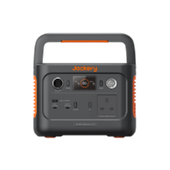
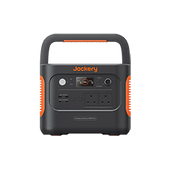
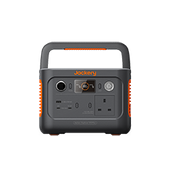
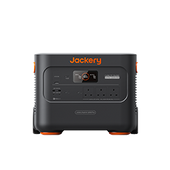
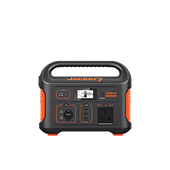
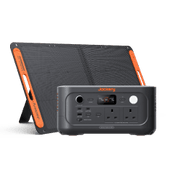
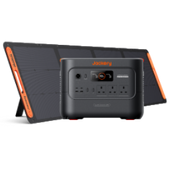
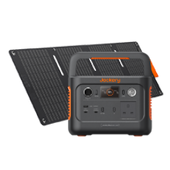
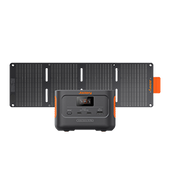
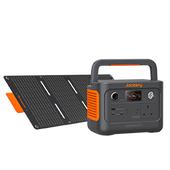
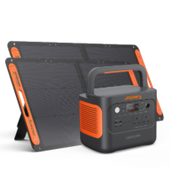
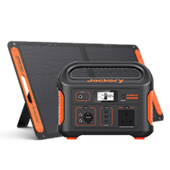
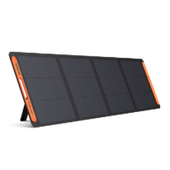
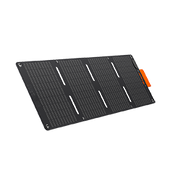
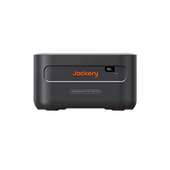
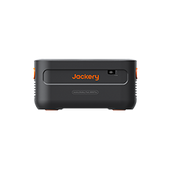
This guide will focus on the cost of a 5kW solar power system, the potential solar savings, and the number of panels required. Moreover, suppose you think solar power systems cost too much. In that case, you can consider a portable solar system, like Jackery Solar Generator, which combines Jackery Solar Panels with a Portable Power Station to turn sunlight into electricity. Wall sockets and carports can also recharge the power station on cloudy or rainy days.
|
Key Takeaways: |
|
The Basics of a 5kW Solar Power System
This section will help you better understand this new energy technology by briefly introducing the definition, system components and working principle of a 5kw solar power system. You can build a 5kW solar power system by purchasing solar panels with a total rated power of 5,000 watts (W) combined. Under standard test conditions, a 5kW solar power system can generate 5,000 kilowatt-hours (kWh) of electricity annually.
Components of 5kw Solar Power System
A complete 5kw solar power system usually consists of the following main parts:
- Solar panels: A 5kw solar power system usually requires the installation of multiple solar panels.
- Inverter: A 5kW solar power system usually has a 5kW inverter.
- Solar controller: It can manage the system's efficient and stable operation under different environmental conditions.
- Brackets: Use brackets to fix and mount the solar panels, ensuring they can receive solar radiation at the best angle.
- Wires: Suitable wires connect the different parts of the 5kw solar power system to ensure the safe transmission of current.
- Battery (optional): A 5kw solar power system usually requires a battery with a storage capacity of 11 – 12kWh.
How Does a 5kw Solar Power System Work?
The working principle of a 5kw solar power system is the same as any other solar panel system. It converts sunlight into clean electricity, so you don't have to rely on the power grid to power your home.
During the day, after receiving solar radiation, the solar panels convert light energy into DC electricity through the photovoltaic effect. The generated DC electricity is transmitted to the battery for storage (if the system includes a battery) through the solar controller or directly to the inverter for conversion. After the inverter's conversion, the DC power is converted into AC power, which is supplied to home or commercial electrical equipment or input into the power grid for grid-connected power generation.

How Much Electricity Does a 5kW Solar System Produce?
A 5kW solar system in the UK typically produces around 4,250–5,000 kWh of electricity per year, depending on location, roof angle, roof direction, shading, panel quality and weather. On average, this equals roughly 350–410 kWh per month or 11–14 kWh per day.
A UK 5kW system is often estimated at about 4,250 kWh per year, while a general UK calculation can use around 950 kWh per kWp per year, giving about 4,750 kWh annually for a 5kW system.
However, solar generation is not evenly spread across the year. A 5kW solar system will produce much more electricity in spring and summer, when days are longer and sunlight is stronger, and much less in winter. For example, summer output may be several times higher than winter output, so households still need grid electricity or battery storage during darker months and evenings.
|
Factor |
Impact on 5kW solar output |
|
South-facing roof |
Usually highest generation |
|
East-west roof |
Still useful, but output may be lower and spread across the day |
|
Shading from trees/buildings |
Can significantly reduce output |
|
Roof angle |
Around 30–40° is often practical in the UK |
|
Location |
Southern England usually produces more than northern areas |
|
Battery storage |
Does not increase generation, but helps use more solar electricity at home |
For many UK households, a 5kW solar system can produce enough electricity to cover a large share of annual household use, especially for a 3–4 bedroom home. But it does not mean the home will be fully off-grid, because solar output changes by season and time of day.
A battery can help store daytime solar power for evening use, improving self-consumption and reducing grid imports.
Is a 5kW Solar System Enough for My Home?
Yes, a 5kW solar system is enough for many UK homes, especially medium-sized households with moderate electricity use. A typical UK household uses around 2,700 kWh of electricity per year, while a 5kW solar panel system can generate roughly 4,250–5,000 kWh per year, depending on roof direction, shading, location and panel quality.
A 5kW solar system means the panels can produce up to 5 kilowatts of power under ideal test conditions. In real UK weather, output changes throughout the day and year. You will get more electricity in summer, less in winter, more from a south-facing roof, and less if the roof is shaded or poorly angled.
|
Home Type |
Is 5kW Enough? |
|
1–2 bedroom flat |
Usually more than enough |
|
2–3 bedroom house |
Usually enough |
|
4-bedroom family home |
Often enough |
|
Large home with EV or electric heating |
May not be enough |
What Can a 5kW Solar System Power?
A 5kW solar system can help power most daily household electricity needs, including lighting, Wi-Fi router, fridge, freezer, washing machine, dishwasher, TV, laptops, phone charging, small kitchen appliances and home office equipment.
It may also contribute to higher-demand appliances, but devices such as electric showers, immersion heaters, tumble dryers, ovens, heat pumps and EV chargers can use a lot of power and may exceed what solar can cover at certain times.
When Is a 5kW Solar System Enough?
A 5kW system is usually enough if your household uses around 8–15 kWh of electricity per day, you have enough unshaded roof space, and you can shift some appliance use to daylight hours. It is especially effective if you run the washing machine, dishwasher, EV top-up, dehumidifier or home office equipment when the sun is producing power.
When Might It Not Be Enough?
A 5kW system may not be enough if your home is all-electric, uses a heat pump, charges an EV daily, has high evening consumption, or has limited winter sunlight. Solar panels produce less in winter, so even a 5kW system may not fully cover heating-related electricity demand during colder months.

How Much Does a 5kW Solar Power System Cost in the UK?
Many potential investors in the UK are focused on the cost of a 5kW solar power system as a medium-sized configuration for home use. Below, we will explore the cost of installing a 5kW solar power system in the UK. The following is an analysis of the cost components of installing a 5kW solar power system in the UK.
Hardware Equipment Cost
First, hardware equipment is the main cost component of a solar power generation system. The hardware equipment of a 5kW solar power system (excluding batteries) includes solar panels, inverters, bracket systems, and other necessary components such as cables and junction boxes. According to market conditions, the cost of hardware equipment for a 5kW solar power system is between £7,500 and £8,500. (Data Source: whatcost.co.uk)
Adding batteries to a solar power system requires considerable investment. In the UK, it usually costs £9,000 – £10,000 to add batteries (11 to 12kWh) to a 5kW solar power system.
Installation Costs
Secondly, installation costs are also an essential part of the cost of solar power systems. Professional installation teams are responsible for the system's design, installation, and commissioning. Installation costs in the UK vary depending on the region, time, and installation conditions (such as roof structure and tilt angle). Still, generally speaking, the labour cost of installing a solar power system is about £600-£1,000 per day. The installation of a solar power system usually takes two to three days.
Other Costs
There are some additional costs to consider, such as system design fees (about a few hundred pounds), grid connection fees (£200 to £500), etc. This part of the cost varies significantly because of the different regions and cooperative electricity suppliers. In addition, compared with the cost of hardware equipment and installation, this part of the cost can be considered insignificant.
What Factors Affect the Cost of a 5kW Solar Power System?
The cost of a 5kW solar power system is usually affected by many factors.
- Solar Panel Types: Monocrystalline silicon panels have the highest photoelectric conversion efficiency (up to 24%), but the manufacturing process is complex, and the cost is relatively high. Polycrystalline silicon panels have a slightly lower conversion efficiency and are relatively low-cost. Thin-film solar panels are low-cost but have low conversion efficiency and poor stability.
- Number of Panels: Installing more panels means a higher initial investment cost but can also increase power output. Therefore, the number of panels must be reasonably configured according to the power demand and budget.
- Brands and Manufacturers: Solar panels from different brands and manufacturers vary in quality, performance, efficiency, and after-sales service, leading to other prices. Well-known brands and high-quality manufacturers usually provide more reliable products and extended warranty periods, but the prices are also relatively high.
How Much Can You Save with a 5kW Solar Power System in the UK?
How much money can a 5kW solar power system save you in the UK? Under ideal conditions, a 5kW solar power system can generate about 20kWh of electricity per day and 4,250kWh of electricity throughout the year (when there is plenty of sunshine).
Generating 4,250kWh of electricity is equivalent to a 5kW solar power system generating about 85% of its peak power output. However, the amount of electricity a solar power system generates depends on the location, equipment performance and solar panel efficiency. A 5kW solar power system generates enough electricity for an average UK household to meet daily needs.
A 5kW solar power system in the UK can typically save around £800-£1,200 per year, depending on how much solar electricity you use at home, how much you export, your electricity tariff, your location and whether you add battery storage.
|
5kW solar setup |
Estimated yearly saving |
|
Solar panels only, low self-consumption |
£650–£850/year |
|
Solar panels only, good daytime use |
£850–£1,050/year |
|
Solar + battery storage |
£1,000–£1,300/year |
|
Solar + battery + time-of-use tariff |
£1,100–£1,500+/year |
Actual Savings of a 5kW Solar Power System
A 5kW solar power system can reduce the reliance of UK households on the national grid, especially between March and October. Therefore, most UK households can rely on a 5kW solar power system for 8 months of the year and save more than £600. According to this data, a 5kW solar power system can pay for itself in about 11 years. (Data Source: Green Match)
Solar panels usually have a 25-year product warranty, so they can continue to make money after the break-even point.
SEG Benefits
In addition, since a 5kW solar power system generates more electricity than the energy required by the household, SEG can bring considerable benefits to UK households (grid-connected solar systems). SEG allows UK households to sell excess electricity for 1p to 24p/kWh. In the UK, a 5kW solar power system can generate SEG benefits of up to £840 per year or up to £21,000 in 25 years. (Data Source: Green Match)

How Many Solar Panels Are Needed for a 5kW Solar Power System?
To determine how many solar panels are needed for a 5kW solar power system, you first need to consider their power. Generally speaking, the power of solar panels in standard residential solar systems on the market ranges from 300 W to 500 W (or 0.3 kW—0.5 kW).
Assuming that a 300-watt solar panel is selected, the number of solar panels required for a 5kW solar power system is as follows:
Total power of 5kW solar power system/power of each solar panel = number of solar panels required
5kW/0.3 kW≈17
Therefore, about 17*300W solar panels are required to build a 5kW solar power system. Depending on the size of the panels, the following are the number of solar panels required for a 5kW solar power system:
- If it is a 300W (or 0.3 kW) solar panel, at least 17 panels are required.
- If it is a 350W (or 0.35 kW) solar panel, at least 15 panels are required.
- If it is a 400W (or 0.4 kW) solar panel, then at least 13 panels are required.
- If it is a 450W (or 0.45 kW) solar panel, then at least 12 panels are required.
- If it is a 500W (or 0.5 kW) solar panel, at least 10 panels are required.
Other Factors Affecting the Number of Solar Panels
In addition to the power of the solar panels, the number of solar panels is also affected by the following factors:
Roof Area: A 5kW solar power system usually requires a roof area of about 16m² to 34m² (each solar panel is about 1.6m² – 2m²).
Roof Orientation: In the UK, south-facing roofs receive the most sunlight. In contrast, east- and west-facing roofs can absorb sunlight, but their power generation efficiency is relatively low.
Solar Panel Tilt Angle: In the UK latitude range, solar panels should be tilted between 30 and 45 degrees to capture sunlight in both winter and summer effectively.
Shadow: Wood, buildings, chimneys, and other obstacles may decrease the efficiency of some panels' cells, affecting overall power generation.
Budget: With a limited budget, owners may need to consider the number and quality of panels or install them in stages to gradually achieve energy self-sufficiency.
Does a 5kW Solar Power System Need to Be Equipped with Batteries?
For a UK household, the decision to install a battery energy storage system for a 5kW solar power system depends on several factors. Here are a few key points to consider:

Self-Use Ratio
Suppose your goal is to maximise the self-use ratio of solar energy (solar batteries allow you to use an average of 80% of the total solar energy.). In that case, a battery energy storage system will be beneficial. Batteries can store excess electricity when the solar panels generate more than the immediate power demand for use at night or on rainy days. Equipping your solar power system with batteries will further reduce your dependence on the grid and increase your energy self-sufficiency rate.
Power Stability
The battery can provide a more stable power supply for users who require higher power stability, such as medical equipment in the home or scenarios that need a continuous power supply. Batteries can be a backup power source when the grid is out, or the solar panels generate insufficient power, ensuring the household power supply is unaffected.
Initial Cost
Equipping a battery energy storage system will increase the initial investment cost. Although battery technology has improved in recent years and the price has dropped, it is still a considerable expense. However, the break-even point of a battery solar power system is about 31.7 years. (Data Source: theecoexperts.co.uk) You need to weigh the investment payback period and long-term benefits of the battery energy storage system to decide whether to equip it with a battery.
Incentives or Subsidies
Users can determine whether the government or electricity supplier provides grid policies and incentives to help them reduce battery installation costs. For example, most British households can benefit from SEG by selling excess electricity.
In summary, no matter a 5kW solar power system needs to be equipped with a battery in the UK requires careful consideration of self-generation, power stability requirements, and economic concerns. Before making a decision, it is recommended to consult a professional solar installation company.
What Is the Payback Period of 5kW Solar Power System?
In the UK, the payback period of a 5kW solar power system is usually around 7–11 years, depending on installation cost, electricity price, export tariff, roof conditions and how much solar electricity you use at home. General UK solar payback estimates commonly sit around 6–10 years, while solar-plus-battery systems can be closer to 10–12 years because the upfront cost is higher.
The basic formula is:
Payback period = total system cost ÷ annual savings and export income
For example, if a 5kW system costs £8,000 and saves or earns about £900 per year, the payback period is:
£8,000 ÷ £900 = about 8.9 years
A 5kW solar system pays back faster when you use more electricity during the day. Running appliances such as the washing machine, dishwasher, tumble dryer, EV charger or heat pump during sunny hours increases self-consumption. A higher export tariff, good south-facing roof, little shading and rising electricity prices can also improve the return.
Jackery Solar Generators Explained
Considering the higher costs of a 5kW solar power system, ranging from £9,000 - £10,000 and even more, including the batteries, installation, maintenance, etc., we highly recommend the solar generator - a portable solar system - to try solar energy first.
Solar generators have many benefits. For environmentally aware users, they are essential since they produce clean electricity without emitting the same pollutants as traditional gas or diesel generators. Once they are up and running, they have very low operational costs. Fuel doesn't need to be purchased, and because they have fewer moving parts, they typically require less maintenance.
We recommend Jackery Solar Generators, which combines Jackery Solar Panels with Portable Power Stations to create a portable solar set. Jackery offers portable power solutions ranging from 99W to 12 kWh, capable of powering up to 99% of appliances, including washing machines, refrigerators, microwaves, etc.
Also, the Jackery Portable Power Stations are compact and easy to carry, so you can put them everywhere in your home or on your outings. Compared to gas or other traditional generators, they are safer to use, and you can even use them while sleeping.
Jackery Solar Generator 2000 v2
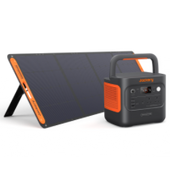
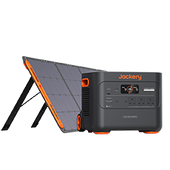
Jackery Solar Generator 2000 v2 is a combination of Explorer 2000 v2 portable power station and SolarSaga 200W solar panel. It has a 2042Wh capacity and a 2200W power output, enough to power most appliances at home or outdoors during camping, RVing, and off-grid living.

(*The working hours are only for reference; the actual working hours depend on your usage.)
Jackery Explorer 2000 v2 Portable Power Station:
With its remarkable 2042Wh capacity and 2200W output, the Jackery Explorer Portable Power Station 2000 v2 can power most home appliances. Additionally, it has two AC outlets, one USB-A 18W connector, and two USB-C ports (100W + 30W), enabling you to charge numerous devices simultaneously, including laptops and phones.
At approximately 38.6 lbs or roughly the weight of a suitcase, it is the first 2kWh LiFePO4 power station in the world with cutting-edge EV-grade CTB (Cell to Body) Structure technology⁵. It is the ideal power source for camping, road trips, and off-grid life, and it has a collapsable handle for convenient carrying.
The CTB structure allows for a compact, potent design, increasing space efficiency to 59%. Its 13.2 × 10.4 × 11.5-inch size, similar to a medium printer, makes it easy to fit in your car.
It has demonstrated resilience even in earthquakes up to 9 by passing the demanding IEC60068-3-3 seismic test. You may feel secure knowing it can manage bumps, falls, and challenging circumstances wherever you go because it is drop-resistant and built to withstand the unexpected.
Jackery SolarSaga 200W Solar Panel:
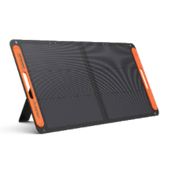
The Jackery SolarSaga 200W Solar Panel can increase solar conversion efficiency by up to 25%. It has a long-lasting ETFE-laminated case and adjustable tilt for optimal sunlight absorption. Ideal for home backup and outdoor excursions, this device is lightweight, foldable, and simple to connect to a power source.
Jackery Solar Generator 3000 v2
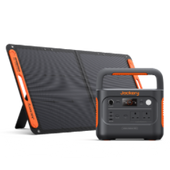
The Jackery Solar Generator 3000 v2 is built for households that want a larger portable solar power solution for home backup, emergency use, outdoor work and off-grid living. It combines the Jackery Explorer 3000 v2 Portable Power Station with Jackery SolarSaga 200W Solar Panels, allowing users to collect solar energy during the day and store it for later use.

(*The working hours are only for reference; the actual working hours depend on your usage.)
Jackery Explorer 3000 v2 Portable Power Station:
The Jackery Explorer 3000 v2 is the battery and inverter unit of the Solar Generator 3000 v2. It has a 3072Wh capacity, equal to about 3.07kWh of stored energy. This makes it suitable for longer home backup than smaller 500Wh, 1000Wh or 2000Wh power stations.
A major reason to choose the 3000 v2 is its 3600W AC output and 7200W surge power. This makes it much more capable than smaller portable power stations, especially for home backup and higher-demand appliances.
The Explorer 3000 v2 is not only for power cuts. Its portability makes it useful for outdoor solar power, garden work, caravan trips, family camping, outdoor events and off-grid living. Compared with a fixed solar battery, it can be moved where power is needed.
Delivers a massive 3072Wh while being 47% more compact and 43% lighter than similar models—easy to store at home or pack in your car for off-grid adventures. Maximise the use of solar energy by prioritising stored solar power over grid electricity, reduce grid reliance and lower your electricity bills by 22% through solar charging. Ideal for high utility costs, off-grid living, or eco-conscious users looking to save on energy.
Jackery SolarSaga 200W Solar Panel:
The Jackery SolarSaga 200W Solar Panel captures sunlight and sends solar electricity to the Explorer 3000 v2. Each panel has a 200W peak power rating, making it suitable for building a flexible solar charging setup at home, in the garden or outdoors. The SolarSaga 200W panel is listed with 200W peak power, 18V power voltage, 11.12A power current, IP68 waterproof rating, and an efficiency rate of up to 25%.
Is a 5kW Solar Power System Worth It?
In the UK, installing a solar power system is gaining increasing attention as a sustainable energy solution. However, is it worth investing in a 5kW solar power system for UK households? Here are some comprehensive considerations from multiple dimensions.
Electricity Demand
According to Ofgem, a UK household's average annual electricity consumption is about 2,700kWh. Although the UK is not as sunny as the Mediterranean or the Middle East, its light conditions are still sufficient to support the effective operation of a solar power system. A 5kW solar power system can generate about 20kWh daily electricity under ideal conditions.
However, most households' electricity consumption is not in line with the average, so make sure that the size of the system is based on current and future electricity consumption, not the average.
Roof Characteristics
When installing a solar power system, you must consider the roof's orientation, tilt angle, and shading.
In the UK, the roof is ideal for facing south and having a tilt angle between 15 and 30 degrees. It must also be free of excessive shading and large enough to accommodate all the solar panel components.
Investment and Return
The initial investment cost of a 5kW solar power system in the UK is about £7,500 to £8,500, which only includes solar panels, inverters, etc. However, various government programs, such as the SEG (Smart Export Guarantee), can subsidise the installation of solar power systems in the UK.
For British households, investing in a 5kW solar power system is worth considering. Of course, a detailed needs analysis and on-site assessment are recommended before deciding to install a system to ensure that its design and installation meet specific needs and conditions.
FAQs
The following are the frequently asked questions about the 5kW solar power system in the UK:
1. Can a 5kW solar power system power a house in the UK?
Yes, a 5kW solar power system can meet the power needs of a UK home. A 5kW solar power system (ideally generating 4,250kWh per year) will meet most of the power needs of a 3-4 bedroom house for 7-8 months of the year. But you can't quickly go off the grid because the system can't meet the house's power needs in the winter when there is less sunlight.
2. How many solar panels do you usually need for a 5kW solar power system?
For a 5kW solar power system, you need 10-17 solar panels, each with a peak power of 300W-500W. In short, the specific number of solar panels needed depends on each panel's output. The larger the output, the fewer panels are required.
3. How much does a 5kW solar power system with battery cost in the UK?
According to Green Match, a 5kW solar power system with a battery costs between £16,500 and £20,500.
4. What appliances can be run with a 5kW solar power system?
A 5kW solar power system can power most appliances in an average home, including LED TVs, refrigerators, microwaves, washing machines, etc. However, it cannot run all appliances simultaneously. If you plan to run multiple appliances simultaneously, ensure your solar power system is large enough to generate enough electricity.
5. Does rain affect solar panels?
Yes, rain affects solar panels. While it won't damage them, the thick clouds that accompany rain significantly reduce your energy production. However, the rainwater itself offers a major hidden benefit: it naturally washes away dirt, pollen, and debris, which actually boosts your panels' long-term efficiency.
6. Do solar panels charge on cloudy days?
Yes, solar panels absolutely charge on cloudy days. They generate electricity using daylight, not just direct sunlight. Because clouds scatter and diffuse light, your panels will still capture ambient photons.
Final Thoughts
To sum up, a 5kW solar power system can provide enough energy for the average UK home, which usually has 3 or 4 bedrooms. In this article, we cover everything you need to know about a 5kW solar power system, including the number of solar panels, the amount of electricity it produces, the cost of installation, and whether you should buy a solar battery. In addition to saving electricity, a 5kW solar power system equipped with a battery can also benefit from schemes such as the Solar Panel Grant and the Smart Export Guarantee.


