







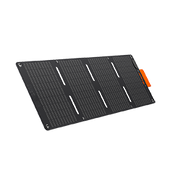
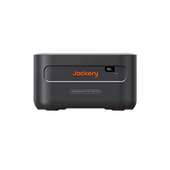


































By gathering free sunshine and converting it into residential electricity, UK residents can drastically reduce their dependency on the costly grid. However, how will your monthly electricity expenses alter once you add solar panels? In the United Kingdom, the typical monthly power expenditure can be cut by about 30%, to between £18 and £42.
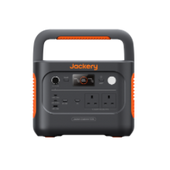
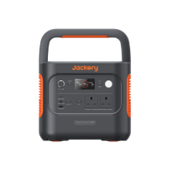
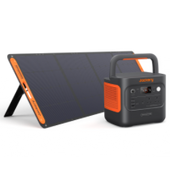
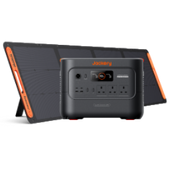
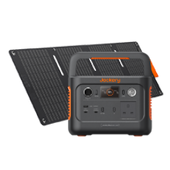
Combining solar panels and battery storage increases energy independence and savings. However, purchasing a solar battery might be very expensive. Portable solar storage systems, such as the Jackery Explorer 2000 Plus, are an option for households on a tight budget.
|
Key Takeaways: |
|
How Do Solar Panels Affect Your Electricity Bill?
Solar panels capture sunlight's energy and transform it into useable electricity for your home. As a result, it is popular solely for its ability to lower electricity costs.
Solar panels in the UK cut electricity costs primarily in two ways: by lowering the amount purchased and by selling any surplus. Here are two brief ways that solar panels impact electricity bills:
Way 1: Directly Offset Daily Electricity Usage
This is the most straightforward technique to save money. When daylight strikes your solar panels, they generate electricity. Your home will prioritise using the free electricity rather than purchasing it from the grid.This procedure minimises the amount of grid electricity you need to purchase from your energy source, lowering your monthly electricity bill.
The more solar energy your system generates and the more solar energy you consume at home during the day, the more you save. When paired with battery storage, unused solar energy can be stored for later use, such as in the evening or on overcast days.
Way 2: Smart Export Guarantee (SEG Revenue)
When your solar panels generate more electricity than you require, the excess energy can be stored or exported back to the National Grid using the Smart Export Guarantee (SEG). This means you can even earn money by selling idle energy to your energy supplier, which will help to balance your monthly electricity expense.
SEG rates vary by source, but commonly range from 1p to 30p per kilowatt-hour (kWh) exported. While export rates are often lower than purchase rates, they can nonetheless generate significant annual income.
What Is the Average Monthly Electric Bill with Solar Panels in the UK?
The average monthly electricity expenditure for UK families without solar panels is between £65 and £131, depending on expected energy usage and recent energy prices. However, UK homes who install a properly sized solar PV system should expect to cut this amount by 30% to 70%, depending on how much electricity they create and consume directly.
The following is an examination of the average monthly electricity cost for different types of residences with solar panels:

Small Homes
A 2-3kWp system is commonly installed in small homes with 1-2 bedrooms or apartments with limited roof space. These dwellings consume roughly 1,800 kWh of power each year, with an average annual electricity cost of around £783, resulting in an average monthly cost of about £65. Because of the lower total electricity consumption, solar energy can frequently pay the majority of daytime appliance costs. As a result, utilising solar panels reduces the average yearly electricity bill to around £220, or approximately £18 per month. A modest battery can also provide self-sufficiency for evening lights and television use.
Medium Homes
This is the typical UK home, using a 4kWp system. A typical 2-3 bedroom home utilises around 2,700 kWh of electricity per year, with an average yearly electricity cost of £1,304. This indicates that before utilising solar panels, you would be paying approximately £109 per month for electricity.
With solar panels covering a portion of the electricity consumption, the typical yearly electricity cost will fall to around £330, or approximately £28 per month. Installing a solar panel system with batteries can boost your self-consumption rate from 30% to more than 80%.
Large Homes
Large homes with 4-5 bedrooms usually have a 6kWp or greater solar panel installation. Their yearly electricity consumption is typically 4,100 kWh or greater, with an average annual electricity cost of roughly £1,567 (or £131 per month).
Large homes consume more electricity in absolute terms, but their larger roof areas generate much more power. As a result, with effective utilisation of solar panel systems, the average annual electricity bill for such homes may drop to around £502, or approximately £42 per month.
|
Household size |
Small; 1-2 bedrooms |
Medium; 2-3 bedrooms |
Large; 4-5 bedrooms |
|
Annual electricity usage |
1,800 kWh |
2,700 kWh |
4,100 kWh |
|
Average Annual Electricity Cost |
£783 |
£1,304 |
£1,567 |
|
Average Monthly Electricity Cost |
£65 |
£109 |
£131 |
|
Average Annual Electricity Cost After Installing Solar Panels |
£220 |
£330 |
£502 |
|
Average Monthly Electricity Cost After Installing Solar Panels |
£18 |
£28 |
£42 |
(Source: www.greenmatch.co.uk)
The above average monthly electricity cost/average monthly electricity cost after installing solar panels is an estimate calculated based on the average annual electricity cost/average annual electricity cost after installing solar panels and is for reference only.
What Factors Affect the Monthly Energy Savings of Solar Panels?
Below are some of the most critical aspects that will determine the amount of monthly savings you may expect to make by installing solar panels:

System Size and Efficiency
The size and effectiveness of your solar panel installation impact the amount of electricity you generate. Larger, more efficient systems produce more energy, which boosts savings and export potential. Under the same conditions, a 4kW solar panel system can generate more power than a 2kW system.
Seasonal Fluctuations
Solar energy generation varies throughout the year. Longer daylight hours and greater sun angles increase solar panel efficiency and output during the summer months (June to August). On the other hand, winter (December - February) brings fewer days and lower solar angles, limiting energy generation. This seasonal discrepancy affects the amount of electricity you may create and export each year.
Local Climate and Weather
The performance of solar panels in the United Kingdom is affected by regional climate changes. Areas with more sunny days have higher energy output and savings than those with frequent cloud cover. Northern Scotland receives less sun irradiation than the southern UK.
Roof Orientation and Shading
Southeast- or southwest-facing systems lose about 5-10% of their efficiency as compared to south-facing roofs. Furthermore, localised shadowing from chimneys, tree branches, and other obstructions can dramatically diminish solar panels' power generation potential.
Electricity Usage Habits
This is the most important behavioural aspect that influences the quantity of energy saved. Using appliances during peak solar power generation hours can directly replace expensive grid electricity, resulting in significant savings. If the house is empty for most of the day, the majority of the electricity will be supplied into the grid.
Electricity Price Level
The higher the grid electricity price, the more money you save on each kilowatt-hour of self-generated solar power. As a result, the economic benefits of solar systems are most noticeable during periods of high electricity prices.
Equipped with Energy Storage Batteries
Installing solar panels with energy storage batteries is a highly effective technique to increase economic efficiency. It can store extra electricity generated during the day for later use in the evening or at night, considerably improving solar energy self-consumption and often tripling electricity cost savings.
How Can You Maximise Your Electricity Savings Using Your Solar Panels?
To get the most out of your solar panels and save money on your monthly electricity bill, you should enhance power generation, optimise your electricity usage patterns, and take advantage of relevant regulations and gadgets. Here are some useful tips:

Tip 1: Adjust High-Energy Appliance Usage Times
Schedule the use of high-power appliances like washing machines, dishwashers, dryers, and electric kettles between 10 a.m. and 4 p.m., when solar power is at its greatest. This enables you to directly use free solar electricity, increasing your self-consumption ratio. To control the running time of your appliances, use smart home devices such as smart plugs.
Tip 2: Minimise Shading
Even moderate shadowing can dramatically diminish the efficiency of solar panels. Conduct a complete site inspection to identify and address any potential shading sources. Micro-inverters and power optimisers can help to reduce the impact of partial shading on overall system performance.
Tip 3: Correct the Roof Orientation and Tilt Angle
In the UK, solar panels work best on south-facing roofs. The ideal tilt angle for solar panels is typically equal to your latitude. For example, in the UK (about 51-55 degrees latitude), a tilt angle of 30-40 degrees is commonly recommended.
Tip 4: Implement Dynamic Time-of-Use Tariffs
Some suppliers provide dynamic tariffs, in which electricity rates fluctuate daily or even hourly dependent on wholesale electricity prices. These tariffs can help you save even more money if you time your energy use (or battery charging) to coincide with price drops.
Tip 5: Increase the Battery Storage
Installing a battery storage system increases your self-consumption rate by allowing you to store extra solar energy for later use during non-generating hours. This can result in significant savings, particularly when combined with a time-of-use rate. If you have a restricted budget in the beginning, try portable solar energy storage items like the Jackery Explorer 2000 Plus.
Tip 6: Regular Maintenance
In terms of cleaning, the rain will do the majority of the work, but a yearly clean is recommended to prevent harsher stains, such as bird droppings, from accumulating. You should also consider having a professional evaluate your solar panels once a year to verify they are in good working order and to fix any faults as soon as possible.
Tip 7: Utilise Smart Export Guarantee (SEG)
The SEG plan allows you to make money by exporting excess electricity generated by solar panels back to the grid. Different energy suppliers provide varying SEG rates, which can have a big impact on your savings. Compare and select the best energy provider.
Jackery Explorer 2000 Plus: Stores Excess Solar Power for Later Use
Solar panels offer numerous benefits to your home and lifestyle. Besides being environmentally friendly, installing solar panels can significantly reduce your electricity bill because they provide clean, renewable energy and reduce your dependence on the grid.
In exploring how to completely optimise your UK household electricity bill, flexible mobile energy storage solutions are becoming increasingly popular among UK households, in addition to fixed rooftop solar systems. As an industry-leading portable power solution, the Jackery Explorer 2000 Plus is extremely popular. Here are some of its key advantages:

Exceptional Expansion Flexibility: From Daily Backup to Whole-House Off-Grid
The Jackery Explorer 2000 Plus has a base capacity of 2042.8kWh, but it can connect up to 5 additional battery packs, expanding the capacity to an impressive 12kWh.
In the UK, where winter days are shorter, this flexible expansion capability means you can store more excess electricity during the sunny summer months or fully charge it via a wall outlet during off-peak hours in winter, providing power for the whole family during the evening rush hour when electricity prices are high.
High-Efficiency Solar Fast Charging: Capture Every Ray of Sunlight
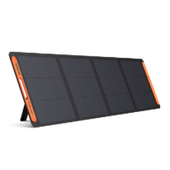
The Jackery Explorer 2000 Plus combines its advanced IBC solar technology with support for up to 1,200W of solar input. Under ideal sunlight conditions, it can be fully charged in approximately 2 hours.
This rapid charging capability ensures that even during the less-than-stellar afternoons in the UK, you can quickly harvest free electricity from your rooftop or yard, ensuring no green electricity is wasted.
Long-Life LiFePO4 Battery Technology
For users investing in long-term electricity savings, durability equals cost savings. This product uses state-of-the-art LiFePO4 (lithium iron phosphate) battery with a cycle life of up to 4,000 cycles, retaining over 70% of its capacity even after 10 years of use with daily charge-discharge cycles. This means you'll have a stable energy buffer for the next decade, without worrying about the extra costs of frequent battery replacements.
3000W Powerful Output: Covering Core Household Loads
Many small power supplies can't power high-power appliances, which account for a large portion of your electricity bill. The Explorer 2000 Plus boasts a rated AC output of 3000W (peaking up to 6000W), meaning it can easily power the vast majority of appliances in the average UK household—from coffee makers to microwaves and even energy-intensive kettles. By offloading these high-power tasks to Jackery's stored solar power, you can effectively avoid peak electricity bills.
Smart App Monitoring: Control Every Penny in Real Time
With the official Jackery app, you can monitor your power input and output in real time via your mobile phone. This digital transparency is crucial given the UK's volatile dynamic tariff policies. You can remotely manage your charging and discharging strategies via the app based on weather forecasts and electricity price alerts. This smart energy management lets you intuitively see how every kilowatt-hour of solar power translates into savings on your bill.
|
Features of Jackery Explorer 2000 Plus |
|
|
Capacity |
2042.8Wh (Up to 12kWh expandable) |
|
Cell Chemistry |
LiFePO4 4000 cycles to 70%+ capacity |
|
Weight |
61.5 lbs (27.9 kg) |
|
Dimension |
18.6 x 14.1 x 14.7 in (47.3 x 35.94 x 37.36 cm) |
|
Output Ports |
AC Output: 3 Ports, 230V~ 50Hz, 13A Max, 3000W Max, 6000W surge peak USB-A Output: 2 Ports, Quick Charge 3.0, 18W Max, 5-6V⎓3A, 6-9V⎓2A, 9-12V⎓1.5A USB-C Output: 2 Ports, 100W Max, 5V⎓3A, 9V⎓3A, 12V⎓3A, 15V⎓3A, 20V⎓5A Car Port: 12V⎓10A DC Expansion Port Output: 32.2V-50.4V⎓97A Max |
|
Recharging Methods |
Solar Charging: 2.4 H Wall Charging: 2 H Car Charging: 25 H |
|
Operating Temperature |
Charge Temperature: 0°C~45°C (32°F~113°F) Discharge Temperature: -10°C~45°C (14°F~113°F) |
Customer Review:
"I bought the Jackery Explorer 2000 Plus as a home backup power solution in the UK, and it has been a really reassuring addition to the house. One of the main reasons I chose it was the growing concern around power cuts and rising energy costs, and so far it has done exactly what I hoped it would do. It feels reliable, well made, and easy to use, even if you are not particularly technical.
What I like most is that it gives me peace of mind. During short outages or when I want backup power ready, I can run essentials like the fridge, Wi-Fi router, phones, laptops, lights, and small kitchen appliances without stress. For a UK household, that makes a real difference, especially in winter or during bad weather. The capacity feels generous for home use, and the option to expand it later is a big advantage if you want something more future-proof."
Can You Completely Eliminate Electricity Bills Using Solar Panels?
Technically, yes, but it is unusual. Some homeowners that consume little electricity and continuously export under the Smart Export Guarantee SEG scheme may be able to pay very low or even no monthly electricity bills, although this is dependent on your unique use and system performance. Even if solar power can totally meet your electricity needs, it is impossible to reach a zero-bill.
Why Is It Very Impossible to Entirely Cut Your Electric Bill?
Here are some of the primary reasons why it may not be able to entirely eliminate your electricity cost.
- Day and Night Cycles: Solar energy is most effective during the day, yet peak electricity demand for a typical UK family is between 5:00 PM and 9:00 PM. Without storage, you'll be wasting free electricity and paying more for it at night.
- Seasonal Changes: In the United Kingdom, the sunshine in December is only a tenth of that in June. Even with a high number of panels, it is difficult to avoid purchasing electricity from the grid during the winter. If you use a heat pump or electric heating in the winter, your power consumption will increase.
- Standing Charges: You must face the realities of standing charges. As long as you are linked to the national grid, you must pay this fee. This cost is regardless of how much electricity you use, unless you entirely withdraw from the grid.
Can Adding Batteries Erase Your Entire Electricity Bill?
Adding batteries will get you far closer to zero electricity expenditures. Without batteries, you typically only use 20%-30% of the electricity generated by your solar panels. With batteries, the rate rises to 60%-80%. But that's it. If you want to use batteries to store electricity to meet all of your household needs, you'll probably need a 15kWh, 20kWh, or greater model. Furthermore, guarantee that sufficient solar energy is transformed into usable electricity.

Are Solar Panels Right for You?
Solar panel installation is a long-term investment for your home. A variety of factors influence whether or not it will yield the intended return. Before making a selection, we recommend that you do a self-assessment of the following critical aspects.
Your Electricity Usage Patterns
Is anyone home during the day? Solar panels are perfect for people who work from home throughout the day or can set dishwashers and washing machines to run at midday. If you rarely use electricity, the costly system installation could take 15 years to pay off. In contrast, whether you have an electric vehicle (EV) or a heat pump, solar panels are required.
Home Characteristics
South-facing roofs are preferable, however east-west facing roofs can attain approximately 80% efficiency. North-facing roofs are generally not advised in the UK due to the substantially longer payback period. Are there any large trees, chimneys, or adjacent structures nearby? Even a small patch of shade on one panel can significantly reduce the overall system's output.
Budget
A typical solar photovoltaic (PV) system installation costs between £5,000 and £7,000, depending on the amount of solar panels used and whether battery storage is included. Adding batteries raises the initial cost by £2,000 to £5,000, but increases your self-consumption rate to 80% or more. Alternatively, consider portable solar storage devices such as the Jackery Explorer 2000 Plus. You can also charge the batteries during off-peak electricity rates in winter.
Will You Move Soon?
How long will you stay? While solar power can enhance your home's EPC rating and boost its value, if you want to sell within two years, you may not be able to return your initial investment in electricity savings. It is generally advised that it be installed in homes where you plan to live for at least five years.
|
Solar power is a great fit for you if: |
You should think twice if: |
|
A south-, east-, or west-facing roof with no major obstructions |
Your home is rented or you plan to move within a short period (within 2 years) |
|
Planning to install batteries to optimise nighttime electricity use |
A north-facing roof or completely obstructed by tall trees |
|
Own an electric car or use electric heating (heat pump) |
You are rarely home during the day |
|
Have a start-up budget of £5,000+ |
You do not plan to buy batteries |
If your home has a perfect south-facing, unobstructed roof, you have a significant budget for the initial expenditure, and your lifestyle or desire to equip your home with batteries allows for a high rate of self-consumption, solar panels are likely a worthwhile and prudent choice for you.
FAQs
The following are the frequently asked questions about average monthly electric bill with solar panels in the UK.
1. Why is my electricity bill so high when I have solar panels in the UK?
If you have installed and are utilising solar panels but your electricity bill remains high, there are several possible reasons:
- Your solar panels could be producing less than expected.
- You use the majority of your electricity at night.
- Your household uses more electricity than before.
- Seasonal changes can impact solar savings.
- Fixed utility charges and increasing electricity rates.
2. What is the 20% rule for solar panels?
The 20% rule for solar panels is a design guideline that states that a solar array should be sized to generate around 20% more electricity than the average household's consumption. This includes a 20% "buffer" to accommodate for energy losses due to shading, dust, poor inverters, or increased usage, such as EV charging.
3. What is the biggest downside to solar electricity?
The main disadvantage of solar power is its intermittent nature, which generates electricity only when there is enough sunlight. Although prices have dropped, the initial cost of purchasing and installing solar panels and energy storage batteries remains considerable. Without pricey energy storage batteries, there will be no power at night, forcing reliance on the grid or sunny weather.
4. Is 10kW enough to run a house?
In most typical UK homes, 10kW is not just sufficient, but more than adequate. 10 kW indicates you can run the following items concurrently without tripping the circuit breaker.
An oven (2.5 kW).
An electric kettle (3 kW)
A washing machine (2 kW).
A dishwasher (2 kW)
Final Thoughts
While totally eliminating electricity bills in the UK is highly difficult, lowering monthly rates by tens of pounds with a combination of solar panels and batteries is now a reality. Whether you own a separate villa with a large roof or a low-cost modest home, proper energy management and behavioural modifications are critical to maximising savings.
For families looking for flexible energy solutions, the Jackery Explorer 2000 Plus, with its powerful scalability and 3000W output, offers a closed-loop energy storage solution that does not require complex construction, making it ideal for managing peak electricity prices and providing emergency backup power.


![5kW Solar Battery Price in the UK [2026 Update]](http://uk.jackery.com/cdn/shop/files/5kw_solar_battery_price.png?v=1776306774&width=90)


