


































Even if you don't use much electricity, your energy bill will include a small daily charge, known as a standing charge. Standing charges for energy are the monthly fees you pay to cover the costs of physically delivering electricity to your home and maintaining it connected to the energy network.
The standing price for power can range from 5p to 60p per day. In the first quarter of 2026, the South had the cheapest standing charge in the UK, with users paying just 45.70 pence a day. However, this is simply a guideline, because different energy suppliers levy varying standing prices.
|
Key Takeaways: |
|
What Are Standing Charges?
Almost all energy bills consist of a unit rate (what you pay for each unit of electricity you use) and a daily standing charge. A standing charge is a predetermined daily fee you pay to remain connected to the power grid. It appears on your statement every day, even if you consume no energy. Standing charges typically cover:
- Maintaining the energy grid and pipelines.
- Meter readings and the related administrative costs.
- Government energy programs, such as renewable energy initiatives.
Standing charges may appear insignificant on a daily basis, but they accumulate over time, making them a crucial consideration when comparing energy programs.
How Do Standing Charges Work?
Your energy plan's standing charge is a payment you make to your supplier for the reasons stated above. It may appear on your energy account as a standing charge or as a "daily unit rate". In the UK, this charge is restricted by Ofgem's price cap, which determines the maximum amount suppliers can charge for both your daily standing charge and the unit rate of energy.
Suppliers can choose to charge less, and the actual amount varies by region and method of payment. For example, an energy standing charge in Southern England may be limited to 42.30p per day under the price cap, whereas the similar rate in Southern Scotland may be 54.25p. This reflects disparities in energy transportation and infrastructure maintenance across regions.
Why Do Standing Charges Electricity Vary by Regions?
Standing charges for power on your energy bills can vary by area. This regional disparity is mostly attributable to the varying costs of energy services across different geographic areas. Here's a closer look at the elements influencing the geographical variation in standing charges electricity:

Infrastructure Complexity
Regions with more complicated or extensive infrastructure may face higher standing charges for energy due to increased maintenance and operation costs. For example, maintenance expenses for electricity infrastructure in the Scottish Highlands are higher than in comparable plains locations.
Supplier Competition
Areas with more competition among energy suppliers may see reduced standing charges for electricity as vendors compete for consumer preference by offering more appealing rates.
Provider-Specific Policies
Some providers provide tariffs with no standing charges for electricity or lower rates as part of special agreements aimed primarily at low-energy users.
Distance From Energy Sources
The greater a region's distance from energy producing sources, the more expensive it is to deliver electricity to its residents. This may result in higher standing charges for clients residing in remote or rural locations.
Population Density
In densely inhabited locations, the expense of maintaining energy infrastructure is distributed among a larger number of consumers, perhaps resulting in reduced standing charges. In contrast, in less densely populated locations, costs are shared across fewer consumers, perhaps leading to higher standing charges.
Local Regulations and Taxes
Local government rules and taxes may also have an impact on standing charges. Regions with greater regulatory compliance expenses or taxes may pass these costs on to customers through increased standing charges.
What Is the Cheapest Standing Charge Electricity in the UK?
The standing charge on your electricity account is a fundamental service price that you must pay every day, regardless of whether you use electricity. The standing charge for electricity can range from 5p to 60p every day, which can add a significant amount to your energy bill. The following study of the UK's lowest current standing charge electricity tariffs is provided for reference purposes only.
Region - What Is the Cheapest Standing Charge Electricity in the UK?
Looking at energy rates by region, the cheapest standing charge power in the UK is in the south, where users pay only 45.70 pence per day. This is most likely owing to the region's more stable grid infrastructure, which requires less maintenance than London and the densely crowded urban regions along the southeast coast.
Furthermore, the region is projected to gain from renewable energy integration, which reduces local grid pressure and lowers system balancing costs. North Wales and Merseyside often have the highest standing charges in the UK.
|
Region |
Electricity daily standing charge January to March 2026 |
|
North West |
52.22 pence per day |
|
Northern |
60.93 pence per day |
|
Yorkshire |
59.72 pence per day |
|
Northern Scotland |
62.07 pence per day |
|
Southern |
45.70 pence per day |
|
Southern Scotland |
57.62 pence per day |
|
North Wales and Mersey |
71.01 pence per day |
|
London |
47.11 pence per day |
|
South East |
48.66 pence per day |
|
Eastern |
49.33 pence per day |
|
East Midlands |
50.17 pence per day |
|
Midlands |
54.08 pence per day |
|
Southern Western |
55.11 pence per day |
|
South Wales |
52.75 pence per day |
(Source: Ofgem)
Note: Even within the same southern region, standing charges vary by postcode.
Electricity Suppliers - What Is the Cheapest Standing Charge Electricity in the UK?
Aside from regional differences, standing charges fluctuate slightly between providers. This is dependent on their pricing structure and the permissible price rise.
Among several energy providers, Fuse Energy's January 2026 Fixed (13m) v3 offers an unusually low standing charge of 37.45 pence per day. However, some requirements must be met in order to take advantage of such a low price. Therefore, contact Fuse Energy for additional information.
The following is a list of energy suppliers with the lowest daily standing charges on their electricity prices.
|
Supplier |
Tariff |
Standing Charge (Daily) |
Standing Charge (Yearly) |
|
Fuse Energy |
January 2026 Fixed (13m) v3 |
37.45p |
£136.69 |
|
EDF Energy |
Simply Tracker Mar27 |
40.25p |
£146.92 |
|
Fuse Energy |
January 2026 Fixed (12m) v3 |
40.55p |
£148.01 |
|
So Energy |
So Myrtle One Year – Green |
41.74p |
£152.37 |
|
So Energy |
So Myrtle 18 Month – Green |
44.46p |
£162.29 |
|
E.ON Next |
Next Fixed 12M V111 |
44.78p |
£163.45 |
|
E.ON Next |
Next Gust 12m V44 |
44.78p |
£163.45 |
|
British Gas |
Longer Fix Feb28 v1 |
45.33p |
£165.45 |
(Source: The Energy Shop)
The standing charges displayed above are only for comparison purposes.
How to Check Your Standing Charge Electricity?
Knowing the standing charges on your energy statement is critical for getting a full picture of your total energy costs. Here are some practical ways to check your standing charge:

Method 1: Review Your Energy Bill
Your standing charge will appear on your monthly or quarterly energy statement. It is commonly referred to as a 'daily standing charge' or 'daily unit rate'. Look for this information in the charge breakdown section of your bill. If you have an online account with your energy provider, you can log in to examine your invoices and standing charges. This information is frequently found in the billing area of your account.
Method 2: Contact Your Supplier
If you can't find the information on your bill or have any questions, contact your energy supplier. Request a thorough breakdown of your standing charges from your supplier. They can supply you with information on your standing charge and explain how it is computed. They can even provide particular specifics about the charges covered by the standing charge.
Method 3: Use Comparison Websites
Energy comparison websites, such as Comparethemarket and Moneysupermarket, can provide an overview of the standing charges offered by several suppliers in your area. While this may not offer you the precise amount of your standing charge, it can serve as a good comparison. It can also be useful for comparing alternative tariffs or suppliers, allowing you to select the most cost-effective option for your energy supply.
Are There Tariffs with Low or Zero Standing Charges?
As the name implies, a no-standing charge tariff will keep your standing charges at zero during your contract. This means you'll only be charged for the energy you consume, with no daily fees to pay. Other names include "no standing charge electricity." If you're looking for an energy deal without a standing charge, searching for a British Gas no standing charge agreement or an EDF Energy zero standing charge offer may yield no results.
Which Providers Offer Zero Standing Charge Tariffs?
There are two companies which offer 'no standing charge' rates, but they are likely only worthwhile if you do not use energy for long periods of time and require a prepayment meter. Only Utilita and E Energy provide a zero standing charge option for prepay customers. Utilita's tariff is more expensive for traditional prepayment meters, while E Energy's tariff is only available for smart prepayment meters.
'Low Standing Charge' Tariff: Alternative to Zero Standing Charge Tariff
EDF Energy offers a 'low standing charge' price that saves you a fixed £50 on standing charges under the Price Cap, regardless of energy use, payment method, or region.
It is a Price Cap tracker, which means that the unit rates you pay for electricity exactly match the Price Cap, but the standing charge costs remain £50 (£25 for each fuel) less than what is allowed under the Cap - thus if the Cap rises, so will this tariff.

Should I Switch to a Tariff with no Standing Charges Electricity?
Although zero standing charges appear to be a wonderful deal, they are not necessarily the most cost-effective solution for every home. The answer is all about how much energy you use. It's important to consider the following trade-offs.
What Are the Advantages of a No Standing Charge Tariff?
The main advantage of a no standing charge tariff is that you only pay for the energy you use, so if you don't use electricity for an extended length of time, you won't be charged anything. Another advantage of tariffs with greater standing charges is that they typically have lower energy usage rates. This can be beneficial for energy-intensive homes because the lower unit cost helps to reduce the overall bill.
What Are the Disadvantages of a No Standing Charge Tariff?
If you don't pay any standing charges, your electricity will likely be more expensive. This means that if you use nothing in a day, you won't have to pay anything. However, if you have any degree of use (even if it is very low), you will essentially be paying a standing charge through the higher unit rates, especially if you are a medium-to-high energy customer.
Conclusion: 'Zero standing charge' tariffs are often preferable for persons who go several days without using any power, as they allow you to avoid paying anything on those days. If you have a property that is unoccupied for a significant portion of the year, such as a garage separate from your home or a flat that is only used a few months per year, it is worth considering a plan with £0 standing charges.
Besides Avoiding or Reducing Standing Charges Electricity, What Other Ways Are There to Reduce Energy Bills?
Aside from avoiding or minimising standing charges, you can reduce your energy cost at the source: by optimising your energy consumption. Here are some methods for optimising your energy consumption.
Lower the Thermostat by 1°C
Lowering your main thermostat by one degree can save you approximately 10% on your energy cost. Please be aware that the government recommends that the rooms you use the most, such as your living room, be at least 18°C.
Reduce the Consumption of Hot Water
Heating hot water requires energy, so you can limit your hot water consumption. Consider taking shorter showers, using a water-efficient shower head, setting your hot water cylinder to 60-65°C, and so on.
Solar Energy Generation for Self-Use
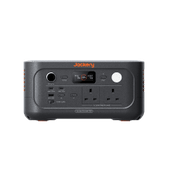
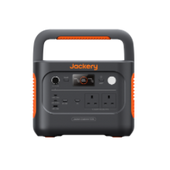
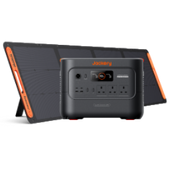
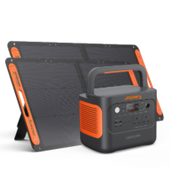
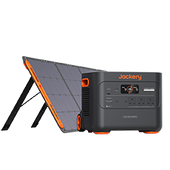
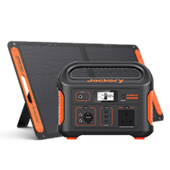
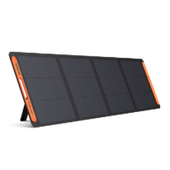
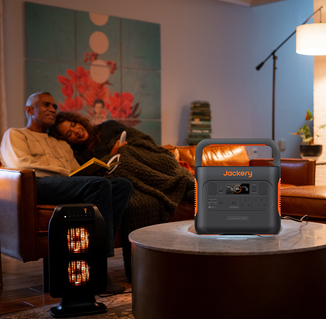
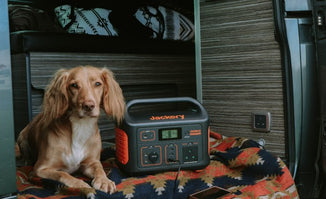
A solar energy system (for example, the Jackery Solar Generator 3000 v2 and 2000 Plus) can store energy generated throughout the day via sunlight and power your home appliances later, cutting unit costs and mitigating the impact of the standing charge.
A Jackery Solar Generator is a flexible, portable, and cost-effective way to reduce electricity bills in the UK. By generating and storing your own solar energy, you can:
Cut reliance on expensive grid power.
Avoid installation costs.
Use clean, renewable energy anywhere.

Look to Enhance Insulation
You can also try these simple techniques to keep heat from escaping: set draught blockers around windows and doors to keep heat out and cold air in; and hang heavy drapes and sealed blinds to trap heat.
In addition to optimising energy consumption, if you're having trouble, check at resources like the Warm Home Discount or your supplier's hardship funds. They will not abolish the standing charge, but they will alleviate the burden on your overall cost.
Jackery Solar Generators for Saving Your Electric Bills
Electricity prices in the UK are relatively high and fluctuate due to energy market conditions. A Jackery Solar Generator allows you to generate your own power from sunlight, reducing how much electricity you buy from the grid.
- Use free solar energy during the day
- Power essential appliances without drawing from the grid
- Lower your monthly energy bills over time
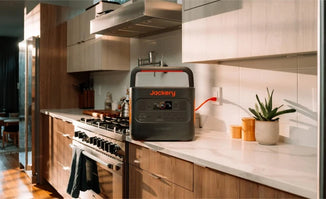
For households facing rising tariffs, this can significantly cut annual costs. UK energy tariffs often have peak and off-peak pricing. A solar generator lets you store energy when it’s cheaper (or free from solar) and use it later. Jackery systems can be used anywhere, not just at home:
Indoor use (kitchen appliances, laptops, routers)
Outdoor use (garden, camping, vanlife)
Backup power during outages
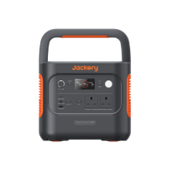
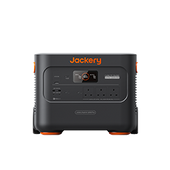
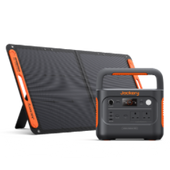
Jackery Solar Generator 3000 v2
The core advantages of the Jackery Solar Generator 3000 v2 are as follows:

Large Capacity, Long-Lasting Power: The Jackery Solar Generator 3000 v2 is equipped with a 3072Wh large battery capacity, which can easily support key devices such as refrigerators (running for 24-48 hours), laptops (running for 48 hours), and wireless routers (running continuously for 66 hours), meeting the basic electricity needs of the household.
High Power Output and Strong Compatibility: The Jackery Solar Generator 3000 v2 supports a pure sine wave output power of 3600W (peak power 7200W), capable of driving high-power appliances such as microwave ovens, electric kettles, and coffee makers, truly achieving off-grid living without degradation.
Ultra-Fast Solar Charging and Energy Self-Sufficiency: The Jackery Solar Generator 3000 v2 supports up to 1000W of solar input. Paired with a SolarSaga panel, it can be fully charged in 3.5 hours, fully utilizing the UK's abundant sunshine and making electricity bills reflect sunlight.
Utilizing Advanced CTB Technology to Improve Space Utilization: The Jackery Explorer 3000 v2 Portable Power Station is 47% smaller (16.4 x 12.8 x 12 in) and 43% lighter (59.5 lbs) than comparable products – making it easy to store at home or pack in your car for outdoor adventures. It also features an ergonomic handle for easy transport to balconies, patios, or mobile homes.
Smart Monitoring and Home Energy Storage Scalability: The Jackery Solar Generator 3000 v2 supports remote monitoring of power, charging status, and power consumption via the Jackery App; it can prioritise using stored solar energy instead of grid power, maximizing solar energy utilization and reducing electricity bills by 22% (for reference only).
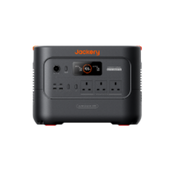
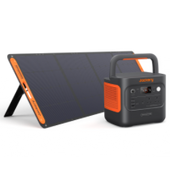
Jackery Solar Generator 2000 Plus
The core advantages of the Jackery Solar Generator 2000 Plus are as follows:

Optimal Capacity, Precisely Matching Daily Needs: The Jackery Solar Generator 2000 Plus is equipped with a 2042Wh battery capacity, enough to support 70 charges for a mobile phone (29W), 15 charges for a laptop (80W), and about 3 hours of operation for a refrigerator (520W), meeting basic household electricity needs.
Multi-Mode Charging, Seamless Energy Replenishment: The Jackery Solar Generator 2000 Plus supports three charging methods: solar, mains power, and vehicle charging. On cloudy days or during winter when sunlight is insufficient, charging can be taken advantage of off-peak electricity rates at night to further optimise costs.
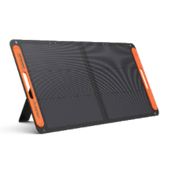
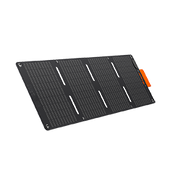
Fast Charging, Outstanding Efficiency: The Jackery Solar Generator 2000 Plus, equipped with six SolarSaga 200W solar panels, can be fully charged in just 2 hours. Its solar panels feature bifacial power generation and industry-leading bifacial IBC technology: unaffected by sudden weather changes, it can generate electricity even in low-light conditions.
Intelligent Safety and Long-Life Design: The Jackery Solar Generator 2000 Plus features innovative ChargeShield 2.0technology, providing 62 protections to enhance the safety of every energy use. Its built-in high-quality lithium iron phosphate battery, designed for durability, ensures a lifespan of up to 10 years even with only one use per day.
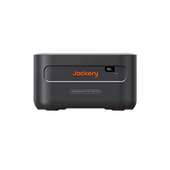
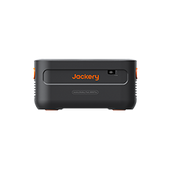
Scalable Power for Various Needs: A single Jackery Explorer 2000 Plus power station can support up to five additional battery packs, expanding capacity from 2 kWh to an impressive 12 kWh, making it ideal for home backup power, outdoor use, and extended power outages.
FAQs
The following are frequently asked questions about the cheapest standing charge electricity in the UK.
1. What is the average standing charge for electricity in the UK?
The average standing charges for all payment methods under the Price Cap as of January 1 are shown below.
|
Payment Method |
Average Standing Charge for Electricity |
|
Direct Debit |
54.75p per day |
|
Prepayment |
54.75p per day |
|
On receipt of a bill |
62.97p per day |
(Source: www.moneysavingexpert.com)
2. Is it better to have a cheaper standing charge or unit rate?
For homes with significant electricity consumption, a lower unit price is usually more cost-effective. For households with little use, a smaller standing charge may be more cost effective.
3. How much is octopus electricity standing charge?
The variable tariff carries a daily standing fee of 45.78p. The rates are correct as of January 2026, based on variable standard tariff costs for a residence in the London area paid by direct debit. Prices may vary by region and payment option.
4. What is the maximum daily standing charge for electricity?
Under the current Ofgem price-cap era (January 1 to March 31, 2026), electricity standing charges vary by location. The North Wales and Mersey region has the highest electricity daily standing charge on a default tariff paid by direct debit, at 71.01 pence per day. (Source: www.ofgem.gov.uk)
Final Thoughts
Standing charges may appear tiny, but they compound over time and eventually increase your overall annual energy cost. If you own a property that is unoccupied for a significant portion of the year, you might choose a plan with £0 standing charges.
Furthermore, you can reduce your energy bill at the source by optimising your energy consumption. We advocate employing solar power devices such as the Jakery Solar Generator 3000 v2 and 2000 Plus, which can power your appliances during the day with solar energy while also storing excess solar energy for later use at night.


