






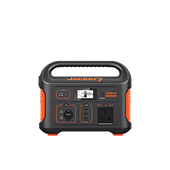
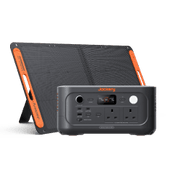
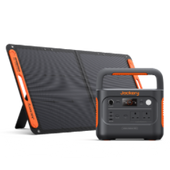
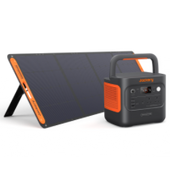
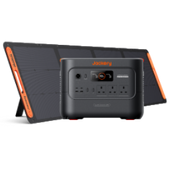
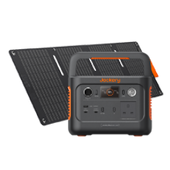
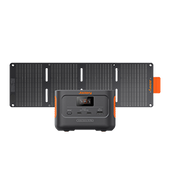
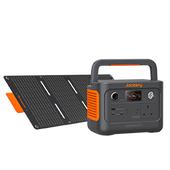
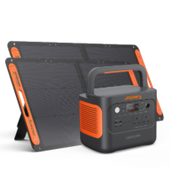
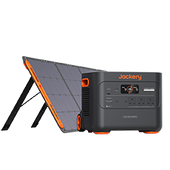

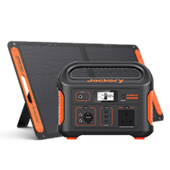
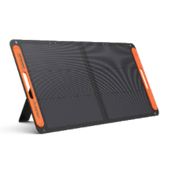
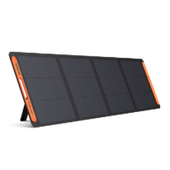
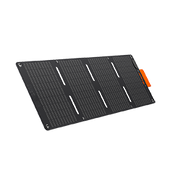
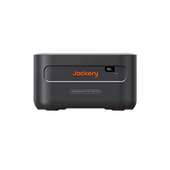
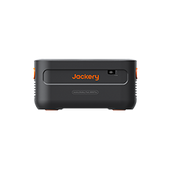



































The average household refrigerator consumes 250kWh of electricity annually and requires 200W of solar panels. A 100Ah battery would also be required as a reservoir to provide surplus current for the compressor motor and to power the refrigerator through the night when the solar panel is not producing power.
Alternatively, you can choose a solar generator with solar panels and a power station so that you do not need to find the appropriate inverter, battery, or charge controller to solar-power your refrigerator. Before disconnecting your refrigerator from the utility, however, you must determine how many solar panels and other solar power system components you require.
This comprehensive guide covers everything you need to know about solar panels for refrigerators. We highly recommend Jackery Solar Generators to power your refrigerator with high capacity.
|
Key Takeaways: |
|
Can I Run A Refrigerator with Solar Panels?
Yes, solar power can power various household appliances, including a standard refrigerator, a mini-fridge, or an RV refrigerator.
It would be best to use solar power with a solar panel, a battery, an inverter, a charge controller, or a solar generator. Solar panels can transfer sunlight into electricity, but there is a power station or battery to store energy and power a refrigerator. A solar generator could be the best option for charging the refrigerator with solar power, combining solar panels with a power station.
Solar energy is an excellent resource that is gaining in popularity daily. Solar power is never exhausted because it is a renewable energy source. Solar energy is environmentally friendly. It emits no carbon dioxide. In addition, solar energy can lessen your reliance on the utility and lower your electricity bill.
Although you can use solar power to run a refrigerator, it is essential to know how many watts it uses and how much solar energy it requires. Keep reading, and you will learn the answer.
How Many Solar Panels Do I Need to Run A Refrigerator?
How many solar panels to run the refrigerator? Solar panels are an effective method to lower your electricity bill and help the environment. However, how many solar panels are needed to fuel a fridge? Depending on the size of your refrigerator and the amperage of your solar panels, the number of solar panels required will vary.

Before determining how many solar panels are required to power a refrigerator, you must calculate the following:
- How many watts does a refrigerator use?
- How many watts do solar panels generate?
- How many peak sun hours do you receive?
- How much solar power does your refrigerator need?
How Many Watts Does A Refrigerator Use?
Most refrigerators in the United States include an EnergyGuide label that estimates their Annual Energy Consumption (kWh/year), which can be used to calculate their daily energy consumption (kWh/day).
For instance, this refrigerator's label indicates an "Estimated Annual Electricity Use" of 600 kWh. To calculate the daily energy consumption of this refrigerator, we divide its estimated annual energy consumption by 365 (the number of days in a year):
Estimated Daily Energy Consumption = 600 kWh ÷ 365 = 1.644 kWh/day = 1644 Wh/day
It is the easiest and quickest method, but you can also calculate your refrigerator's energy consumption using the manufacturer-supplied electrical specifications.
A modern, energy-efficient fridge typically uses between 100 and 250 kWh per year, depending on size and model. This translates to approximately 0.27 to 0.68 kWh per day.
|
Product |
Size |
Annual Energy Consumption |
Daily Energy Consumption |
|
Small Fridge |
4.5 Cubic Feet |
237 kWh/year |
650 Wh/day (0.65 kWh/day) |
|
Middle Fridge |
12 Cubic Feet |
312 kWh/year |
850 Wh/day (0.85 kWh/day) |
|
Large Fridge |
27 Cubic Feet |
728 kWh/year |
2000 Wh/day (2 kWh/day) |
(The data is only for reference)
How Much Energy Does A Refrigerator Use?
Here is a reminder of the distinction between electrical power and electrical energy to avoid confusion:
- Electrical Power: measured in Watts (W) or kiloWatts (kW), represents the electricity consumption rate.
- Electrical Energy: measured in Watt-hours (Wh) or kiloWatt-hours (kWh), electrical energy is consumed over a given period. Power (Watts or kiloWatts) and Energy (Watt-hours or kiloWatt-hours) have the following relationship:
Energy Consumption (Wh) = Power Consumption (Watts) x Duration of Use (Hours).
For instance, if you have a 500W refrigerator that you use 8 hours per day, the daily energy consumption would be 500W x 8H = 4000Wh (4kWh).
As previously explained, a refrigerator's power consumption is the rate at which it consumes electricity. While older refrigerators can consume up to 700 Watts of power, newer, more energy-efficient models only consume 150-300 Watts.
You can find the power consumption (Watts) of your refrigerator on the manufacturer's nameplate or calculate it using other electrical specifications, such as its Amperage (Amps) and Voltage (Volts).
How Long Does A Refrigerator Run?
Refrigerators have operating cycles (Duty cycles), which means they do not operate continuously.
The compressor, the primary electrical component in a refrigerator, cycles ON and OFF to maintain a constant temperature within the appliance.
The refrigerator's compressor must work harder to maintain the desired temperature whenever the ambient temperature rises, which causes power surges and increased duty cycles.
How Many Watts Does A Solar Panel Generate?
First, determine your solar panels' power yield. Under perfect conditions, a solar panel can provide up to its rated electricity. However, the actual production will vary. The actual wattage produced by your solar panels depends on several factors, including:
- Accessible sunlight
- Temperature
- Orientation and angle of your solar array
- Panel type (polycrystalline, monocrystalline, thin film)
- Solar panel productivity
All of the above factors affect the amount of electricity your solar panel will generate. Also, observe that some conditions can vary substantially throughout the day.
Depending on your location and orientation, a 300 W solar panel in the UK typically produces 0.9–1.2 kWh per day on average.
How Many Peak Sun Hours Do You Have?
In the solar industry, W/m2 (Watts per square meter) is the standard unit for measuring sunlight (Solar irradiance). Before a solar panel is assigned a Wattage rating, it is subjected to a series of tests known as "Standard Test Conditions" (or STCs for short).
These STCs contain a standard testing condition that replicates the amount of sunlight a solar panel would receive in ideal conditions: 1000 W/m2 (1 kW/m2).

(Data Source: Alternative Energy Tutorial)
Under these ideal conditions, a Peak Sun Hour is the energy the sun receives in one hour. Peak Sun Hours help us determine the amount of energy solar panels could produce in a given location.
Daily Energy Production (Wh) = Wattage of Solar Panels x Daily Peak Sun Hours
Reversely, and more importantly, for our purposes, you can use your region's daily peak sun hours to establish the size of the solar panel you require if you know how much daily energy the solar panels generate:
Wattage of Solar Panels = Required Daily Energy Production / Peak Daily Sun Hours
For instance, if you need to generate 600Wh of energy per day in an area that receives six hours of optimal sunlight daily, you will need a 100-Watt solar panel. (600Wh / 6 Sun Peak Hours) = 100W.
How Much Solar Power Does A Refrigerator Need?
To calculate the amount of solar energy required to operate a refrigerator, divide the refrigerator's daily energy consumption (in Watt-hours) by the number of Peak Sun Hours you receive daily, then multiply the result by 1.15 to account for system losses.
Solar Power Needed = (Estimated Daily Energy Consumption / Peak Sun Hours) x 1.15
For instance, if your refrigerator consumes approximately 2000Wh of energy per day and receives 5 hours of peak sunlight daily, you will need (2000Wh / 5H)*1.15 = 460W of solar power to operate your refrigerator.
|
Product |
Size |
Daily Energy Consumption (When refrigerator runs for 8 hours a day) |
Peak Sun Hours |
Solar Power Needed |
|
Small Fridge |
4.5 Cubic Feet |
650 Wh/day (0.65 kWh/day) |
5 |
150W |
|
Middle Fridge |
12 Cubic Feet |
850 Wh/day (0.85 kWh/day) |
6.5 |
150W |
|
Large Fridge |
27 Cubic Feet |
2000 Wh/day (2 kWh/day) |
6.5 |
350W |
So, how many solar panels do you need for a refrigerator?
Different solar panel wattages result in various daily outputs. Higher wattage panels require fewer units to run the same item.
Always account for system losses (10-20% from inverter inefficiencies, wiring, and shading) and seasonal changes. Oversizing your system guarantees that your refrigerator operates continuously during the winter months, when solar production is lower.
For example:
If you have a modern A+++ fridge, one 300 W panel might suffice in the summer, but two will provide constant year-round performance.
For an older or high-consumption fridge, three or more panels may be required to ensure continuous functioning.
|
Panel Wattage |
Avg. Daily Output |
Fridge Daily Demand (0.6 kWh) |
Panels Needed |
|
150W |
0.3-0.5 kWh |
0.6 kWh |
2 (ideal), 3 for reliability |
|
200W |
0.6-0.8 kWh |
0.6 kWh |
1 (ideal), 2 for reliability |
|
300W |
0.9-1.2 kWh |
0.6 kWh |
1 (ideal), 2 for reliability |
|
400W |
1.2-1.5 kWh |
0.6 kWh |
1 |
What Factors Affect the Number of Solar Panels Needed to Run a Refrigerator?
Several factors determine the number of solar panels necessary to power a refrigerator. Understanding these characteristics enables homeowners, landlords, and commercial property owners to create systems that are both efficient and cost effective.

Energy Consumption by Refrigerator
The fridge's energy consumption is the key factor of panel requirements. Modern, energy-efficient versions (such as A+++ rated fridges) use substantially less power, 0.4 to 0.6 kWh per day, compared to older or larger fridges that can use more than 1 kWh per day.
Features like frost-free technology, ice dispensers, and greater capacities increase usage, requiring more panels.
Solar Panel Wattage and Efficiency
Solar panels are available in a variety of wattages, commonly ranging from 200W to 400W for residential use. greater wattage panels provide more electricity per unit, reducing the number of panels required, but sometimes at a greater initial cost.
Panel efficiency, which determines how well a panel transforms sunlight into electricity, also influences output.
Roof Orientation and Shading
South-facing roofs capture the greatest sunshine, which increases panel output. East and west-facing roofs receive less direct sunshine, increasing the amount of panels needed to compensate for decreased daily generation.
Furthermore, shade from neighbouring trees, buildings, or chimneys can impair panel efficiency, necessitating the installation of additional panels to meet energy requirements.
Geographical Location and Solar Radiation
Solar irradiation in the United Kingdom varies substantially by region. Southern England and South Wales have more average peak sun hours than the northern portions of the UK.
More sunlight implies that each panel generates more electricity daily, potentially reducing the number of panels required. When sizing your system, take into account the solar data for your individual location.
System Loss and Efficiency Factors
Real-world solar systems have energy losses due to inverter inefficiencies, wiring resistance, dust, and panel degradation over time. Typically, a 10-20% derate factor is used to account for these losses. This implies you'll need to install more panels than a simple energy calculation suggests to maintain consistent power delivery.
Use of Battery Storage
The incorporation of a battery allows extra energy created during the day to be stored and used when sunlight is insufficient (for example, at night or during gloomy weather).
While batteries improve system reliability, they cause round-trip efficiency losses (often approximately 10%), which might increase the number of panels needed to sustain continuous refrigerator operation.
Will a Refrigerator Powered by Solar Panels Can Work during a Power Outage?
Only if your solar system is equipped with battery storage or an off-grid inverter. Without these, most solar installations shut down during outages for safety reasons. But if you choose a solar generator, it will work during a power outage.

Jackery Solar Generators for Refrigerators
A portable solar generator is ideal for using solar energy to power a refrigerator and other appliances. It is much more important for home or off-grid use because it allows you to charge most of your devices.
Jackery is a well-known manufacturer of high-quality solar equipment, including solar panels, power stations, and solar generators. Jackery Solar Generators convert solar energy into electricity using solar panels and store the point in a portable power station. Jackery Solar Generators provide clean and dependable backup power for camping, RVs, and residential backup systems.
Jackery solar generators are renowned for their durability, portability, and originality in the international market. Numerous AC outlets, DC carports, and USB charging terminals power your devices. The pass-through charge function permits simultaneous appliance and power station charging simultaneously.
Determine your refrigerator's required volts before choosing the proper size solar generator.
Working time = solar generator capacity * 0.85 / wattage of your device
For instance, charging a 600W refrigerator with a Jackery Solar Generator 2000 v2 (2042Wh capacity) will take 3 hours (2042Wh*0.85/600W).
Jackery Solar Generator 3000 v2
Choosing a Jackery Solar Generator 3000 v2 over just solar panels to run a refrigerator in the UK is primarily a matter of consistency and technical necessity. In the UK's climate, relying on "panels only" is practically impossible for a domestic appliance like a fridge.

The "Nighttime and Cloud" Problem
Solar panels only generate electricity when the sun is shining. A refrigerator, however, must run 24/7 to keep food at safe temperatures.
Without a Battery: As soon as a cloud passes over or the sun sets, the panels stop producing power. Your fridge would immediately turn off, leading to spoiled food within hours.
With the 3000 v2: The unit acts as a 3,072Wh reservoir. It captures excess energy during the day and "bridges the gap" through the night and during the UK's frequent overcast spells.
Managing Startup "Surge" Power
Refrigerators use a compressor that requires a massive burst of energy to start up - often 3 to 5 times their running wattage.
Panels Only: Standard portable solar panels cannot provide this instantaneous "surge" of current. They lack the "buffer" required to kickstart a motor.
Jackery 3000 v2: This model features a 7,200W surge peak. It can easily handle the initial "hit" when a fridge compressor kicks in, ensuring the appliance doesn't stall or damage its electronics.
UK-Specific Solar Reliability
In the UK, "Peak Sun Hours" (hours where panels produce their rated wattage) are quite low—averaging only 1 to 2 hours per day in winter and 4 to 5 hours in summer.
A fridge typically consumes about 100W–200W when the compressor is running. The 3000 v2’s massive 3kWh capacity allows you to store several days' worth of energy during a single sunny afternoon, protecting you during the subsequent rainy or "grey" days typical of British weather.
Direct Compatibility (AC vs. DC)
Most home refrigerators in the UK run on 230V AC (standard wall plugs).
Panels Only: Solar panels produce DC (Direct Current). You cannot plug a standard UK fridge directly into a solar panel; it would require a separate controller and a high-quality pure sine wave inverter.
Jackery 3000 v2: It is an all-in-one system. It includes the charge controller and a high-efficiency inverter with three standard UK 13A sockets. You simply plug the fridge in as if you were using a wall outlet.
|
Features of Jackery Solar Generator 3000 v2 |
|
|
Combo |
|
|
Capacity |
3072 Wh |
|
Cell Chemistry |
LiFePO4 4000 cycles to 70%+ capacity |
|
Weight |
About 59.5 lbs (27 kg) |
|
Dimension |
16.4 x 12.8 x 12 in (41.6 x 32.5 x 30.5 cm) |
|
Output Ports |
AC Output: 3 Ports, 230V~ 50Hz, 13A Max, 3600W Total, 7200W Surge peak USB-A Output: 2 Ports, 18W Max, 5-6V⎓3A, 6-9V⎓2A, 9-12V⎓1.5A USB-C Output: 2 Ports, 100W Max, 5V⎓3A, 9V⎓3A, 12V⎓3A, 15V⎓3A, 20V⎓5A Car Port: 12V⎓10A |
|
Recharging Methods |
AC+DC (54V) Charging: 1.4 Hrs AC Charging (Mains): 1.8 Hrs Solar Input 1000W Max: 3.5 Hrs 1 x SolarSaga 200W: 22 Hrs Car Charging 12V: 36 Hrs |
|
Working Hours |
Small Fridge (60W): 31.8 Hrs Medium Fridge (200W): 11.8 Times Large Fridge (500W): 5 Hrs |
Jackery Solar Generator 2000 v2
The Jackery Solar Generator 2000 v2 is a distinct alternative to the 3000 v2, leaning heavily into portability and efficiency rather than raw capacity. While the 3000 v2 is a heavy-duty powerhouse, the 2000 v2 is essentially the "highly mobile" version of a high-capacity generator.

Significant Portability (The "CTB" Advantage)
The 2000 v2 is built with Cell-to-Body (CTB) technology, which integrates the battery cells directly into the chassis. It weighs only 38.6 lbs, which is roughly 35.6% lighter than most other 2kWh power stations (and much lighter than the 3000 v2).
Its physical footprint is about 41% smaller than its predecessors. If you need to move the unit between your kitchen and a caravan, or store it in a tight UK utility cupboard, the 2000 v2 is much easier to handle.
High Efficiency with GaN Technology
The 2000 v2 uses a GaN (Gallium Nitride) inverter. GaN inverters are more efficient than standard silicon ones. They lose less energy as heat, meaning more of that 2,042Wh capacity actually goes into running your fridge rather than warming up the unit itself.
Because it’s so efficient, it stays cooler and runs quieter (around 30dB—quieter than most refrigerators), which is ideal if you are keeping it indoors.
Faster "Flash" Charging
If you are expecting a storm or a scheduled power cut in the UK, you want the unit full as quickly as possible.
Emergency Speed: Using the Jackery app, you can activate "Emergency Flash Charge," which can get the battery from 0% to 80% in about 52 minutes via a wall outlet.
Solar Input: While lower than the 3000 v2 (400W max vs 1400W), it is perfectly balanced for a setup using two SolarSaga 200W solar panels.
Durability and Lifecycle
Like the 3000 v2, it uses LiFePO4 (Lithium Iron Phosphate) battery chemistry. It is rated for 4,000 charge cycles before it drops to 70% capacity. If you used it every single day, it would last over 10 years. It features ChargeShield 2.0, which provides 62 different layers of protection, making it very safe to leave running unattended with a fridge.
|
Features of Jackery Solar Generator 2000 v2 |
|
|
Combo |
Explorer 2000 v2 + SolarSaga 100W/200W |
|
Capacity |
2042 Wh |
|
Cell Chemistry |
LiFePO4 4000 cycles to 70%+ capacity |
|
Weight |
38.6 lbs (17.5 kg) |
|
Dimension |
13.2 × 10.4 × 11.5 in (33.5 × 26.4 × 29.2 cm) |
|
Output Ports |
AC Output: 2 Ports, 230V ~ 50Hz, 10A Max, 2200W Rated, 4400W Surge peak USB-A Output: 1 Port, 18W Max, 5-6V⎓3A, 6-9V⎓2A, 9-12V⎓1.5A USB-C Output: 2 Ports, USB-C1: 30W Max, 5V⎓3A, 9V⎓3A, 12V⎓2.5A, 15V⎓2A, 20V⎓1.5A; USB-C2: 100W Max, 5V⎓3A, 9V⎓3A, 12V⎓3A, 15V⎓3A, 20V⎓5A Car Port: 12V⎓10A |
|
Recharging Methods |
Emergency Charging (AC) via App: 1.33 Hrs Wall Charging: 1.7 Hrs 400W Solar Input: 5.5 Hrs Car Charging: 24 Hrs |
|
Working Hours |
Small Fridge (60W): 21.5 Hrs Medium Fridge (200W): 7.7 Times Large Fridge (500W): 3.2 Hrs |
How Much Do Solar Panels Cost to Run a Refrigerator?
A 300-watt solar panel normally costs between £150 and £200, while a 400-watt panel costs between £200 and £250 before installation.
The overall cost of a 300W panel, including installation, is typically £250-£330, and a 400W panel is £320-£400.
While these expenses serve as a baseline, the initial expenditure might vary greatly depending on panel wattage, brand, and installation complexity. Running a refrigerator on solar power is still one of the most cost-effective solutions to cut your bills and your carbon footprint.
How Much Can You Save Using Solar Panels to Run a Refrigerator?
Depending on the size of your system and local energy pricing, using solar panels to power your refrigerator can save you roughly £5 per month and more than £60 per year on electricity expenditures.
A typical UK household fridge consumes about 0.5 kWh per day, which equates to approximately 15 kWh per month. With the average UK electricity price of approximately 34p per kWh (according to Ofgem), the monthly and annual savings can mount up:
|
Energy Consumption |
Monthly kWh |
Monthly Cost (£) |
Annual Cost (£) |
|
Fridge (0.5 kWh) |
15 |
£5.1 |
£61.2 |
The exact amount saved depends on:
- The number and wattage of your solar panels.
- How much energy your system generates and uses on-site.
- The system’s performance through the year, including seasonal variations.
Why Solar Generator Is a Better Option?
Choosing a solar generator (like the Jackery Solar Generator 2000 v2 or 3000 v2) over a permanent rooftop solar panel installation in the UK often comes down to upfront liquidity, installation complexity, and long-term maintenance costs. While a rooftop system is a better long-term investment for powering a whole house, a solar generator wins on immediate affordability and flexibility.
Are There Solar Panel Grants Available?
Yes, there are various government-sponsored schemes and incentives available to help decrease the cost of installing solar panels, notably for qualifying homeowners, landlords, and social housing providers in the United Kingdom.
ECO4 Scheme
The ECO4 (Energy Company Obligation) project provides low-income homes and vulnerable groups with free or subsidised energy efficiency improvements, such as solar panel installations. The project, which runs until March 2026, focuses on households with lower Energy Performance Certificate (EPC) ratings, so helping to reduce fuel poverty and carbon emissions.
Home Upgrade Grant (HUG)
The Home Upgrade Grant focuses on low-income, off-gas-grid homes in England, assisting them in installing energy-efficient measures such as solar panels, insulation, and renewable heating systems. The HUG promises to reduce heating costs and increase home comfort while lowering carbon emissions.
Additional Financial Incentives
Solar panel installations benefit from a 0% VAT rate, which lowers the initial cost when compared to many other home upgrades.
Smart Export Guarantee (SEG): This system compensates solar panel owners for surplus electricity exported back to the grid, resulting in continued financial benefits.
Local Authority Flexibility: Some local councils, particularly in Southern England, Greater London, South West England, and South Wales, provide tailored grants or interest-free loans to augment national plans.
FAQs
The following are frequently asked questions about the solar panels for refrigerators.
1. Can a 200W solar panel run a refrigerator?
Of course, you can use a 200W solar panel to power a refrigerator, but you should combine it with a portable power station.
The ability of a 200W solar panel to power a refrigerator depends on the size and efficacy of the fridge. Refrigerators typically consume between 60 and 500 watts. If you choose Jackery SolarSaga 200W solar panels, you should be paired with a Jackery Portable Power Station to use solar energy fully.
For example, if you combine a 200W solar panel with an Explorer 2000 v2, you will have a higher 2042Wh capacity, which can power your 200W refrigerator for about 7.7 hours. Check the following detailed information.
|
Compatible with |
Capacity |
Refrigerator Watts |
Working Hours |
|
Explorer 3000 v2 |
3072Wh |
60W-500W |
5.2-43.5H |
|
Explorer 2000 v2 |
2042Wh |
60W-500W |
3.2-21.5H |
|
Explorer 1000 v2 |
1070Wh |
60W-500W |
1.7-11.7H |
|
Explorer 500 v2 |
512Wh |
60W-500W |
0.8-6H |
2. How many solar panels do I need to run a 12V fridge?
Most individuals will require 100W to 200W solar panels to power a 12V portable refrigerator, which should power your refrigerator for camping, RVing, and boating excursions.
Usually, a 12V fridge has 30 Amps, according to the formula:
Watts = Volts x Amps
However, suppose you intend to use solar power to charge your camping, RV, or off-grid refrigerators. In that case, you may choose Jackery SoloarSaga 100W or 200W with relatively low-capacity Explorer portable power stations.
For instance, Explorer 1000 v2 portable power station with a 200W solar panel powers a 12V portable fridge for about 3.6 hours, or 2*SolarSaga 100W with Explorer 1000 v2 can power 4 hours. You can check our web for more details based on your requirements and usages in Jackery Solar Panel.
3. How to make my refrigerator more energy efficient?
It is possible to reduce your refrigerator's daily energy consumption. These suggestions will make your refrigerator more energy-efficient and reduce your monthly electric bill:
- Keep the refrigerator well-stocked. When a fridge is empty, it requires more energy to chill itself than when it is complete.
- From time to time, defrost your freezer; this enhances the appliance's efficiency. When frost reaches a thickness of 1/4 inch, it is time to get to work.
- Cover all liquids and stews placed in the refrigerator. They emit moisture, which increases the load on the refrigerator's compressor.
Final Thoughts
The refrigerator is the most demanding working household appliance. It preserves our food frozen and fresh 24 hours per day, seven days per week. Since the refrigerator accounts for between 5 and 10 percent of your annual electricity bill, running it on solar power is highly enticing.
This detailed guide will help you to figure out how many solar panels you need to run a refrigerator, how many watts it uses, and how much solar power it requires. Jackery Solar Generators combine Jackery Solar Panels with Portable Power Stations to power your refrigerator with high capacity.


