






















































Solar panels on new builds are becoming a central part of the UK’s shift towards lower-energy housing. In England, the Future Homes Standard was published in March 2026 and will take effect from 24 March 2027, followed by transitional arrangements.
Most affected new homes will combine rooftop solar with high energy efficiency and low-carbon heating, although technical constraints and the development’s approval date can alter the requirement. Scotland, Wales and Northern Ireland retain separate building regulations.
For buyers, developer-installed solar can reduce grid electricity use, support a heat pump or EV charger and generate export income. However, panel capacity, ownership, certification and expected output must all be checked.
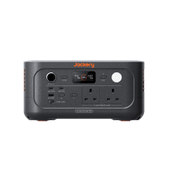
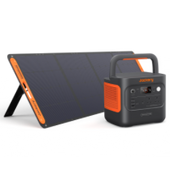
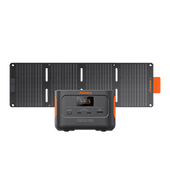
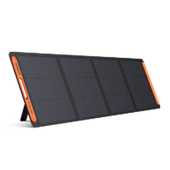
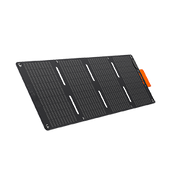
Where daytime generation exceeds household demand, an expandable battery such as the Jackery SolarVault 3 Pro Max, combined with compatible Jackery solar panels, can store surplus electricity for later use rather than exporting it immediately.
|
Key Takeaways: |
|
Solar Panels on New Builds: What Changed in 2026?
Solar panels on new builds have become far more important following a major change to England’s energy-efficiency rules. Although developers already install PV on many properties, solar has not historically been compulsory on every new home across the UK.
In March 2026, the government published the final Future Homes Standard for England, confirming solar and clean heating as standard features for most new dwellings.
The standard comes into force on 24 March 2027. A one-year transitional period will allow qualifying developments to continue under the previous regulations, with longer arrangements for certain higher-risk buildings. Consequently, a home completed after the commencement date will not automatically fall under the new rules; its building-control approval and construction timeline must also be checked.
Most homes covered by the standard will require on-site renewable electricity generation, normally rooftop solar PV. However, the rules do not prescribe the same number of panels for every property. The required provision depends on the energy-performance calculation and factors such as usable roof area, orientation, shading, building height and space needed for other equipment.
Anyone researching solar panels on new builds UK requirements should remember that the Future Homes Standard applies to England. Scotland, Wales and Northern Ireland have their own building-regulation systems.
Buyers should therefore ask whether solar is included, the array’s capacity in kWp, its expected annual generation, who owns it and whether the installation has been properly connected, certified and commissioned. These details determine both regulatory compliance and the system’s long-term value.

Are Solar Panels Compulsory on New Builds in the UK?
Not on every new home across the UK. As of 2026, the answer depends on the property’s location, the building standards applied to its development and whether transitional provisions apply. England has confirmed new rules that make solar PV the normal route for most new homes, but the other three UK nations maintain separate regulatory systems.
The Position in England Before the New Standard
England’s 2022 uplift to Part L of the Building Regulations required new homes to achieve tighter carbon-emission and primary-energy targets. Developers also had to consider the building fabric, heating system, ventilation, hot-water provision and overall energy performance.
Solar PV could help a dwelling reach those targets, but it was not a standalone requirement for every property. A developer could use solar panels, improved insulation, efficient heating or another compliant combination. Consequently, two developments built under the same version of Part L could provide very different solar arrays—or one could include no panels at all.
The Future Homes Standard Announced in 2026
The government published the final regulations and technical specification for England’s Future Homes Standard on 24 March 2026. The standard takes effect on 24 March 2027 and makes on-site renewable electricity, normally rooftop solar PV, part of the specification for most new dwellings.
Affected homes will also require high energy efficiency and low-carbon heating, such as a heat pump or heat-network connection. A conventional gas boiler will not satisfy the new performance standard.
The government estimates that the complete package could reduce annual energy bills by up to £830 compared with a standard EPC C home. This is not a guaranteed saving from solar alone: actual costs depend on the property, heating demand, electricity consumption, tariffs and the amount of solar generation used within the home.
Transitional Developments and Exceptions
A completion date after March 2027 does not necessarily mean a property must meet the new-build solar panel requirements. Transitional eligibility can depend on:
- When the building-control application, initial notice or full-plans submission was made
- Whether building work begins before the relevant transition deadline
- Whether commencement is assessed for the whole site or individual plots
- The one-year general transition ending in March 2028
- Longer arrangements applying to certain higher-risk buildings
Solar provision can also vary where roof orientation, heavy shading, limited roof area, structural constraints or space for essential building equipment prevents the reference design from being installed. Buyers should ask which regulations apply to their specific plot and request the approved and as-built energy calculations.
England Is Not the Whole UK
Information about solar panels on new builds UK must distinguish between four regulatory systems:
|
Nation |
Relevant system |
Position |
|
England |
Future Homes Standard and Part L |
New 2026 rules confirmed |
|
Wales |
Welsh Building Regulations |
Check current Welsh requirements separately |
|
Scotland |
Scottish Building Standards, Section 6 |
Separate energy standards and building-warrant system |
|
Northern Ireland |
Northern Ireland Building Regulations |
Separate requirements; England’s FHS does not apply automatically |
How Much Solar Must a New Build Have Under the New Rules?
The Future Homes Standard does not set one universal panel count for every new home. England’s Building Regulations use a whole-dwelling performance approach: the proposed home is assessed against energy targets derived from a notional building with specified characteristics. Solar PV contributes to meeting those targets alongside insulation, airtightness, heating, ventilation and hot-water efficiency.
The reference specification includes high-efficiency solar PV with a panel area equivalent to 40% of the dwelling’s ground-floor area, subject to the final compliance guidance. This percentage is frequently misunderstood. It does not necessarily mean that panels must physically cover exactly 40% of every roof, nor does it impose the same installed capacity in kWp on every property.
Consider a two-storey house with a ground-floor area of 60 m²:
- Reference PV area = 60 m² × 40% = 24 m²
The 24 m² figure forms part of the reference calculation. It does not automatically determine how many modules must appear on the finished roof. If each selected panel occupies approximately 2 m², a simple area calculation suggests 12 panels, but the workable layout may be different.
Several factors can change the actual provision:
|
Design factor |
Possible effect on the array |
|
Hips, valleys and irregular roof shapes |
Reduce continuous installation space |
|
Chimneys, vents and roof windows |
Divide the array or reduce panel count |
|
Nearby buildings and trees |
Create shading and reduce useful generation |
|
Roof orientation and pitch |
Affect expected annual output |
|
Structural and wind-loading limits |
Influence mounting and panel placement |
|
Fire and maintenance access |
Require clear roof areas |
|
Shared roofs on blocks of flats |
Limit the area available to each dwelling |
|
Plant and communal equipment |
Compete with solar for roof space |
Flats require different treatment because one roof may serve many dwellings. Their solar installation may supply communal loads, individual homes or a shared generation arrangement. Very tall buildings can also have limited roof area relative to their total floor area, while plant rooms, ventilation and access routes may take priority.
Developers must therefore demonstrate compliance through the applicable design-stage and as-built energy assessments—not through panel count alone. Substituting other measures may also require evidence that the completed dwelling still meets every regulated performance target.
Can You Put Solar Panels on a New Build? Design and Installation Requirements
Can you put solar panels on a new build? Yes. Installing them during construction is often simpler because the roof structure, mounting system, cable routes and electrical equipment can be designed together. However, a developer should treat solar as part of the building rather than an appliance added at the end of the project.
Roof Design
A south-facing roof can produce a strong annual yield, but southeast, southwest and east–west layouts can also work well. Pitch affects output, self-cleaning and mounting design, while shallow or flat roofs may require angled frames and adequate spacing to prevent one row shading another.
The important measurement is usable roof area, not total area. Chimneys, dormers, vents, roof windows, hips and valleys can divide the available space. Designers should also model shading from neighbouring homes and trees, including vegetation likely to grow during the system’s lifetime.
Developers can choose between:
- On-roof panels, which sit above the roof covering and are generally simpler to install, ventilate and replace.
- In-roof panels, which replace part of the roof covering and offer a more integrated appearance but require carefully designed drainage and weatherproofing.
The roof structure must support the panels, mounting equipment and wind and snow loads. Fixings need to transfer forces safely into the structure without compromising waterproofing. The layout should retain safe access for inspection and roof repairs. Where possible, panels should form a coherent array rather than being scattered across several small roof sections, which can increase cabling, mounting complexity and maintenance costs.
Electrical and Grid Design
The inverter should be installed in a dry, accessible and adequately ventilated position. Extremely hot lofts can reduce inverter performance and may shorten component life. Planned DC and AC cable routes should minimise length, avoid vulnerable areas and allow safe isolation.
The electrical design must also address:
- Consumer-unit capacity
- Earthing and bonding
- Overcurrent, surge and residual-current protection
- DC and AC isolators
- Generation and export metering
- Monitoring access for the homeowner
Small systems that comply with Engineering Recommendation G98 can normally be connected under the notification process. Systems exceeding the applicable limit, commonly 16 A per phase, equivalent to about 3.68 kW on a single-phase supply, usually require a G99 application and distribution network operator approval before connection. The DNO may also require a G100-compliant export-limitation scheme.
A new build should reserve suitable connections, cable routes and physical space for a battery, heat pump and EV charger, even if all three are not installed immediately. Their combined demand and export characteristics should be assessed rather than designed separately.
Planning and Building Control
Solar panels included in the original house design normally form part of the development’s planning permission and building-control assessment. Permitted development rights are more relevant when panels are added after completion.
Listed status, conservation areas, local design codes and site-specific planning conditions can impose additional restrictions. Planning approval also does not replace Building Regulations compliance: planning considers matters such as appearance and location, while building control addresses structural, electrical, fire-safety and energy-performance requirements. A compliant new-build installation may therefore require evidence under both systems.

How Much Do Solar Panels Cost on a New Build?
The cost of solar panels on new builds should be considered in two ways: what the system costs the developer to supply and install, and how much of that cost is reflected in the property’s sale price. These figures are not necessarily equal. Large developers may secure lower prices through bulk purchasing and shared site labour, while the selling price also reflects land, construction, financing and market demand.
For context, the Energy Saving Trust places the current average cost of a 4.5 kWp domestic solar system at around £7,600. The following ranges are broad consumer benchmarks rather than confirmed developer costs:
|
Example array |
Approximate home type |
Indicative complete-system cost |
What the estimate should include |
|
2–3 kWp |
Small home or limited roof |
£4,500–£6,500 |
Panels, inverter, mounting, electrics and commissioning |
|
3.5–5 kWp |
Typical family house |
£6,000–£9,000 |
Complete array, controls, scaffolding allocation and certification |
|
5–6+ kWp |
Larger home or high electrical demand |
£8,000–£11,000+ |
Larger inverter, possible grid application and additional roof work |
Actual prices vary according to panel efficiency, inverter quality and warranty length. An in-roof system may cost more than a straightforward on-roof array because the panels also form part of the weatherproof roof covering. Multiple roof sections, difficult access, monitoring equipment, export controls, grid-connection work and battery storage can raise the total further.
Installing solar during construction can reduce several avoidable expenses. Scaffolding and lifting equipment may already be on site, cable routes can be incorporated before walls are closed, and the roof covering can be coordinated with the mounting system. The consumer unit, meter position and inverter space can also be specified from the outset. This can avoid duplicated labour, new scaffolding and disruption after occupation.
However, buyers cannot assume that every saving achieved by the developer will reduce the house price. They should ask for an itemised specification and establish whether PV is:
- Included in the advertised base price
- Required for regulatory compliance
- Offered as an optional upgrade
- Bundled with a battery or EV charger
- Subject to an additional reservation or variation fee
Eligible installations of solar panels and other specified domestic energy-saving materials may receive favourable VAT treatment. Under the rules current in 2026, qualifying installations can be zero-rated, although the tax treatment of a newly constructed dwelling, a developer-supplied upgrade and a later homeowner installation is not identical. Buyers should not assume that a stated VAT benefit must be passed through as a separate discount.
Most household solar grants target eligible existing homes requiring energy improvements. A newly built property is therefore unlikely to qualify automatically, especially where the panels are already required by the development’s energy design. Any grant or local incentive should be confirmed before it is included in an affordability calculation.
Generation, Electricity-Bill Savings and Payback
New-build solar panel savings depend less on the advertised panel count than on how much electricity the array generates and when the household can use it. Panel count alone is unhelpful because modules have different wattages.
System capacity should be stated in kilowatt peak (kWp), together with a roof-specific annual generation estimate in kilowatt-hours (kWh).
Annual output is affected by UK location and local solar irradiation, as well as roof direction, pitch and shading. The forecast should also allow for inverter conversion losses, panel degradation and clipping, which occurs when panel output temporarily exceeds the inverter’s usable capacity. Generation is heavily seasonal: summer surpluses do not guarantee enough electricity for a heat pump during winter.
Household demand is equally important. Daytime appliances, heat-pump operation and daytime EV charging can increase direct self-consumption. A battery can move some midday generation into the evening, while unused electricity may earn income through a Smart Export Guarantee tariff.
A transparent estimate should use
- Annual financial benefit = electricity used directly × import price avoided + electricity exported × export tariff
Illustrative 4 kWp Example
Assume:
- Annual solar generation: 3,400 kWh
- Direct self-consumption: 45%
- Electricity used directly: 1,530 kWh
- Electricity exported: 1,870 kWh
- Import price avoided: 25p/kWh
- Export tariff: 12p/kWh
The estimated annual benefit is:
- (1,530 × £0.25) + (1,870 × £0.12) = £382.50 + £224.40 = £606.90
This is an illustrative calculation, not a guaranteed saving. It excludes standing charges because solar panels normally do not remove them. It also excludes maintenance, inverter replacement, tariff changes and gradual panel degradation.
The difference between import and export rates determines the additional value of using more solar within the home:
|
Scenario |
Likely effect on solar use |
Main financial consideration |
|
Solar panels only |
Surplus exported during sunny periods |
Higher export volume but lower self-consumption |
|
Solar with a heat pump and daytime load shifting |
More generation used for heating, hot water or appliances |
Savings improve if solar replaces imported electricity |
|
Solar with battery storage |
Surplus moved into evening hours |
Extra avoided imports must justify battery cost, losses and forgone export income |
Battery storage does not make every generated kWh more valuable automatically. If the import tariff is 25p and the export tariff is 12p, shifting one otherwise exported kWh is worth less than the full 25p saving because the household gives up 12p of export income and incurs storage losses.
If a buyer pays an identifiable £6,000 solar premium and receives £606.90 annually, the simple payback would be approximately 9.9 years. Where solar is included within the overall property price, its standalone payback may be impossible to isolate.
Finally, the government’s “up to £830” estimate applies to the wider Future Homes Standard package compared with a standard EPC C home. It includes energy efficiency and clean heating and should not be presented as the guaranteed annual saving from solar PV alone.
Who Owns Solar Panels on a New Build?
Who owns solar panels on a new build depends on the property title, lease and sale contract—not simply on whose roof they occupy. Buyers should establish ownership before exchange because it controls access, maintenance, export income and the freedom to alter the system.
For a freehold house, panels, inverter and associated equipment are commonly transferred with the property. The buyer then becomes responsible for operation and repairs and can usually apply for Smart Export Guarantee payments. However, the contract should confirm that every component is included and free from third-party rights.
Arrangements can be more complicated for flats and shared-ownership homes:
|
Arrangement |
Points the buyer should check |
|
Panels transferred with a freehold |
Whether the title includes the roof and complete system |
|
Panels within a leasehold demise |
Whether the lease includes the panels, inverter and right of access |
|
Communal system |
Whether electricity serves corridors, lifts or other shared loads |
|
Generation allocated between flats |
How electricity and export income are measured and divided |
|
Housing association or management-company ownership |
Who maintains the system and how costs appear in service charges |
|
Third-party lease or power-purchase agreement |
Contract length, electricity price, roof-access rights and transfer conditions |
A third-party provider may own the equipment while the occupier uses or purchases the electricity it generates. Such arrangements can include a long roof-space lease, maintenance rights and restrictions on removal. Buyers should ask their conveyancer and mortgage lender to review the agreement because unsuitable terms can complicate lending or a future sale.
Before committing to the property, obtain written answers to these questions:
Who owns the panels, inverter, generation meter and monitoring account?
- Who can claim exported-electricity payments?
- Is any part of the roof leased to another organisation?
- Are inspection and repair charges included in the service charge?
- Can the homeowner replace the inverter, add a battery or change export tariff?
- Who pays for repairs, roof access and eventual panel removal?
- Are the product and workmanship warranties transferable?
- Must the installation be declared to the buildings insurer?
- Does an ownership or lease agreement bind future buyers?
Solar PV does not automatically invalidate NHBC Buildmark or another new-home warranty. NHBC cover is divided between the builder-warranty period and later insurance against specified defects, so buyers should read the actual policy rather than assume every solar-related problem is covered.
Unauthorised alterations can create difficulties. Adding panels, changing fixings or drilling the roof after completion may affect waterproofing or structural responsibility, particularly where an unsuitable contractor carries out the work.
Certificates, Warranties and Checks Before Buying
A working solar array should be supported by documents showing what was designed, installed, tested and connected. Buyers should request these records in stages rather than discovering missing certificates after moving in.
At Reservation
Confirm the promised specification before paying for upgrades:
- Solar PV capacity in kWp
- Panel and inverter make and model
- Scaled roof-layout drawing
- Estimated annual generation in kWh
- Whether the system is on-roof or in-roof
- Whether a battery, monitoring platform or export control is included
- Product, workmanship, roof and waterproofing warranties
The reservation documents should distinguish between a complete PV system and a “solar-ready” property. Solar-ready may mean only that cable routes, roof space or consumer-unit capacity have been reserved. It does not confirm that panels, an inverter or an operational grid connection will be supplied.
Before Exchange
Ask the conveyancer or developer for the available compliance and ownership evidence:
- Design-stage energy assessment and expected EPC
- Proposed Electrical Installation Certificate
- Building-control approval route
- DNO G98 notification plan or G99 connection approval
- Installer details and applicable consumer-protection scheme
- MCS certification arrangements
- Confirmation of system ownership and export-payment rights
- Transfer conditions for warranties and monitoring accounts
Final documents may not exist while construction continues, so the contract should state what will be supplied at completion and who must correct missing or defective work.
At Handover
The final handover pack should contain:
- As-built energy assessment and EPC
- Electrical Installation Certificate
- Building-control completion evidence
- DNO notification or connection approval
- Commissioning report and electrical test results
- MCS certificate, where the installation is MCS certified
- Product and workmanship warranties
- Roof and waterproofing warranty
- Monitoring-app login and ownership-transfer instructions
- Generation and export-meter details
- Smart Export Guarantee eligibility information
- Emergency shutdown, isolation and maintenance instructions
MCS certification is not the same as planning permission, Building Regulations approval or an Electrical Installation Certificate. It is a recognised quality framework covering small-scale renewable products, installers and installation standards. An MCS-certified installer should issue the certificate directly to the consumer within ten working days of commissioning, according to MCS certificate guidance.
An MCS certificate, or evidence accepted as equivalent by the supplier, is commonly required when applying for a Smart Export Guarantee tariff. SEG eligibility also requires compliant export metering and satisfaction of the chosen supplier’s conditions; certification alone does not create an export contract. Ofgem’s SEG guidance explains the scheme requirements.
Physical Handover Inspection
Before accepting the installation:
- Look for cracked, damaged or visibly uneven panels.
- Compare the installed layout with the sales specification.
- Confirm that the inverter is operating without unresolved warnings.
- Open the monitoring app and verify live generation data.
- Record generation and meter readings on completion day.
- Photograph the roof, inverter, labels and meters.
- Add missing documents, faults and layout discrepancies to the snagging list.
Do not allow a verbal assurance that the system “will be activated later” to replace a written commissioning date and named party responsible for completing the work.
Should a New Build Include Battery Storage?
The Future Homes Standard’s solar provisions do not automatically require every new home to include a battery. Storage should be considered separately because its value depends on when the household uses electricity, how much solar is exported and the price of the developer’s upgrade.
When Battery Storage May Be Useful
A battery is most useful where occupants are away during daylight hours but use substantial electricity in the evening. A repeatable midday surplus can then be stored for lighting, cooking, appliances and heat-pump operation after solar output falls.
Storage may also support:
Time-of-use tariffs, including cheaper overnight charging
Heat-pump preheating or evening demand
EV charging when the car returns home
Reduced peak-period grid imports
Backup electricity, where the system includes a dedicated backup output and circuits
The following example uses the same 4 kWp array and tariff assumptions as the previous section:
|
Annual result |
Without battery |
With battery |
|
Solar generation |
3,400 kWh |
3,400 kWh |
|
Used directly |
1,530 kWh |
1,530 kWh |
|
Stored surplus |
0 kWh |
1,200 kWh |
|
Battery electricity delivered at 90% efficiency |
0 kWh |
1,080 kWh |
|
Exported |
1,870 kWh |
670 kWh |
|
Solar-related benefit at 25p import/12p export |
£606.90 |
£732.90 |
|
Additional annual value from battery |
— |
£126 |
These figures are illustrative. They show why a battery quotation must be tested against lost export income and conversion losses. An expensive battery could have a long payback even if it substantially increases solar self-consumption.
Storage may be less compelling where daytime loads already absorb most generation, the solar array is small, export payments are attractive or the developer charges a high upgrade price. It may also be unsuitable without a safe, ventilated installation location or a clearly defined backup circuit. A battery does not automatically power the whole home during a blackout.
Jackery SolarVault 3 Pro Max: Intelligent Energy Storage System
The Jackery SolarVault 3 Pro Max is one modular configuration to compare for solar panels and battery storage. It uses LFP batteries and starts at 2.52 kWh, expanding to 15.12 kWh within one tower. It supports up to 4,000 W of direct PV input and up to 2,500 W AC coupling.

AC coupling allows it to work alongside solar arrays from different panel and inverter manufacturers without rewiring the existing PV strings. However, the installer must still confirm metering, phase arrangement, export limits and electrical compatibility. Smart-meter-based management can coordinate solar charging, household demand and time-of-use tariffs, while the specified backup output and connected circuits determine what remains powered during an outage.
Buyers should compare panels-only and solar-plus-storage quotations separately, including capacity, installation space, backup design, warranty and projected annual benefit.
FAQs
The following are the frequently asked questions about the solar panels on new builds:
1. What is the 33% rule for solar panels?
There is no general UK rule restricting domestic solar panels to 33% of a roof. The phrase is often borrowed from overseas fire-access requirements or confused with local planning guidance.
UK installations are governed by the applicable planning, structural, electrical and building-regulation requirements. The Future Homes Standard’s 40% reference calculation is unrelated to a supposed 33% roof limit.
2. Are solar panels compulsory on new builds in the UK?
Not on every new build throughout the UK. England’s Future Homes Standard was published on 24 March 2026 and comes into force on 24 March 2027. It makes solar PV standard for most affected new homes, subject to transitional arrangements and technical constraints. Wales, Scotland and Northern Ireland have separate building-regulation systems, so England’s requirements do not apply automatically.
3. What is the 20% rule for solar panels?
There is no universal domestic “20% rule” determining how much of a UK roof can or must be covered with solar panels. The figure may come from an overseas regulation, a planning policy, an energy-modelling assumption or older guidance. New-build compliance should be checked against the applicable energy assessment and Approved Documents rather than an unsupported percentage rule.
4. Is 10 kW enough to run a house?
A 10 kW solar array can generate substantial electricity, but it cannot continuously run a house by itself. Kilowatts measure power at a particular moment, while kilowatt-hours measure energy produced or consumed over time.
Solar output changes with daylight, weather and season, and a 10 kW array produces nothing meaningful at night. Most homes still need the grid or a suitably designed battery. The answer also depends on simultaneous loads such as a heat pump, EV charger, oven and electric shower.
5. Can a developer leave solar panels off a new build?
Sometimes. A property may follow earlier standards because it qualifies for transitional arrangements, or it may be located outside England. Roof shading, limited usable space, building height or essential rooftop equipment can also affect solar provision.
However, a developer cannot simply omit required measures from a home covered by the new standard without demonstrating compliance through the relevant energy assessment. Buyers should request the regulations applicable to their plot and the as-built calculation.
6. How many solar panels should a new build have?
There is no standard number based solely on bedrooms or property type. The correct array depends on panel wattage, usable roof area, orientation, shading and the dwelling’s energy calculation. For example, eight 500 W panels provide 4 kWp, whereas ten 400 W panels provide the same nominal capacity. Compare installed kWp and estimated annual generation rather than panel count alone.
7. Who receives the Smart Export Guarantee income?
The person or organisation that owns or controls the eligible generation system and enters into an export contract normally receives the payments. For a freehold house, this is often the homeowner. For leasehold flats, shared solar, housing-association properties or third-party-owned systems, the management company, landlord or equipment owner may receive the income. Ownership documents and metering arrangements should be checked before purchase.
8. Can I add more panels after buying the property?
Usually, but the extension must be designed around the existing roof, inverter, wiring and grid connection. Check planning restrictions, structural capacity, new-home and roof warranties, DNO requirements and whether the existing inverter can accept additional DC input.
Adding panels may require a G99 application, revised export limitation and updated MCS or Smart Export Guarantee documentation. Written approval may also be necessary for leasehold or managed properties.
9. Do solar panels increase the value of a new build?
They may improve buyer appeal by reducing electricity costs and supporting a better energy rating, but there is no guaranteed percentage increase. Value depends on system size, generation, ownership, condition and documentation.
Fully owned panels with transferable warranties and no restrictive roof lease are generally easier for buyers and lenders to assess than third-party-owned equipment. A poorly performing or undocumented installation could instead create uncertainty during conveyancing.
Final Thoughts
Solar panels on new builds should be assessed as part of the property’s complete energy design, not simply counted on the roof. Regulatory compliance matters, but buyers also need a productive layout, transparent ownership, transferable warranties and reliable commissioning records.
The strongest system is one designed around the home’s expected electricity profile, including its heat pump, EV charger and daytime demand, with appropriately sized storage added only where the available surplus and likely savings justify it.


