



























As the UK transitions toward a decentralised, greener energy network, managing domestic power efficiently has never been more critical. Smart meters have evolved from simple digital readers into powerful tools that help households curb rising energy costs. But how do they fit into the growing trend of home renewables?
If you are considering adding a plug-in solar battery system to your home, you might wonder if it will play nicely with your current setup. This guide explores how UK smart meters seamlessly coordinate with modern plug-in batteries to optimise your self-consumption and maximise your daily savings.
|
Key Takeaways: |
|
What Is a Smart Meter?
A smart meter is a gadget that replaces your standard meter and automatically records your gas and electricity consumption, relaying the information to your energy source without requiring you to take manual readings.
There are First Generation Smart Meters that are no longer deployed and may not be compatible with solar panels. Then there are the Second Generation Smart Meters, which have been placed for several years. The latest generation of meters facilitates switching energy suppliers by providing access to all data provided by the meter.
How Do Smart Meters Differ from Traditional Meters?
Smart meters resemble traditional meters, with the only visible difference being a bigger digital screen. All of the key distinctions are internal. Every smart meter has an In-Home Display (IHD), a tiny portable screen that displays information about your energy use without requiring you to locate your meter. The IHD allows you to create a budget, see how much energy you're consuming at any given time, and track your usage over weeks and months.
How Do Smart Meters Work?
They function by sending energy data back to your energy source in real time, allowing you to properly track your energy consumption. This precision enables you to avoid getting overcharged for predicted energy bills. The meters send signals to an In Home Display (IHD), which displays the amount of gas and energy you are currently using.
You may track your energy use and utilise it more carefully. Smart meters track how much gas and energy you use, whether you have solar panels or not. The information acquired is transmitted to your energy supplier over a purpose-built network known as the Data Communications Company (DCC). Your provider then invoices you based on the readings they get.

Do Plug-in Solar Batteries Work with UK Smart Meters?
Yes, plug-in solar batteries are fully compatible with UK smart meters. In practice, the two not only coexist perfectly but also complement each other effectively through intelligent regulation. When the plug-in solar battery is charging, the smart meter treats the energy flowing into the battery just like that used by a standard household appliance, accurately recording it as electricity imported from the grid.
When the battery discharges power back into the home circuit via a standard socket, household appliances prioritise using the energy supplied by the battery. The smart meter detects the resulting drop in external current intake and lowers the real-time import reading accordingly.
How Do Plug-in Solar Battery Systems Work with Smart Meters?
Enabled by smart control technology, plug-in solar battery systems and UK smart meters coordinate their daily operations primarily through the following three modes:
- Supply Shortfall: On a morning or overcast day, your solar panels and battery provide a combined maximum output of 300W, while household appliances—such as the kettle, fridge, and computer—require a total of 800W. The smart battery system discharges the full 300W. Upon detecting that 300W is being consumed internally, the smart meter reduces the instantaneous power drawn from the external grid to 500W. With the smart meter running more slowly, you save directly on the cost of that 300W of electricity.
- Perfect Balance: On a sunny afternoon, the combined standby power draw of your TV, router, and fridge is exactly 200W. The battery’s discharge output is precisely limited to 200W. At this point, internal generation and consumption achieve a perfect 1:1 ratio of self-sufficiency. The smart meter’s instantaneous import reading shows exactly 0W; all appliances are powered for free by green energy, with no excess electricity flowing back into the grid.
- Supply Surplus: At noon on a hot summer day, your balcony solar panels are generating 800W, but with no one home, the household's base electrical load is only 150W—creating a 650W surplus. When the smart battery system detects that the import reading is about to turn negative (indicating reverse flow), it immediately activates a blocking mechanism to stop the inverter from discharging into the socket and redirects the entire 650W surplus into the battery for storage.
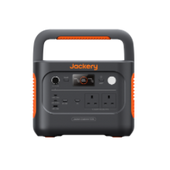
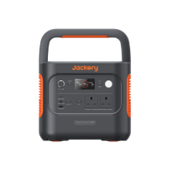
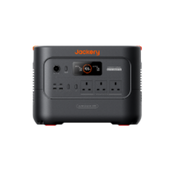
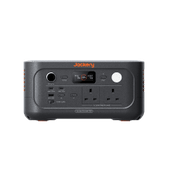
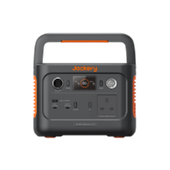
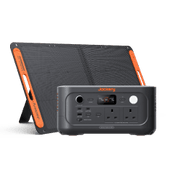
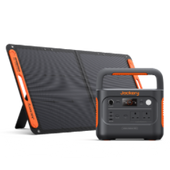
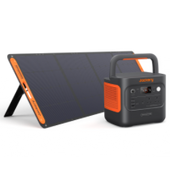
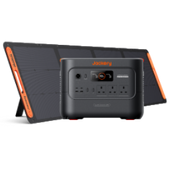
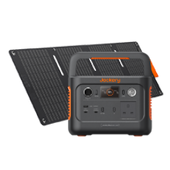
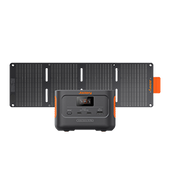
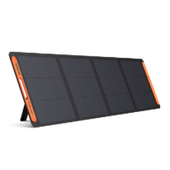
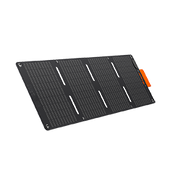
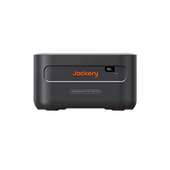
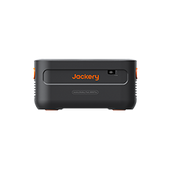
If you are looking for a plug-and-play battery system that integrates seamlessly with UK smart meters while offering both easy installation and powerful performance, Jackery’s newly launched SolarVault 3 Series is a highly recommended choice.
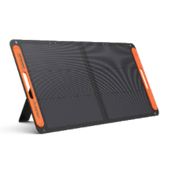
 The Jackery SolarVault 3 Series is Jackery’s next-generation home solar storage solution, designed to help households generate, store, and use solar energy more efficiently. The series includes the SolarVault 3 Pro, SolarVault 3 Pro Max, and SolarVault 3 Pro Max AC, offering flexible options for balcony solar systems, existing PV installations, and larger home energy setups. With an integrated inverter, LiFePO4 battery technology, smart energy management, and expandable storage from 2.52 kWh to 15.12 kWh, the SolarVault 3 Series brings solar storage into a compact, modular, all-in-one system.
The system works by collecting solar power from connected panels, storing surplus electricity in the battery, and automatically supplying that energy when the home needs it most, such as in the evening, during peak electricity prices, or during a power outage. The SolarVault 3 Series can optimise solar generation even when panels face different directions or experience partial shading. Its AI-driven energy management helps balance solar production, household demand, battery charging, and electricity tariffs for smarter daily use.
When Are Smart Meters Particularly Useful?
Smart meters have long progressed beyond rudimentary gadgets for automatic meter reading. In the context of the UK's highly developed and market-driven energy environment, smart meters bring great value in the following scenarios:

Avoid Estimated Bills
When energy suppliers don't have real meter readings, they make guesses based on previous trends. This sometimes leads in renters obtaining surprisingly large costs while moving in or out. Smart meters, on the other hand, send exact, real-time readings to the supplier on the same day you move in or out, eliminating any estimation inaccuracies.
Precise Tracking of Energy Usage Patterns
If your monthly power bill appears to be unusually high, and you want to discover the top energy-consuming offenders in your house, examine your smart meter's In-house Display (IHD). You may see the real-time cost amount (£/hour) rise when you turn on items such as a microwave, electric heater, or underfloor heating system.
Using Time-of-Use Tariffs
Some homes profit from tariffs in which the price of power changes during the day. For example, when there is a surplus of solar or wind power on the system, wholesale electricity costs fall. If you have a battery, you may choose to charge during lower-cost periods and discharge later. A smart meter is required for any tariff that charges various rates at different times of the day.
Overnight Off-Peak EV Charging
While ordinary fixed-rate power generally costs between 20p and 30p per kWh, smart meters provide distinct EV-specific time-of-use prices. Smart meters carefully measure your charging behaviour in 30-minute intervals, allowing your smart charger or vehicle to begin charging in the early hours and complete the charge within a four-hour off-peak window. Compared to typical daytime power rates, this can immediately reduce your car charging expenses by more than 70%.
Precise Measurement of Exported Electricity
On a weekday, your solar panels may be generating a lot of electricity while the home is unoccupied. The extra power is automatically sent back into the grid. Smart meters support bidirectional metering, which precisely records how much power you put into the system. Signing up for a Smart Export Guarantee (SEG) tariff allows you to get paid from your supplier based on the export data.
When Is the Impact of a Smart Meter Minimal?
In several specific instances, smart meters' real utility is drastically reduced, sometimes leaving them completely unusable. Here are some common circumstances in which the advantages of smart meters are limited:

Adherence to Standard Fixed Tariffs
If a user is on a regular fixed-rate tariff or is unable to move the operation of high-energy appliances to off-peak periods (such as nights or weekends) owing to work schedules or home routines, the smart meter's potential for cost savings through time-of-use pricing is not realised. In such circumstances, the gadget just functions as a tool for automated meter reading.
Data Already Accessible via PV Inverter Systems or Storage Apps
For households with solar PV panels and energy storage batteries, the monitoring apps that accompany these inverter systems far outperform smart meters—and their associated In-Home Displays (IHDs)—in terms of data update frequency and depth of information provided.
Sole Focus on Self-Generation
Some homeowners install renewable energy systems just to attain energy independence; they have no intention of selling excess power back to the grid and are uninterested with billing data split down into half-hour intervals. Users that are simply interested in "self-generation and self-consumption" and have no interest in grid feedback mechanisms will find the smart meter's complicated two-way communication and accurate billing capabilities unnecessary.
Residing in Remote Areas
Smart meters use a dedicated Wide Area Network (WAN) to send readings to the central data network (DCC). As a result, if a residence is in a remote location, or if the meter is put in a "dead zone"—such as a basement with thick walls or a rural region with no signal coverage—it may fail to send data automatically. In these cases, manual meter reading is required.
Users Highly Sensitive to Data Privacy
For users who are extremely concerned about privacy—unwilling to allow the utility provider access to their electricity usage profile and refusing to use in-home displays to monitor real-time consumption—smart meters provide little value beyond eliminating the inconvenience of manual meter reading; in terms of the core function of tracking energy usage patterns, they are virtually useless.
Can I Install a Plug-in Solar Battery without a Smart Meter?
In the UK, using a traditional mechanical electricity meter (rather than a smart meter) does not prevent you from installing and using a plug-in solar battery system. For households without smart meters, these devices offer an excellent, straightforward way to cut electricity bills and achieve energy independence. However, there are some key operational differences when a smart meter is not present.

How Does the System Work without a Smart Meter?
Traditional mechanical meters only record electricity purchased from the grid in one direction. When you plug a plug-in solar battery into a standard household socket, your appliances prioritise the nearest power source—the energy flowing from the battery via the socket. Appliances will only automatically draw power from the external grid if the battery's output is insufficient to meet demand.
Additionally, because the battery handles part of the electrical load, the current flowing from the grid into your home decreases, causing your old meter’s dial to spin more slowly (or the digital display to increment more slowly). This process achieves energy savings simply and directly, without requiring a smart meter.
What Challenges Arise without a Smart Meter?
While the system functions correctly, the absence of a smart meter means you face two specific limitations:
- Inability to Capitalise on Off-Peak Tariffs: In the UK, smart meters allow you to access ultra-low night-time or off-peak rates (such as the 7.5p/kWh rate offered by Octopus Energy between 00:30 and 04:30). This enables you to fully charge the battery at a very low cost overnight and discharge it during peak hours the following day.
- Risk of Reverse Flow with Traditional Meters: If the solar panels and battery discharge rapidly while household appliance consumption is low, excess electricity may flow back through the socket into the local grid. Some older non-smart digital meters may trigger an error (such as a red warning light) upon detecting reverse current, or they may incorrectly include the exported electricity in your bill as consumption.
Alternatives to Smart Meters
If, for whatever reason, you do not wish to or cannot install a smart meter but still want to lower high electricity bills and achieve energy independence, there are other technical solutions available. Here are three viable alternatives:

Alternative 1: Smart Plugs
Smart plugs are the most affordable and accessible alternative to smart meters. They can tell you exactly how much electricity a specific appliance—such as an old refrigerator, dryer, or gaming console—is consuming.
Furthermore, the average household wastes hundreds of pounds annually on appliance standby power; smart plugs allow you to set automated schedules via a mobile app to completely cut power to devices like TVs, microwaves, and computer power strips during the night.
Alternative 2: Home Energy Management System (HEMS)
If you want to monitor electricity flow across your entire home (rather than just for individual appliances) just as a smart meter would, you can install a standalone Home Energy Management System (HEMS).
While UK smart meters typically transmit data every half-hour or every second, HEMS hardware can refresh data at the millisecond level. The data is sent directly to your mobile phone, computer, or Home Assistant system without passing through the UK’s national smart meter network (DCC), thereby fully protecting your privacy.
Alternative 3: Plug-in Solar Batteries with Built-in Smart Management
These latest-generation plug-and-play devices (such as the Jackery SolarVault 3 Series) feature proprietary smart energy management systems. They monitor the real-time load on your home's electrical circuit directly, eliminating the need for data exchange with the utility provider's smart meter.
When the solar panels generate 600W of power but the household's real-time load is only 200W, the system's "brain" calculates the 400W surplus and instructs the inverter to supply only 200W to the home via the socket, while diverting the remaining 400W into the battery for storage.
Note: Because you lack a smart meter and MCS certification, you cannot earn money by feeding excess electricity back into the grid (i.e., you cannot apply for the SEG subsidy); any surplus power flowing into the external grid is essentially given away for free.
FAQs
The following are the frequently asked questions about the smart meters:
1. What is a smart meter?
Smart meters are the next generation of gas and electricity meters. They are being placed at no extra cost in households throughout the UK to replace traditional meters, including prepaid key meters, which many of us presently have ticking away beneath the stairs or outside our houses. Smart meters detect how much gas and electricity you use, as well as how much it costs, and show the information on a convenient in-home display.
2. How can smart meters save money?
The nice thing about smart meters is that they provide you more control over your energy expenses. The smart meter is an excellent method to know exactly how much energy you consume on a daily basis in pounds and pence.The UK government has begun a statewide rollout of smart meters, with the objective of installing one in every UK household.
3. What is the downside of having a smart meter?
There are no significant disadvantages to having a smart meter. If you live in the 0.7% of properties that are not connected to the Data Communications Company's (DCC) national network, a smart meter will not operate effectively in your home. In this situation, it would function as a manual meter until the DCC expanded coverage to your region.
4. Can you have solar panels without a smart meter?
It is not necessary to have a smart meter, so you could install solar panels without one, although it makes no sense. You cannot sign up for solar export rates unless you have a smart meter. Your system would continue to deliver extra power to the grid, but you would not receive payment for it. You'd just be giving it out for free.
5. Does my smart meter know I have solar panels?
For all intents and purposes, your smart meter will know if you have solar panels, whether they are placed before or after the smart meter. It will also track your imports, which means you will only be paid for the amount of power you purchase from the grid, with any solar-generated electricity utilised in your home not registered on your smart meter.
6. Will My Smart Meter Go Backwards?
No, modern SMETS2 smart meters track import and export independently. They do not "go backwards" like the old-style meters that some early solar adopters profited from. You'll see lower import charges on your statement, and if your supplier pays for exports, you'll also get export credits.
Conclusion
Ultimately, UK smart meters and modern plug-in solar batteries are a perfect match for intelligent home energy management. While it is technically possible to run a plug-in battery without a smart meter, pairing the two unlocks essential benefits like time-of-use tariffs, seamless grid balance, and paid export credits.
High-tech solutions like the Jackery SolarVault 3 Series make this integration effortless, offering a flexible bridge to true energy independence. Whether you want to escape estimated bills, charge cheap overnight, or simply power your home with clean solar energy, combining these smart technologies is a major step toward a smarter, cheaper future.


