




































Vendor lock-in is the enemy of home energy flexibility. Most residential battery manufacturers force users to manage their systems through a single, proprietary cloud application, actively hiding the local APIs or Modbus connections that would allow you to build custom, self-contained automations. You do not own your system’s performance data; you simply rent access to it.
This limitation becomes highly frustrating when you try to automate your home beyond basic time-of-use schedules. If your factory app cannot schedule battery charging based on local weather forecasts or coordinate real-time discharges during dynamic tariff peak slots, you are leaving substantial savings on the table. Unlocking true home automation requires integrating your system with a smart smart home panel that exposes local control pathways.
Understanding Smart Home Panels for Battery Integration
A smart home panel acts as the central intelligence hub connecting your solar battery system directly to your household electrical circuits. It replaces your traditional, non-intelligent consumer unit with an advanced, interactive system. Instead of simply splitting grid power, a smart panel dynamically decides which of your household circuits receive battery backup, when the battery charges, and how to respond to real-time grid signals.
This allows for precise, circuit-level load isolation. During a power cut, the panel can automatically keep essential appliances running while shedding high-draw loads like tumble dryers and EV chargers. In the UK, managing variable household loads is becoming increasingly critical: according to the Microgeneration Certification Scheme (MCS) database, there are now over 275,000 cumulative certified heat pump installations across the country, with tens of thousands of new systems added annually. This represents a major shift toward smart, electrified heating setups.
A smart panel also coordinates daily time-of-use (ToU) tariff optimization, charging your battery from cheap off-peak grid power and discharging it during peak afternoon hours. To see how these configurations fit into typical home storage budgets, explore our guide on the 10-kW solar battery price UK market.
Circuit-Level Control and Backup Prioritisation
During an outage, your smart panel prioritizes your pre-defined essential circuits. Critical appliances—such as your refrigerator, internet router, boiler pumps, and hallway lighting—are kept running. Meanwhile, non-essential loads are automatically shed to prevent a high-draw appliance (like a kettle) from accidentally draining your backup supply in minutes.
To prepare for outages, use your panel’s reserve settings to lock away a dedicated emergency reserve (typically 20% to 30% of your battery's capacity). The panel will never discharge below this threshold during normal daily time-of-use cycling. If a sudden blackout occurs, this reserve is instantly made available, providing vital hours of backup runtime. Smart load shedding can also be configured to drop secondary loads if your battery's state of charge (SOC) falls below a certain level during a prolonged outage.
Regulatory Note: UK wiring compliance is highly strict. Backup circuits must be isolated on a separate consumer unit or a dedicated section of your smart panel. Furthermore, all battery installations must strictly comply with the location standards of PAS 63100:2024. This standard strictly prohibits placing batteries in lofts, roof spaces, or along primary escape routes. While other indoor areas (like utility rooms) are permitted if they meet strict 30-minute fire separation (REI 30) and external ventilation rules, choosing garages or external walls remains the most practical and cost-effective safe placement.
Time-of-Use Optimisation with UK Tariffs
Automating your battery around peak and off-peak rate spreads delivers consistent daily savings. On a standard Economy 7 tariff, you can import cheap overnight electricity at roughly 9p/kWh and discharge it to power your home during the 35p/kWh daytime peak, pocketing a solid arbitrage margin. On dynamic tariffs like Octopus Agile, these price spreads can be even wider, occasionally dropping below zero overnight and spiking past 60p/kWh during peak evening hours.
Combining battery time-of-use optimization with rooftop solar generation allows UK homeowners to reduce their annual electricity bills by 50% to 70%. A typical UK property with a 5 kW solar array and 10 kWh of battery storage can slash its annual electricity costs from £1,200 down to £400–£600, depending on tariff selection and consumption habits.
Smart Export Guarantee (SEG) payments add a secondary revenue stream. When your battery is fully charged and solar generation is high, your smart panel can automatically export surplus solar power to the grid, earning you additional export credits under your SEG contract. Many advanced panels also support AI energy management software, automatically calculating the cheapest overnight charging windows and preparing for forecasted solar yields.
Installation Process and Compatibility
Because smart home panels integrate directly with your high-voltage consumer unit, they must be mounted and wired by a licensed, certified electrician. If your system’s inverter capacity can import or export over 16A per phase (3.68 kW), your installer must secure formal G99 approval from your local Distribution Network Operator (DNO) before any installation work begins. In contrast, smaller systems under the 16A limit only require a simple post-installation G98 notification.
Retrofitting a smart panel to work with your existing solar panels and battery storage is straightforward if the system communication protocols match. The smart panel must be able to communicate with your battery inverter via Modbus, Wi-Fi, or CAN bus. To ensure a safe, code-compliant installation, consult our detailed electrical fire safety guide to plan your equipment spacing and clearances.

Home Energy Management System (HEMS) Integration
A unified Home Energy Management System (HEMS) acts as a single, coordinated coordinator for your solar panels, battery, EV charger, and smart appliances. Rather than each component operating in isolation, a HEMS evaluates your entire consumption profile to make intelligent, second-by-second power routing decisions.
Using smart plugs and automated schedules, a HEMS can run high-draw appliances like washing machines and dishwashers during peak midday solar generation. It can also coordinate with smart home thermostats—such as Hive, Nest, or Tado—to pre-heat your home's hot water or thermal mass during cheap overnight off-peak windows, helping to beat the cold front of winter heating costs cleanly and efficiently.
To build these custom rules, look for smart panel systems that support full Entity ID exposure. Exposing core metrics like `sensor.battery_soc` as local entities on platforms like Home Assistant allows you to write automated rules that schedule grid charging when solar forecasts are low, completely bypassing cloud-only manufacturer portals.
Solar Integration and Real-Time Monitoring
Solar-aware charging ensures your battery captures your rooftop solar generation before any power is exported to the grid. Without this coordination, your inverter would send excess solar to the grid for a low export payment while you import expensive power later that evening. The smart panel’s current clamps measure your mains connection in real-time, instantly ramping battery charging to match your generated surplus.
Achieving a reliable zero-feed-in or solar-capturing target requires sub-second system response times. If your panel can only adjust its charging rate every 5 to 10 seconds, you will experience brief grid import and export spikes throughout the day as appliances cycle on and off. Smart panel platforms that can adjust charging levels within 200 milliseconds eliminate these export blips entirely, ensuring complete compliance with DNO zero-export restrictions.
Jackery SolarVault 3 Series – Scalable Smart Storage
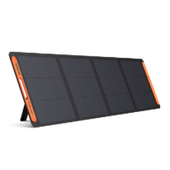
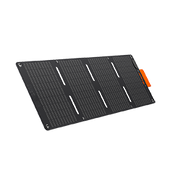
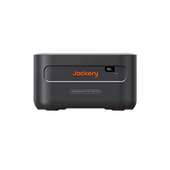
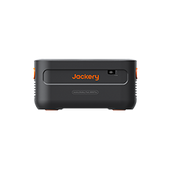
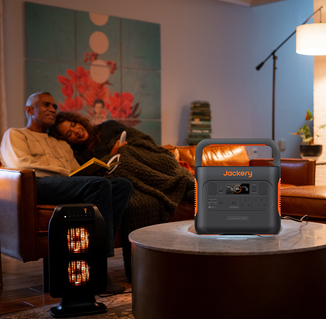
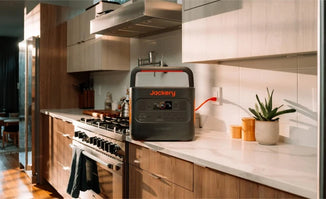
Jackery SolarVault 3 Series – Scalable Smart Storage The upcoming Jackery SolarVault 3 Series (launching July 2026) represents a major step forward for smart home integration. Designed as a next-generation plug-in solar solution, the SolarVault 3 Series brings solar storage into a compact, modular, all-in-one system by combining an integrated inverter, durable LiFePO4 battery technology, and expandable storage.
If you are exploring simplified, versatile home power options, learn more on our dedicated plug-in solar pages.
The system works by collecting solar power from connected panels, storing surplus electricity in the battery, and automatically supplying that energy when your home needs it most—such as in the evening, during peak electricity prices, or during a power outage. With its smart, AI-driven energy management, the system balances solar production, household demand, battery charging, and electricity tariffs for smarter daily use, even optimising solar generation when panels face different directions or experience partial shading. Its straightforward plug-and-play design allows homeowners to start with a smaller battery capacity and expand later as their energy needs grow. Backed by key safety features including LiFePO4 cells, terminal temperature monitoring, and an integrated aerosol fire suppression unit, it delivers maximum safety and reliable long-term performance.
To prepare your family for unexpected outages, review our checklist on what to do when power goes out to keep your home safe and protected.

Frequently Asked Questions
How do I connect my battery to Home Assistant?
To connect your battery storage system locally, select a hardware brand that supports Modbus TCP, exposes a local REST API, or features a verified HACS integration. Avoid systems that rely on cloud-only integrations, as they introduce latency and fail if your internet connection goes down.
Which systems support local control instead of cloud-only?
Several reputable manufacturers offer excellent local control pathways: Victron utilizes its open Venus OS and MQTT protocols; Fox ESS systems support direct local automation via Modbus-to-Ethernet adapters; Zendure systems feature a fully documented local API; and GivEnergy systems support local REST API integrations on select inverter models.
How do I tell if the battery is charging or discharging?
You can monitor your battery's current state of charge by reading the specific entity IDs or sensor states exposed by your smart home panel integration. For example, a positive value on your `sensor.battery_power` entity indicates the battery is charging, while a negative value indicates it is discharging.
Can I automate around solar surplus or storm warnings?
Yes. By writing custom, weather-triggered automation rules on Home Assistant, you can pause or delay grid-charging schedules if your weather integration forecasts a high solar surplus the next day. You can also integrate live Met Office weather alert feeds to trigger an automatic 100% charge cycle when a storm warning is issued.
What’s the difference between EPS backup and storm guard?
EPS (Emergency Power Supply) is a reactive system, physically isolating your home and switching to battery backup within milliseconds when a grid failure occurs. Storm Guard (or Storm Watch) is a proactive system, monitoring meteorological alerts and pre-charging your battery to 100% capacity from the grid before an anticipated storm hits, ensuring maximum backup runtime.


