




























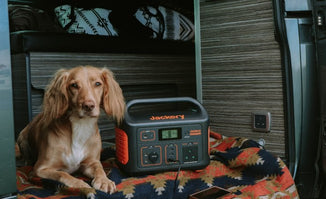


When a power cut hits your home, the fridge-freezer stops, the lights go out and your broadband equipment loses power. Even a gas boiler may stop working because its controls and pump need electricity. Choosing the best home battery for power outage protection starts with three essentials: a genuine backup function, enough power output for your chosen appliances and sufficient stored energy to keep them running for the time you need.
Start by deciding what matters most during an outage. Keeping food cold, a few lights on and phones charged requires a different setup from supplying an entire house. This guide explains sizing, runtime and costs, and assesses our featured recommendation, the Jackery SolarVault 3 Pro Max, for selected essential-appliance backup.
|
Key Takeaways: |
|
How Does a Home Battery Provide Power Outage Protection?
A home battery can keep essential appliances running during a power cut, but storing electricity is only part of the job. The system must support backup operation, with suitable connections and equipment to deliver that electricity when the mains supply fails.
What Happens When the Grid Goes Down?
When the grid supply fails, a correctly configured backup system separates the supported appliances or circuits from the electricity network. Its inverter converts the battery’s stored direct current (DC) into alternating current (AC) suitable for household appliances.
This separation prevents the backup supply from feeding electricity into the external grid. The battery then powers the connected loads within its output and remaining-energy limits.
A battery installed for everyday solar storage or off-peak charging may not provide this function. Even a fully charged battery can leave your home without power if the required backup equipment and wiring are absent.
Backup Socket, Essential Circuits or Whole-House Backup?
The arrangement determines where backup electricity goes. Before buying, establish exactly which sockets or circuits will remain powered.
|
Backup arrangement |
What it supplies |
What to check |
|
Dedicated backup outlet |
Compatible appliances connected to that outlet |
Output limit, connections and changeover behaviour |
|
Essential-circuit backup |
Selected circuits, such as lighting and refrigeration |
Included circuits and required installation work |
|
Whole-house backup |
Household circuits through suitable backup equipment |
Total load, load management, phase compatibility and available energy |
Whole-house backup still has limits: connecting every circuit does not mean every appliance can run simultaneously. Essential-circuit backup can make it easier to reserve energy for priority uses.
Automatic Changeover Does Not Always Mean Uninterrupted Power
Transfer time is the interval between losing mains power and establishing the backup supply. Some equipment tolerates a short interruption; other devices may restart.
An emergency power supply (EPS) provides backup with its specified changeover behaviour. An uninterruptible power supply (UPS) is designed to maintain continuity for compatible equipment. Whole-house backup describes the circuits covered. These terms describe different characteristics, so check the actual transfer specification and appliance requirements.

Which Appliances Should You Keep Running During a Power Cut?
Before comparing batteries, decide which appliances you genuinely need during an outage. A focused backup plan helps you preserve stored energy for essential tasks while leaving room for useful extras, such as working on a laptop.
Prioritise Refrigeration, Lighting and Communication
Start with your fridge-freezer, a few LED lights and phone charging. Add broadband equipment if staying connected is important, then consider heating controls and work equipment according to your household’s needs.
For full-fibre broadband, both the router and the optical network terminal (ONT) usually need power. However, keeping your equipment powered does not guarantee internet access: the external network must also remain operational.
Build a Realistic Appliance Energy Budget
The following is an illustrative 24-hour plan, not a claim about typical household consumption. Each appliance’s energy requirement depends on its actual demand and operating time.
|
Appliance |
Assumed electrical demand |
Use during 24-hour outage |
Energy required |
|
Fridge-freezer |
40 W average across compressor cycles |
24 hours |
960 Wh |
|
Router and fibre ONT |
15 W combined |
24 hours |
360 Wh |
|
Three LED lights |
15 W combined |
8 hours |
120 Wh |
|
Laptop |
60 W average while used |
4 hours |
240 Wh |
|
Television |
80 W |
3 hours |
240 Wh |
|
Phone charging |
Allowance for charging |
As needed |
40 Wh |
|
Gas boiler controls and pump |
100 W while operating |
4 operating hours |
400 Wh |
|
Total appliance energy |
— |
— |
2,360 Wh / 2.36 kWh |
Calculate energy using power (W) × operating time (hours) = energy (Wh). Divide Wh by 1,000 to obtain kWh. This example requires 2.36 kWh for appliances alone; battery-system consumption and conversion losses must also be considered when sizing storage.
Replace the assumptions with plug-in energy measurements, appliance labels or manufacturer information. Labels may show maximum demand rather than average consumption. For a fridge-freezer, measured daily kWh captures compressor cycling more accurately than multiplying its running wattage by 24. Its starting demand still needs a separate output check.
Identify Appliances That Need Extra Planning
Electric showers, immersion heaters, electric heating, cooking appliances and EV charging can dominate the required power output or stored energy. Decide whether these loads are necessary during an outage before including them.
Gas boiler backup requires a suitable electrical connection, assessed by the installer where fixed wiring is involved. Supplying its controls and pump also depends on an available gas supply; the battery provides only the electrical part of its operation.

What Size Home Battery Do You Need?
The right battery size depends on the appliances you want to support and how long they need to run. Start with your essential-appliance energy budget, then account for system consumption, losses and a reasonable margin for uncertainty.
Choose Your Target Backup Duration
Decide whether you want protection for a few hours, overnight or a full day. Use the appliance schedule in the previous section, adjusting operating hours to match that period. An overnight plan, for example, may need refrigeration and heating controls but little television or laptop use.
Your normal daily electricity consumption provides context, but it may include EV charging, laundry and other activities you would postpone during a power cut. Bedroom count alone cannot capture these differences.
Turn the Appliance Budget into a Capacity Requirement
The previous example required 2.36 kWh for appliances over 24 hours. The calculation below adds an illustrative operating allowance and converts that requirement into nominal battery capacity.
|
Calculation stage |
Illustrative result |
|
Appliance energy |
2.36 kWh |
|
System operating allowance: 30 W × 24 hours ÷ 1,000 |
0.72 kWh |
|
Combined energy requirement |
3.08 kWh |
|
Nominal capacity at an assumed 85% available-energy factor: 3.08 ÷ 0.85 |
≈3.62 kWh |
|
Add an illustrative 20% planning margin: 3.62 × 1.20 |
≈4.35 kWh |
This suggests looking above approximately 4.35 kWh nominal capacity, assuming a full charge when the outage begins. The 20% margin is a planning choice, not a universal installation rule.
Here, the 85% factor represents available energy after discharge restrictions and conversion losses; the separate 30 W allowance represents system operation. Replace both assumptions with suitable product data, avoiding double-counting losses already included in a quoted usable-energy figure.
Check Power Output Separately from Capacity
Kilowatt-hours (kWh) describe stored energy available over time. Kilowatts (kW) describe how much power the system can supply at once.
Check the combined demand of appliances running simultaneously, then check motor start-up requirements separately. A battery may store enough energy for your planned duration yet have insufficient inverter output to start a fridge compressor or run a high-power appliance.

How Long Will a Home Battery Last During a Power Outage?
A home battery might support a small essential load overnight yet last only a few hours under heavier demand. Runtime depends on the energy available when the power fails and how quickly your appliances and the battery system consume it.
Calculate Runtime from Available Energy and Total Load
Use this formula as a starting point:
- Estimated runtime (hours) = available energy (Wh) ÷ average total demand (W)
Available energy must reflect the starting charge, permitted discharge range and relevant losses. Total demand should include the system’s own consumption where that has not already been accounted for.
Three capacity figures need careful interpretation. Nominal capacity describes the battery’s stated storage size. Manufacturer-rated usable energy reflects what can be withdrawn under specified conditions, but may not include every conversion loss. Measured AC energy is the electricity actually delivered to appliances during a particular test.
For a product-specific estimate, check how its figures are defined. Applying another efficiency deduction to a figure that already includes those losses would underestimate runtime.
Compare Runtime at Different Appliance Loads
The following calculations assume a fully charged battery, no recharging and a constant average appliance load. They use 85% of nominal energy, with a separate illustrative 30 W operating allowance. These are planning estimates, not tested product runtimes.
|
Average appliance load |
Illustrative use |
2.52 kWh |
5.04 kWh |
10.08 kWh |
|
100 W |
A modest essentials combination |
≈16.5 hours |
≈33.0 hours |
≈65.9 hours |
|
250 W |
Essentials plus additional electronics |
≈7.7 hours |
≈15.3 hours |
≈30.6 hours |
|
500 W |
A larger appliance combination |
≈4.0 hours |
≈8.1 hours |
≈16.2 hours |
|
1,000 W |
Sustained medium-to-high demand |
≈2.1 hours |
≈4.2 hours |
≈8.3 hours |
|
2,000 W |
A high-power appliance running continuously |
≈1.1 hours |
≈2.1 hours |
≈4.2 hours |
For example, a 2.52 kWh battery supplying a 250 W appliance load gives:
- 2,520 Wh × 0.85 ÷ (250 W + 30 W) ≈ 7.7 hours
The table shows why reducing demand can extend backup substantially. Every example also assumes the inverter can support the appliances’ running and start-up requirements.

Why Actual Runtime Can Be Shorter
A battery at 50% charge starts with substantially less backup energy than these full-charge examples. Discharge limits may reduce it further. Temperature, battery ageing and inverter consumption also affect the result, while fridge compressors cycle on and off rather than drawing constant power.
Brief high-power use differs from sustained demand. A 2,000 W appliance running for five minutes consumes approximately 167 Wh:
- 2,000 W × (5 ÷ 60 hours) ≈ 167 Wh
That is far less energy than running it for an hour, although the battery must still supply the full 2,000 W while it operates.
How Many Backup Batteries Do You Need?
The number of batteries you need follows from your calculated capacity requirement and the size of each compatible module. Count the storage already included in the base unit before deciding how many expansion batteries to add.
Distinguish Expansion Batteries from Complete Systems
An expansion battery adds stored energy to an existing system, allowing compatible appliances to run for longer. It generally uses the main unit’s inverter, so additional capacity does not automatically increase continuous backup output.
Adding another inverter-equipped system is different. Combining systems requires manufacturer-supported equipment and an appropriate installation design; their outputs cannot simply be added together.
Match the Number of Modules to Your Calculated Capacity
The Jackery SolarVault 3 Pro Max starts at 2.52 kWh and expands to 15.12 kWh with five compatible BP2500 expansion batteries.
|
Configuration |
Nominal capacity |
|
Base unit |
2.52 kWh |
|
Base unit + 1 expansion battery |
5.04 kWh |
|
Base unit + 2 expansion batteries |
7.56 kWh |
|
Base unit + 3 expansion batteries |
10.08 kWh |
|
Base unit + 4 expansion batteries |
12.60 kWh |
|
Base unit + 5 expansion batteries |
15.12 kWh |
For the illustrative 4.35 kWh requirement, one base unit plus one expansion battery provides sufficient nominal capacity under the stated assumptions. That means one complete system with one additional storage module. Actual coverage still depends on starting charge, appliance demand and operating conditions.

Plan for Future Needs Without Buying Unnecessary Capacity
Consider whether you might need longer outage coverage or additional essential appliances later. Expansion can accommodate those changes, but unused capacity adds upfront cost.
Before purchasing, check compatible module models, available installation space, stack limits and any conditions for adding batteries later. Choose the initial configuration around a realistic backup plan, with a clear reason for future expansion.
Can a Home Battery Power a Whole House?
Yes, a suitably designed home battery system can supply a whole house during a power cut. However, its continuous output determines what can run together, while its available stored energy determines how long that supply lasts.
Whole-House Connection Is Different from Running Everything
Whole-house backup makes power available to household circuits through suitable backup equipment. It does not give the battery unlimited output. Switching on too many appliances can exceed the inverter’s rating, even when plenty of charge remains.
You therefore need to consider both circuit coverage and appliance use. A system may support lights, refrigeration and electronics throughout the property while requiring you to avoid running several high-power appliances together.
Check Heating, Hot Water and Cooking Loads
Consider a 2,000 W kettle and a 2,000 W electric heater operating simultaneously. Together, they require 4,000 W, before adding the fridge-freezer, lighting or other equipment.
Electric showers, immersion heaters and cooking appliances can increase demand further. Sustained electric heating also uses substantial stored energy: a 2,000 W heater running continuously for one hour consumes 2 kWh, before system losses.
Homes needing these loads during an outage may require greater inverter output, additional storage and load management. This could mean automatic disconnection of non-essential circuits or manually staggering appliance use.
When Essential-Circuit Backup Is the Better Fit
If your priority is keeping food cold, lights on and communication devices charged, supplying selected essentials can make the available energy last longer.
The Jackery SolarVault 3 Pro Max has a 2,500 W backup output, which should be matched to the combined running and start-up demands of selected appliances. It should not be treated as unrestricted whole-house capability. Its supported backup connections must also suit your plan; supplying fixed household circuits requires a compatible, professionally designed arrangement.
How to Choose the Best Home Battery for Power Outage Protection
Choosing the best home battery for power outage protection means checking how the complete system will perform in your home. Compare quotations against the same appliance list, backup duration and installation scope so that differences in price are meaningful.
Compare the Backup Function Before the Headline Capacity
Ask the supplier to identify exactly which outlets or circuits will receive electricity during an outage. Establish whether changeover is automatic, how long the interruption lasts and whether any appliances need restarting afterwards.
The quotation should also identify additional equipment needed to deliver that coverage, such as a backup gateway, changeover equipment or a separate consumer unit for essential circuits. A battery’s capacity figure alone cannot tell you whether these components are included.
Compare Features That Affect Everyday Reliability
Use these questions to assess practical operation alongside the headline specifications.
|
Feature |
Question to ask |
|
Backup output |
What continuous and start-up loads can it support? |
|
Available energy |
How much energy reaches appliances under the stated conditions? |
|
Backup reserve |
Can charge be retained for an unexpected outage? |
|
Solar operation |
Can the intended solar arrangement recharge the battery off-grid? |
|
Low-load operation |
Will it remain active with only small devices connected? |
|
Local controls |
What works if internet access is unavailable? |
|
Warranty and support |
What capacity retention, usage conditions and UK support apply? |
|
Installation |
What location, clearance and electrical work are required? |
Request written answers for anything central to your backup plan. For example, an automatic shutdown setting could matter when only a router is connected, while internet-dependent controls may be inconvenient during a communications outage.
Match the System to Your Existing Solar and Home Wiring
An AC-coupled battery connects on the AC side of the installation and can often work alongside an existing solar inverter. A DC-connected arrangement links solar panels and storage through compatible DC-side equipment, commonly a hybrid inverter.
However, compatibility during normal grid operation does not establish outage compatibility. Confirm whether the solar inverter can operate within the proposed backup system, which circuits remain supplied and whether solar charging continues when the grid is unavailable.
Our Recommended Home Battery for Essential-Appliance Backup: Jackery SolarVault 3 Pro Max
The Jackery SolarVault 3 Pro Max is our recommended option for households seeking expandable storage for selected essential appliances. Its appeal is the ability to match an initial setup to a measured backup requirement, then add capacity if longer coverage becomes necessary.

Why It Fits an Expandable Backup Plan
The system combines battery storage, an inverter and direct solar input. These functions address three practical questions: what you can power, how long it could run and how you might replenish the battery during an extended outage.
|
Feature |
Relevance to outage protection |
|
2.52 kWh starting capacity |
A starting point for a measured essential-load plan |
|
Expansion to 15.12 kWh per system |
Additional stored energy for longer coverage |
|
2,500 W backup output |
Must accommodate the combined running demand |
|
Published 20 ms changeover |
Brief automatic transfer; equipment compatibility still matters |
|
Direct PV input |
A potential recharging route with compatible solar panels and sufficient daylight |
|
LFP battery chemistry |
Assess alongside warranty terms and operating conditions |
These specifications support an expandable backup plan, but adding storage does not automatically increase output. Likewise, a 20 ms transfer is a short interruption, rather than a guarantee that every connected device will continue without restarting.
Which UK Households Is It Best Suited To?
It suits households prioritising refrigeration, lighting, communications and selected additional appliances within the system’s output limits. This could include a laptop for work or a television used for limited periods, provided the combined demand and start-up requirements are suitable.
The earlier 24-hour sizing example produced an illustrative requirement of 4.35 kWh nominal capacity. For that plan, the 2.52 kWh base unit alone would fall short. Adding one compatible BP2500 battery brings nominal capacity to 5.04 kWh, exceeding the calculated requirement under the stated full-charge and consumption assumptions.
What Should You Confirm Before Buying?
Confirm the exact UK backup connections and which appliances or circuits the proposed installation will supply. A dedicated backup outlet does not automatically energise household wiring.
Check reserve controls and low-load settings too. The support documentation describes an off-grid shutdown function when output remains below 25 W for a configured period, with manual restart required afterwards. That matters when only small electronics remain connected.
How Much Does Home Battery Backup Cost in the UK?
The cost of home battery backup depends on the storage capacity, the appliances or circuits you want to protect and the installation work required. Compare complete quotations that deliver the same backup coverage, rather than judging value from the battery’s purchase price alone.
Compare Complete Backup Packages
Energy Saving Trust gives a broad battery-storage cost range of £1,500–£10,000, with approximately £4,600 for a 5 kWh system. These figures provide market context; they do not establish the price of a complete installation configured for power-cut protection. Additional backup equipment and electrical work may be necessary.
|
Cost component |
What the quotation should specify |
|
Main battery and inverter |
Exact model and included capacity |
|
Expansion batteries |
Number and cost of modules |
|
Backup equipment |
Changeover equipment or gateway, where required |
|
Electrical work |
Circuit changes, protection, cabling and labour |
|
Solar integration |
Included panels, connections or compatibility work |
|
Commissioning |
Backup demonstration, settings and documentation |
Ask for a total including applicable VAT and a clear explanation of exclusions. A lower equipment price may offer less value if the work needed to supply your chosen circuits is quoted separately.
Separate Backup Value from Electricity-Bill Savings
Backup provides practical value by keeping selected appliances operating during an outage. Electricity-bill savings depend on how the system charges and discharges during normal use.
Grid charging has a cost, and conversion losses mean less electricity reaches appliances than enters the system. When storing surplus solar electricity, also account for any export payment you would otherwise receive.
Keeping a larger emergency reserve leaves less capacity available for everyday energy shifting. That may suit your priorities, but it changes the savings calculation. Assess potential savings using your own tariff, consumption pattern and reserve settings rather than assuming a fixed payback period.
Confirm Installation and Outage Recharging
Ask the installer to document safe isolation, earthing arrangements, equipment siting and any applicable electricity-network requirements. The commissioning demonstration should confirm which loads remain powered and how normal operation resumes.
Mains charging is unavailable while the grid supply is down. Solar recharging requires a configuration that supports operation during an outage, as well as sufficient daylight. For winter planning, assess whether stored energy alone can cover your essential needs; solar production may extend coverage, but should not be assumed continuous or sufficient.
FAQs
The following are the frequently asked questions about the Best Home Battery for Power Outage Protection:
1. Will Every Home Battery Work During a Power Cut?
No. A home battery needs a supported backup function and the appropriate connections or installation to supply electricity when the grid fails. A system installed for solar storage or off-peak charging may require additional equipment before it can provide outage protection.
2. How Long Can a Home Battery Run a Fridge-Freezer?
It depends on the fridge-freezer’s measured consumption and the battery’s available energy. Using this article’s illustrative assumptions—a 40 W average fridge load, 85% available energy and a separate 30 W system allowance—a fully charged 2.52 kWh battery could provide approximately 30.6 hours without recharging. Actual runtime varies, and the inverter must also handle compressor start-up demand.
3. Is a 5 kWh Battery Enough for a 24-Hour Power Cut?
It can be enough for selected essentials. Our example required approximately 4.35 kWh nominal capacity, including assumed losses, system consumption and a planning margin. A fully charged 5 kWh battery exceeds that estimate, but electric heating, cooking or a lower starting charge could significantly reduce coverage.
4. Can You Use a Home Backup Battery Without Solar Panels?
Yes, provided the system supports grid charging and backup operation. You can charge it while mains electricity is available and use the stored energy during an outage. Once depleted, it needs a supported charging source; it cannot recharge from the grid until supply returns.
5. Will Rooftop Solar Panels Keep Charging the Battery During an Outage?
Only if the complete solar-and-battery arrangement supports it. Ordinary grid-connected solar inverters generally stop supplying power when the grid fails. Continued generation requires compatible equipment and an appropriate backup configuration. Having solar panels and a battery does not automatically provide this capability.
6. Can a Home Battery Keep a Gas Boiler Running?
Yes, if its output and electrical connection are suitable for the boiler’s controls, pump and other electrical components. Fixed-wired boilers require an appropriate installer-designed backup arrangement. The boiler also needs an available gas supply; battery electricity alone cannot keep it heating.
7. Does Adding Another Battery Increase Backup Power Output?
Not necessarily. Expansion batteries usually add stored energy, extending potential runtime while leaving the main inverter’s output limit unchanged. Higher output requires a system designed to support it. Check the manufacturer’s specifications for the exact configuration.
8. Can the Jackery SolarVault 3 Pro Max Power My Whole House?
Its 2,500 W backup output is better assessed against selected essential appliances than assumed to support unrestricted whole-house use. More storage can extend runtime, but does not automatically increase output or energise household circuits. Whole-house coverage would require an explicitly supported installation and careful load management.
Final Thoughts
Choosing the best home battery for power outage protection comes down to three decisions: what must remain powered, how much electricity those appliances need and how long you want backup to last. Match both power output and available energy to that plan, allowing for losses and the charge remaining when an outage begins.
The Jackery SolarVault 3 Pro Max is our recommended option for expandable essential-appliance backup where its output, capacity and supported connections meet those requirements.
Start by recording appliance consumption and choosing your required backup duration. Then obtain an itemised quotation specifying the battery capacity, exactly which connections will remain powered and the complete installed cost.


