






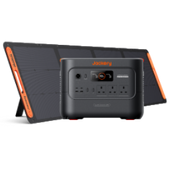
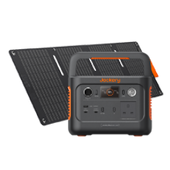
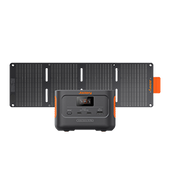
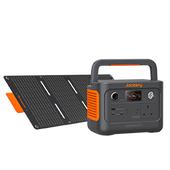
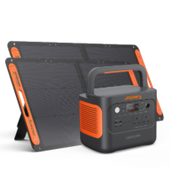
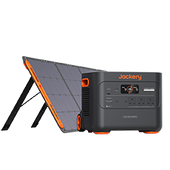

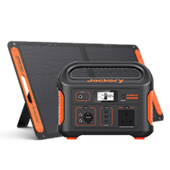









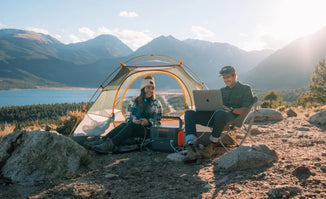


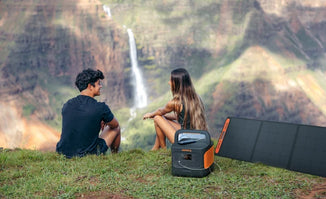




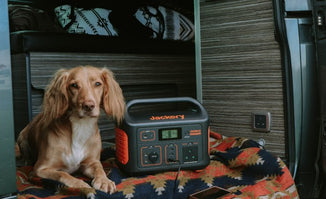








Portable power stations have become one of the most useful pieces of gear for outdoor trips. When you are planning a picnic, a camping weekend, a fishing trip, or a longer road adventure, having a reliable source of electricity can make the experience far more comfortable.
The problem is that many people are not sure what size to buy. A unit that is too small may run out of power much faster than expected. A model that is too large may cost more, weigh more, and be less practical to carry around. The best choice depends on what you want to power, how long you will be away, and how portable the unit needs to be.
This guide explains the difference between small and large portable power stations, how to decide what size suits your needs, which type works best for different outdoor activities, and recommends the best choices from Jackery Portable Power Stations.
|
Key Takeaways: |
|
What Does “Small” or “Large” Portable Power Station Mean?
When people talk about small and large portable power stations, they usually mean a mix of battery capacity, output power, physical size, and weight.
A small portable power station is normally compact enough to carry easily with one hand. These models are often designed for charging phones, tablets, cameras, earbuds, portable lights, and sometimes laptops. They are a practical choice for short outings and light power needs.
A large portable power station usually has a much bigger battery, more output options, and stronger AC power. These models are often used for camping, campervan travel, outdoor work, emergency backup, or longer trips where several devices need charging over time.
In simple terms:
- Small models focus on portability and convenience.
- Large models focus on higher capacity and broader use.
There is no universal line between the two, but many buyers think of them like this:
|
Size |
Typical Battery Capacity |
Best For |
|
Small |
Up to around 300Wh |
Phones, cameras, lights, short outings |
|
Medium |
Around 300Wh to 700Wh |
Laptops, drones, weekend trips, light camping |
|
Large |
700Wh and above |
Camping appliances, group trips, portable fridges, longer outdoor stays |
You can think of it like this:
- A small portable power station is for people who want convenient power for smaller devices and lighter outdoor use.
- A large portable power station is for people who want more stored energy, stronger output, and support for longer or more demanding trips.
Neither option is automatically better. The best choice depends on how much power you need, what you plan to run, and how much carrying and moving you are willing to do outdoors.
Small vs Large Portable Power Stations: Key Differences
When choosing a portable power station, the biggest question is often whether a small or large model makes more sense. Both can be useful outdoors, but they are built for different kinds of trips and different levels of power demand. A small unit is usually designed for convenience and light daily use, while a large one is built for longer runtime, higher output, and more demanding devices.
|
Feature |
Small Portable Power Station |
Large Portable Power Station |
|
Size and Weight |
Compact, lightweight, easier to carry and store |
Bigger, heavier, less convenient to move |
|
Battery Capacity |
Lower capacity, best for light use |
Higher capacity, better for longer or heavier use |
|
Output Power |
Suitable for phones, tablets, lights, laptops |
Can power larger appliances and more devices at once |
|
Charging Speed |
Often fast enough for small batteries, but depends on model |
May support fast charging too, but larger batteries can still take longer overall |
|
Number of Ports |
Usually fewer ports and simpler port mix |
More ports and more variety, including extra AC outlets |
|
Runtime |
Shorter runtime, better for short trips |
Longer runtime, better for overnight or multi-day use |
|
Price |
More affordable upfront |
More expensive, but offers more power and flexibility |
The clearest way to compare them is by looking at the features that affect real use most: size and weight, battery capacity, output power, charging speed, number of ports, runtime, and price.

Size and Weight
One of the most obvious differences is the physical size of the unit. A small portable power station is usually much easier to lift, pack, and carry. It fits better in a car boot, a picnic setup, a tent corner, or even a larger backpacking loadout if the trip is short and gear is limited.
A large portable power station takes up more space and is noticeably heavier. That extra weight comes from the bigger battery, stronger inverter, and more complex internal hardware.
Battery Capacity
Battery capacity shows how much energy the power station can store, usually measured in watt-hours (Wh). This is one of the main reasons people choose a larger model.
A small portable power station has lower capacity, which means it is generally intended for lighter use. It can usually handle charging phones, cameras, small lights, earbuds, tablets, or perhaps a laptop for a limited time.
A large portable power station stores much more energy, so it can support more devices and longer use. This becomes important for camping weekends, road trips, van travel, or outdoor situations where recharging opportunities are limited.
Output Power
Capacity tells you how much energy is stored, but output power, measured in watts (W), tells you what the unit can actually run at one time.
A small portable power station usually has lower output, so it is best for low-wattage electronics and light charging needs. A large portable power station usually offers much stronger output. That means it can handle more demanding equipment, such as portable fridges, electric coolers, small kettles, coffee makers, projectors, power tools, or several devices charging together.
Charging Speed
Charging speed is another practical difference, though it is not always as simple as small equals fast and large equals slow.
A small portable power station often recharges more quickly in real-life use because the battery is smaller. A large portable power station may support advanced fast-charging technology and higher input levels, but because the battery is much bigger, full charging can still take longer overall.
Number of Ports
The number and type of ports can make a big difference in how convenient the power station feels outdoors.
A small portable power station usually comes with a basic selection, such as a few USB ports, one or two AC outlets, and perhaps a DC car port. A large portable power station normally includes more ports and more variety. You may get multiple AC sockets, several USB-A and USB-C ports, DC outputs, and sometimes higher-powered USB-C charging as well.
Runtime
Runtime is where the benefit of a large power station becomes especially clear.
A small portable power station can provide a useful amount of power, but only for a limited period. It is best for short activities, such as a picnic, a beach day, a short fishing trip, or a single overnight stay with very light energy use.
A large portable power station offers much longer runtime, which makes it a better fit for multi-day camping, road trips, or off-grid travel. It can support more sustained use and gives more breathing room if you are not able to recharge often.
Price
Price is often one of the deciding factors, especially for first-time buyers.
A small portable power station is usually much more affordable. That lower entry cost makes it appealing for people who only need basic backup power, want something for occasional outdoor use, or are not ready to invest heavily in a larger setup.
A large portable power station costs more because it includes a larger battery, stronger inverter, more ports, and often more advanced charging features.
How Large of a Portable Power Station You Need?
Choosing the right portable power station is much easier when you break the decision into a few practical steps. Many people start by looking at battery size alone, but that often leads to buying a unit that is either too limited or far larger than necessary.
A better approach is to think about what you need to power, how long you will be outdoors, how mobile you need to be, how much weight you can realistically carry, and how much you want to spend.

Step 1: List the Devices You Actually Need to Power
Start with the most practical question: what are you going to use the portable power station for?
This first step matters because not all outdoor trips need the same level of power. A small picnic setup might only involve a phone, speaker, and camera. A camping trip could include lights, a fan, a laptop, and a cooler. A road trip or van setup may require even more.
In general:
- If you only need to charge small electronics, a small portable power station may be enough.
- If you need to power appliances as well as charge electronics, you will likely need a medium or large model.
For example, a compact Jackery Portable Power Station can be a practical choice for light outdoor use such as charging phones, cameras, and tablets, while a larger Jackery model makes more sense for camping, road trips, or situations where you need to run more demanding devices.
Step 2: Check Whether You Are Charging Electronics or Running Appliances
Charging electronics is usually a light task. Phones, cameras, earbuds, tablets, and some laptops do not require very high output. If that is all you need, a smaller power station often works well. Running appliances is different. Appliances usually require more wattage and often run for longer periods.
So ask yourself:
- Do I only need to top up batteries and phones?
- Or do I want to keep appliances running for hours?
If the answer is mostly charging, a smaller model is usually the more practical and affordable option. If the answer includes appliances, especially anything with heating or cooling, you should look at larger portable power stations with higher output and more battery capacity.
Step 3: Estimate How Long You Will Be Outdoors
The next step is to think about duration. The size you need for a few hours outdoors is very different from the size you need for an overnight or multi-day trip.
For shorter outings, a small portable power station often provides more than enough energy. For longer stays, especially where recharging is limited, you will want more battery capacity.
A useful way to think about it is this:
- Short trips + light devices = small portable power station
- Longer trips + several devices = medium or large portable power station
- Multi-day trips + appliances = large portable power station
Step 4: Think About How Often You Move Around
Portability is not just about whether a power station has a handle. It is about how often you need to lift it, carry it, unpack it, and move it from place to place.
Ask yourself:
- Will I mostly keep it in one place near the car or tent?
- Will I carry it by hand over some distance?
- Will I move it several times during the trip?
- Am I travelling light?
If you move around frequently, weight and compactness matter a lot more. A small portable power station is much easier to live with when you are hiking to a base camp, walking to a picnic area, or packing quickly for a short trip.
Step 5: Be Honest About How Much Weight You Can Carry
This point sounds obvious, but it is often ignored. A bigger portable power station may seem attractive because it offers more flexibility, but it also becomes more awkward to carry, especially when you are already loaded with food, bags, tents, and outdoor gear.
Think realistically about your trip style:
- Are you travelling solo?
- Are you carrying all your own equipment?
- Do you want something you can lift easily with one hand?
- Are you comfortable trading extra weight for extra power?
A smaller power station is usually the better choice for people who want simple portability. A larger one makes more sense when carrying weight is less of a concern and reliable power is the bigger priority.
Step 6: Set a Budget Based on Real Use, Not Maximum Use
Budget is important, but it should be linked to how you will actually use the power station most of the time.
A small portable power station is usually more budget-friendly. It is a sensible choice if you:
- Mainly want backup charging
- Only go outdoors occasionally
- Do not use high-power appliances
- Want something affordable and easy to carry
A large portable power station costs more, but it may be better value if you:
- Camp regularly
- Take longer trips
- Travel with family or friends
- Need to run appliances
- Want one unit for both outdoor trips and emergency backup at home
A common mistake is buying the biggest model just in case. Another common mistake is buying the cheapest model, then finding it too limited. The best approach is to buy for your most common use case, not your most extreme one.
Step 7: Check the Battery Capacity and Output Together
Once you have thought through your devices, trip length, mobility, weight, and budget, it is time to check the specs properly.
There are two numbers you should always look at:
- Battery capacity (Wh): how much energy the power station stores
- Output power (W): how much power it can deliver at one time
Step 8: Calculate the Runtime Before You Buy
A simple runtime estimate can help you decide whether a small, medium, or large portable power station makes sense.
The basic formula is:
Runtime (hours) = Power station capacity (Wh) × efficiency ÷ device wattage (W)
A practical version is:
Runtime (hours) = Wh × 0.85 ÷ W
The 0.85 is used as a rough efficiency factor because some energy is lost during conversion.
Example: Running a 50W device
If you have a 500Wh portable power station and want to run a 50W device:
500 × 0.85 ÷ 50 = 8.5 hours
So it could run for about 8.5 hours under ideal conditions.
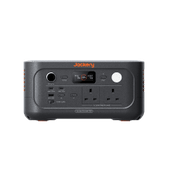
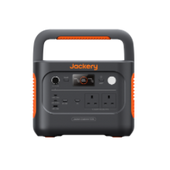
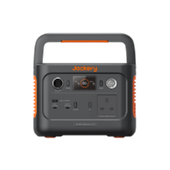
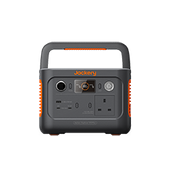
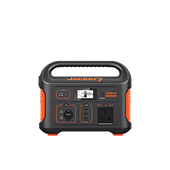
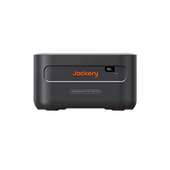
Best Small Portable Power Station: Jackery Explorer 500 v2
The Jackery Explorer 500 v2 marks a significant technical evolution, transitioning to LiFePO4 (LFP) battery chemistry. This high-performance cell technology is inherently safer and more heat-resistant than traditional lithium-ion batteries. More importantly, it offers a massive leap in longevity, providing over 6,000 charge cycles before reaching 70% of its original capacity.
Portability has been redefined through a 27% reduction in size and weight compared to previous generations in the same class. Weighing just 12.57 lbs/5.7kg, it is exceptionally easy to transport with one hand, making it a "grab-and-go" solution for sudden trips. The physical design has also been optimized with a fold-down handle that sits flush against the top of the casing.
Charging speeds have seen a drastic improvement via the ChargeShield 2.0 system, which enables a full AC recharge in just 1.3 hours. This is a massive upgrade from older models that often required seven or eight hours to reach 100%.
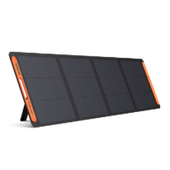
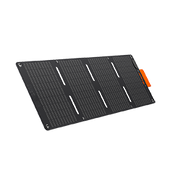
For those who prefer renewable energy, the solar input capacity has been doubled to 200W, allowing you to fully replenish the battery in roughly three hours of clear British sunshine when using Jackery Solar Panels.
The unit also includes two standard UK AC outlets capable of a 500W continuous output and a 1,000W surge peak, ensuring it can handle the initial "kick" required by motor-driven devices like portable fans or small travel kettles.
For runtime planning, a simple estimate is:
Estimated runtime (hours) = 512Wh × 0.85 ÷ device wattage
Using 85% as a practical efficiency factor gives about 435Wh of usable energy in real-world planning. Actual runtime varies with ambient temperature, inverter losses, charging habits, and whether several devices are running at the same time, but this formula is a good guide for outdoor scenarios.

Best for: Weekend Tent Camping Trip
A weekend camping trip in the Lake District is a good example of where the Explorer 500 v2 fits naturally. Many UK campers want enough power for evening comfort and basic convenience rather than full home-style electrics. You might charge phones during the day, run LED lighting after sunset, top up a camera battery, and power a small camping fan in the tent.
|
Device |
Typical Wattage |
Working Hours / Use Time |
|
LED camping light |
10W |
6 hours |
|
Small camping fan |
20W |
5 hours |
|
Smartphone charger |
10W |
3 hours |
|
Camera battery charger |
15W |
2 hours |
|
Laptop |
60W |
2 hours |
*The working hours are only for reference, the actual runtime based on the usages.
Best for: Day Trip
For a day out in Cornwall, the power need is usually lighter, but people still appreciate having a reliable source of electricity. A portable power station like the Explorer 500 v2 can be useful for keeping phones charged, running a portable speaker, topping up a drone battery, and powering a cool box or mini electric cooler for food and drinks.
|
Device |
Typical Wattage |
Working Hours / Use Time |
|
Portable electric cooler |
45W |
6 hours |
|
Smartphone charger |
10W |
3 hours |
|
Bluetooth speaker |
15W |
5 hours |
|
Drone battery charger |
90W |
1.5 hours |
|
Camera charger |
15W |
2 hours |
*The working hours are only for reference, the actual runtime based on the usages.
Best for: Festival Weekend
A UK festival is a strong match for the Explorer 500 v2 because people often need more than a pocket-sized power bank, but do not want to drag around a very large power station. In this setting, the unit can keep several phones charged, run string lights or tent lights in the evening, power a small fan, and support extras like a speaker or camera charging.
|
Device |
Typical Wattage |
Working Hours / Use Time |
|
2 smartphone chargers |
20W |
3 hours |
|
LED string lights |
8W |
6 hours |
|
Small fan |
20W |
4 hours |
|
Bluetooth speaker |
15W |
4 hours |
|
Camera or GoPro charger |
15W |
2 hours |
*The working hours are only for reference, the actual runtime based on the usages.
These three examples highlight where the Jackery Explorer 500 v2 sits in the market. With 512Wh capacity, 500W continuous output, a relatively light 12.57 lbs/5.7kg build, and a useful mix of AC, USB-C, USB-A, and 12V outputs, it suits outdoor users who want more than basic phone charging but do not need a very large, heavy power station
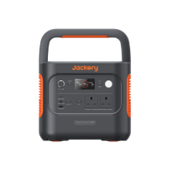
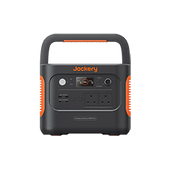
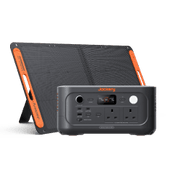
Best Medium Portable Power Station: Jackery Explorer 1000 v2
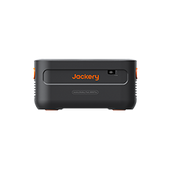
The Jackery Explorer 1000 v2 serves as a robust mid-range powerhouse, bridging the gap between highly portable units and heavy home-backup systems. It features a substantial 1070Wh capacity and a powerful 1500W AC output (with a 3000W surge peak), making it capable of running 90% of common household appliances.
Like its smaller siblings in the v2 lineup, it has transitioned to LiFePO4 (LFP) battery chemistry, ensuring a lifespan of over 4,000 charge cycles—equivalent to roughly a decade of regular use before seeing a dip in performance.
Despite its high capacity, the unit maintains a relatively compact "toolbox" footprint that is roughly 20% smaller than the previous generation. This space-saving design includes the signature fold-down handle, which allows the flat top to serve as a convenient charging shelf or stacking surface in a packed vehicle.
Charging efficiency is a standout feature, as the Explorer 1000 v2 supports an ultra-fast 1-hour AC recharge when using "Emergency Charge" mode via the Jackery app. For sustainable power, it accommodates up to 400W of solar input, allowing the large internal battery to be fully replenished in roughly 4 hours of direct sunlight.
Versatility is further enhanced by its array of outputs, including two 100W USB-C PD ports and three AC outlets. It also features a high-speed Uninterruptible Power Supply (UPS) function with a sub-20ms switchover time, protecting sensitive electronics during power flickers.
For practical planning, a simple runtime estimate is:
Estimated runtime (hours) = 1070Wh × 0.85 ÷ device wattage
Using an 85% efficiency factor gives about 910Wh of usable energy as a rough planning figure. Actual results vary depending on temperature, inverter conversion losses, device cycling, and whether multiple items are charging together, but this is a helpful way to build realistic outdoor scenarios.

Best for: Family Camping Weekend
A family camping weekend in the Peak District is the kind of trip where the Explorer 1000 v2 makes immediate sense. UK campers often want more than just a few phone top-ups. They may want lighting in the evening, a cool box for food, charging for several devices, and a bit of comfort in the tent or awning.
Explorer 1000 v2 has enough battery capacity and output headroom for this kind of setup, while still being portable enough to carry from the car to the campsite pitch.
|
Device |
Typical Wattage |
Working Hours / Use Time |
|
Portable electric cooler |
45W |
10 hours |
|
LED camping light |
10W |
8 hours |
|
2 smartphone chargers |
20W |
3 hours |
|
Laptop |
60W |
3 hours |
|
Small camping fan |
20W |
6 hours |
*The working hours are only for reference, the actual runtime based on the usages.
Best for: Seaside Caravan Break
A seaside caravan or campervan break in Cornwall often involves longer stationary use and a wider mix of devices. This is where the Explorer 1000 v2 becomes more attractive than a smaller portable power station. It can support day-to-evening use for comfort items such as a mini fridge, lights, laptops, and personal charging, while still remaining much easier to transport than a very large, heavy power station.
|
Device |
Typical Wattage |
Working Hours / Use Time |
|
Mini fridge or electric cooler |
60W |
8 hours |
|
TV or portable projector |
100W |
3 hours |
|
Laptop |
60W |
3 hours |
|
2 smartphone chargers |
20W |
2 hours |
|
LED awning light |
12W |
5 hours |
*The working hours are only for reference, the actual runtime based on the usages.
Best for: Summer Festival Weekend
A multi-day festival in England is another situation where the Explorer 1000 v2 works well. Festival-goers often need more than a small power bank can offer, especially if two or three people are sharing one setup. Phones need charging, lights are useful in the evenings, speakers and cameras add extra load, and a small fan can make tent life much more comfortable during warm weather.
|
Device |
Typical Wattage |
Working Hours / Use Time |
|
3 smartphone chargers |
30W |
3 hours |
|
LED string lights |
8W |
8 hours |
|
Bluetooth speaker |
15W |
6 hours |
|
Small fan |
20W |
6 hours |
|
Camera / GoPro charger |
15W |
3 hours |
|
Laptop |
60W |
2 hours |
*The working hours are only for reference, the actual runtime based on the usages.
Its 1070Wh capacity, 1500W rated output, 23.8 lbs travel-friendly build, and mix of AC, USB-C, USB-A, and 12V outputs make it especially suitable for family camping, caravan breaks, road trips, and festival weekends.
Best Large Portable Power Stations: Jackery Explorer 2000 v2 and 3000 v2
The Jackery Explorer 2000 v2 and 3000 v2 are best understood as the large portable power stations rather than compact or mid-size models.
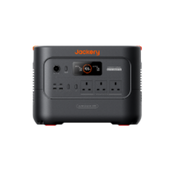
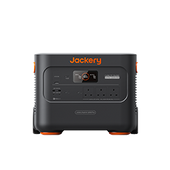
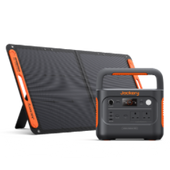
Jackery Explorer 2000 v2
The Jackery Explorer 2000 v2 stands as the lightest and most compact unit in the 2kWh class, specifically designed to offer high-capacity power without the traditional bulk.
It features a 2042Wh capacity and a 2200W continuous output (4400W surge), which is sufficient to power 95% of standard household appliances, including electric grills, microwaves, and power tools. Built with a "Cell-to-Body" (CTB) structure inspired by the automotive industry, the unit is 41% smaller and 35.6% lighter than typical competitors, weighing in at just 38.6 lbs.
This model utilizes LiFePO4 battery technology, ensuring a decade-long lifespan with over 4,000 charge cycles before the capacity dips to 70%. Charging is remarkably efficient, with the ability to reach a full 100% charge in 1.7 hours via a standard AC outlet, or as little as 52 minutes for an 80% charge when using the "Flash Charge" mode in the Jackery App.
For off-grid use, it supports up to 400W of solar input, making it a versatile choice for off-road adventures, remote job sites, or as a silent home backup system.
For runtime planning, a simple estimate is:
Estimated runtime (hours) = 2042Wh × 0.85 ÷ device wattage
Using an 85% efficiency factor gives about 1735Wh of practical usable energy for rough planning. Real results vary with inverter losses, ambient temperature, device cycling, and simultaneous charging, but this is a sensible working estimate for outdoor scenarios.

Best for: Family Glamping Weekend
A family glamping weekend in the Cotswolds is a strong match for the Explorer 2000 v2 because this kind of UK trip usually involves more comfort-focused power use than a simple tent camping setup. Instead of charging only phones and lights, families often want to keep an electric cooler running, power a projector for evening entertainment, charge multiple devices, and run small comfort items such as a fan or electric blanket.
|
Device |
Typical Wattage |
Working Hours / Use Time |
|
Portable electric cooler |
60W |
12 hours |
|
2 LED camping lights |
20W |
6 hours |
|
2 smartphone chargers |
20W |
3 hours |
|
Laptop |
60W |
3 hours |
|
Portable projector |
100W |
3 hours |
|
Small camping fan |
20W |
5 hours |
*The working hours are only for reference, the actual runtime based on the usages.
Best for: Campervan Road Trip
A campervan road trip through Scotland is another realistic UK use case for a large portable power station. On this kind of trip, people often want to support a more self-contained setup: cooling food, charging cameras and phones, powering a laptop for route planning or remote work, and running small kitchen or leisure devices during stops.
|
Device |
Typical Wattage |
Working Hours / Use Time |
|
Mini fridge |
70W |
14 hours |
|
Laptop |
60W |
4 hours |
|
2 smartphone chargers |
20W |
3 hours |
|
Camera battery charger |
15W |
3 hours |
|
Portable coffee maker |
550W |
0.5 hours |
|
LED awning light |
12W |
6 hours |
*The working hours are only for reference, the actual runtime based on the usages.
Best for: Group Festival Basecamp
A festival basecamp in England is a good example of outdoor use where several people share one power source. In this setting, the value of a large portable power station is not just higher battery capacity, but also its ability to handle several devices at once without feeling limited. A group may want to keep multiple phones charged, run lights around the tent area, power a speaker, top up camera batteries, and use a small electric cooler.
|
Device |
Typical Wattage |
Working Hours / Use Time |
|
4 smartphone chargers |
40W |
3 hours |
|
LED string lights |
10W |
8 hours |
|
Bluetooth speaker |
15W |
8 hours |
|
Small electric cooler |
45W |
10 hours |
|
Camera / GoPro charger |
15W |
3 hours |
|
Portable fan |
20W |
6 hours |
*The working hours are only for reference, the actual runtime based on the usages.
These three UK examples show why the Jackery Explorer 2000 v2 fits the “large portable power station” category so well. Its 2042Wh capacity, 2200W rated output, and comparatively portable 38.6 lbs design give it enough headroom for more demanding outdoor setups.
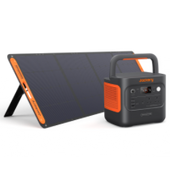
Jackery Explorer 3000 v2
The Jackery Explorer 3000 v2 is the flagship of the large portable range, offering a massive 3072Wh capacity and a formidable 3600W continuous output (7200W surge). This high-performance output allows it to run even the most demanding heavy-duty appliances, such as air conditioners, full-sized refrigerators, and high-wattage kettles, making it a primary choice for long-term off-grid living or extended RV trips.
Despite its significant power, it remains remarkably portable for its class, weighing approximately 59.5 lbs and featuring integrated wheels and a handle for easy maneuverability.
Engineered for ultimate longevity and reliability, the 3000 v2 also employs LiFePO4 chemistry rated for over 4,000 cycles. A standout feature is the ZeroDrain technology, which allows the unit to retain up to 95% of its charge even after a full year in storage—ensuring it is ready the moment an emergency strikes.
It supports an ultra-fast 1.8-hour AC recharge and up to 1000W of solar input, which can fully replenish the massive battery in roughly 3.5 hours under optimal conditions. Additionally, it operates at a whisper-quiet 27dB in silent mode, making it suitable for use inside a vehicle or home during the night.
For simple runtime planning, a practical estimate is:
Estimated runtime (hours) = 3072Wh × 0.85 ÷ device wattage
Using an 85% efficiency factor gives about 2611Wh of usable energy for rough real-world planning. That is only an estimate, but it is a useful one when building realistic outdoor scenarios.

Best for: Multi-Day Caravan Holiday
A caravan holiday in Devon is a strong match for the Jackery Explorer 3000 v2 because this kind of trip often feels closer to off-grid living than simple camping. People usually want to run a mix of comfort devices throughout the day, keep food chilled, make hot drinks in the morning, charge personal electronics, and power lighting in the evening.
|
Device |
Typical Wattage |
Working Hours / Use Time |
|
Portable fridge |
90W |
14 hours |
|
Electric kettle |
850W |
0.4 hours |
|
Laptop |
80W |
4 hours |
|
2 smartphone chargers |
20W |
3 hours |
|
LED caravan light |
15W |
6 hours |
|
Portable TV |
60W |
4 hours |
*The working hours are only for reference, the actual runtime based on the usages.
Best for: Outdoor Family Cinema Night
An outdoor cinema night is a very different kind of use case, but it shows the advantage of moving up to a large-capacity model. Instead of just powering essentials, this setup is about creating an experience: a projector, speakers, lighting, and a few extra comfort devices for a family or group.
|
Device |
Typical Wattage |
Working Hours / Use Time |
|
Projector |
100W |
4 hours |
|
Portable speaker |
20W |
5 hours |
|
String lights |
10W |
6 hours |
|
Mini fridge / cooler |
90W |
8 hours |
|
2 phone chargers |
20W |
2 hours |
|
Electric popcorn maker |
1200W |
0.3 hours |
*The working hours are only for reference, the actual runtime based on the usages.
Best for: E-Bike Weekend Basecamp
Here, the focus is not on leisure charging or small comfort items alone, but on supporting outdoor mobility itself. Riders staying at a campsite or rural accommodation may want to recharge e-bike batteries, keep lights and phones powered, and still have enough energy left for a laptop or small cooking appliance.
|
Device |
Typical Wattage |
Working Hours / Use Time |
|
E-bike battery charger |
200W |
6 hours |
|
2 smartphone chargers |
20W |
3 hours |
|
LED campsite light |
15W |
5 hours |
|
Laptop |
80W |
3 hours |
|
Small fan |
20W |
5 hours |
|
Portable coffee maker |
550W |
0.4 hours |
*The working hours are only for reference, the actual runtime based on the usages.
The 3000 v2 a more distinct role as a high-capacity, high-output outdoor power station for bigger setups, heavier loads, and more lifestyle-oriented use.
FAQs
The following are frequently asked questions about the portable power stations in the UK.
1. Is it worth buying a portable power station?
Portable power stations are generally worth it for users needing quiet, fume-free, portable power for camping, van life, or emergency home backup. They offer immediate, user-friendly power for appliances and electronics without the maintenance of traditional generators.
2. What can a 2000W portable power station run?
A 2000W portable power station is a solid starting point for emergency preparedness. It can keep the essentials running, such as lights, refrigeration, internet, and phones, so your household stays comfortable during a typical outage.
3. How long does a 3000W power station last?
The runtime of a 3000Wh power station depends entirely on the total wattage of the devices you plug into it, calculated by dividing the station’s capacity by the load (Hours = Capacity x 0.85 / Watts). For high-draw appliances like a 1500W electric heater, it will last approximately 1.7 hours, whereas for a medium load like a 100W portable fridge, it could run for over 25 hours.
Final Thoughts
Choosing between a small, medium, or large portable power station comes down to how you actually spend time outdoors. A compact model is often enough for short outings and simple device charging, while a mid-size unit gives you more flexibility for weekend breaks and family trips. If your setup includes longer stays, multiple users, or higher-wattage appliances, a large portable power station is usually the better fit.
From lightweight options like the Jackery Explorer 500 v2 to higher-capacity models such as the Explorer 2000 v2 and Explorer 3000 v2, there is a portable power station for nearly every kind of outdoor activity in the UK.


