




















![[Over £1200 Tier Gift] Bluetooth Speaker with Phone Stand - shipped Separately](http://uk.jackery.com/cdn/shop/files/Portable_Bluetooth_Speaker_with_Phone_Stand_2.png?v=1781595581&width=170)












To learn how to build a tiny house in the UK, you need to plan carefully how to utilise the land, what materials to use, and how to get power. People who want to save money, be flexible, and have a smaller environmental impact, like those who choose tiny homes. But they can only be successful if they follow the law and make good design decisions.
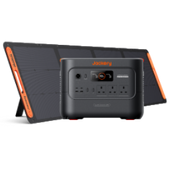
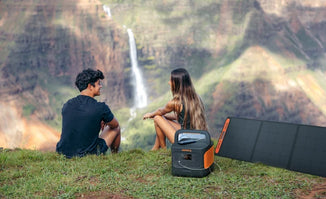
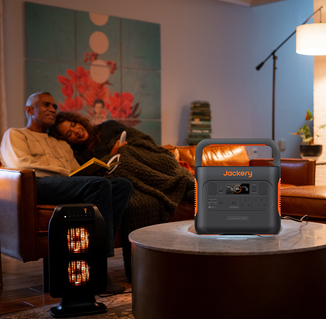
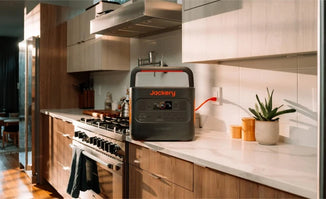
Another important thing to think about is how to get power, particularly for mobile or rural structures. The Jackery Solar Generator 3000 v2 and Jackery Solar Generator 2000 Plus are two examples of solutions that may help meet power demands during construction and long-term living without connecting to the grid.
|
Key Takeaways: |
|
Are Tiny Houses Legal in the UK?
Yes, they are. In the UK, a tiny house is considered the same as a caravan if it is on wheels and has a defined size. So the question of legality arises: where do you 'put' a tiny house? Again, when deciding where to place the construction, you must comply with Tiny House UK legislation.
Do You Need Planning Permission for a Tiny House?
In most circumstances, yes. If a small home is used for living purposes, such as sleeping, cooking, or washing, it is classified as Use Class C3 (dwellinghouse), just like any other home.
That implies that the same planning criteria apply: location, design, access, drainage, and adherence to municipal planning policy.
Even if your Tiny Home is mobile (e.g., on a caravan chassis), if it is being lived in permanently or semi-permanently (or has the potential to be classified as such), it will most likely be classified as development in planning terms - s55 of the 1990 Act.
The test is one of fact and degree — how it is utilised rather than how it is created. In summary, a tiny house is still a home, and the same planning guidelines apply.
Do You Pay Council Tax on a Tiny House?
If you utilise a tiny house as 'extra living space' inside your home's grounds, you will not be required to pay council tax. If you live in the Tiny House permanently or rent it out, you must pay council tax.
However, if the tiny house is utilised as a vacation house or secondary dwelling while your primary abode is elsewhere, you will not be required to pay council tax on it.
Is There a Tiny House Community In The UK?
Yes, there is, and it is increasing. The Tiny House Movement is gaining root in the UK, just as it has in the United States and Europe! The Tiny House movement in the United Kingdom, as it does worldwide, concentrates on individual constructions. The buildings are movable, low-cost, and well-equipped, allowing for pleasant, environmentally responsible living.
The biggest mobility in the UK occurs in the Bristol region. However, others occur in diverse places.
What About The 4-Year Rule For Sheds or Outbuildings?
There is a widespread misconception that if you live in a building for four years without being recognised, it will become legal automatically. While the four-year rule exists, it is not always applicable. It only applies to unauthorised houses that have been utilised consistently for 4 years without enforcement and are not disguised.
The four-year limit currently only applies to improvements completed before June 2024. Currently, the ten-year rule applies.

Where Can I Put My Tiny House in the UK?
This is a great question. It's something we receive often. You may lawfully install your small home in a variety of locations, including:
- Within the curtilage of your home/dwelling, such as in the garden.
- On a parcel of land, such as farmland, for a period of 60 days, or you may put it there for longer under approved development rights and/or a certificate of legitimate development.
- Tiny houses are portable residences on wheels, thus they come under the caravan laws and regulations. Look for sites with long-term seasonal spaces.
- On a park home / residential home site, this is possible provided your small house meets particular specifications such as BS:EN 3632:2015 (interior height of no more than 3.05m), as ours do.
- On land where you've sought for planning clearance in a residential neighbourhood.
- On a glamping site for vacation rental purposes (with planning authority obtained).
- On a recognised site, provided as a site management building - check out 'freedom camping'.
- On farms, stables, or equestrian land.
Can I Live In a Tiny House On My Own Land UK?
As previously stated, you may install a tiny house on your land as long as it is the same dimensions as a big caravan: 19.8m × 6.7m (65 x 22 feet). However, you may only utilise the tiny house for 'extra living space'. You cannot rent it out to renters until you apply for planning clearance!
Can I Buy Land and Build a Tiny House in the UK?
Anyone who can afford it may own a parcel of land. However, you may be UNABLE to put a tiny house on the property. You may need to seek planning clearance from your local council.
Make sure you have written authorisation from the Council. In the past, a vocal 'yes' has turned into a 'written no'! Placing a tiny house on a block of land without formal Council approval might get you in trouble.
Are All Tiny Houses On Wheels?
One of the most appealing aspects of having a small home is that you may avoid some of the laws about where you install it. That, plus the fact that you are free to move whenever you choose!
However, finding a site to put a little home might be difficult. The structure's roadworthiness is another factor to consider. A tiny house that is more than 2.55 metres wide is not road permitted. Additionally, there are weight constraints to consider.
If you have a conventional UK driver's license, you cannot lawfully tow a tiny house longer than 7 metres. You will need a category CIE licence to accomplish this. When you want to remain in one spot, you may buy a compact, anchored home or one with a cabin-style design!

How Can I Build a Tiny House?
The most important rules for planning, designing, and building a tiny house in the UK are to be mindful of the law, keep costs down, and make smart building choices. It helps readers understand how location, construction type, and budget affect the final result.
Tiny House Building Checklist
To learn how to build a tiny house in the UK, start with a practical checklist to ensure the process is legal, quick, and cheap. Before any work begins, the builder should ensure they understand how the small home will be used. Will it be lived in full-time, used as a supplementary living space, or leased out for a short time?
To be ready early, you should read your local council's planning advice, find out whether the construction will be on wheels or attached to the ground, and examine the size limitations that apply under UK caravan or residence rules.
You should think about where to get materials, how to get utilities, how to get rid of trash, and insurance ahead of time. A well-prepared checklist reduces delays, keeps the work in line with UK building standards from the start, and prevents legal issues.
|
Tiny House Building Checklist in the UK |
||
|
Legal Status |
Planning Permissions |
Building Regulations |
|
Insurance |
Weight Distribution |
Foundations |
|
Framing (C16 or C 24) |
Sheathing (OSB3) |
Breather Membrane (Tyvek) |
|
Roofing |
Insulation (PIR) |
Vapour Barrier |
|
Plumbing (PEX) |
Electrics (Part P Certified Electrician) |
Windows (U-Value) |
Building a Tiny House in the UK: A Step-by-Step Guide
So why build a tiny house in the UK? There are many reasons! Maybe you’re looking to downsize and live a simpler life. Or maybe you’re tired of renting and want to invest in your own property. Whatever your reasons, building a tiny house can be a fun and rewarding experience.

STEP 1: Pick Your Plans and Design
Choosing your design and plans is the first step in creating your tiny house. There are many ways to achieve this, so you should look into them and find what works best for you. You can get tiny house designs online, or you can hire a tiny house constructor to make blueprints just for you. The next step after making your plans is to find a place to build!
STEP 2: Look for a Place to Build
Finding a place to build your tiny house is the second stage. This is a big choice because it will affect how easy (or hard) it is to build your tiny house. You can build your tiny house on wheels so you can move it if needed. You might also build your tiny house on a foundation, which will make it more stable but may cost more and take longer. The next step after picking a place to build is to get the materials.
STEP 3: Get the Supplies and Materials
The next stage in making your tiny house wrap is to get the materials. This stage can be hard because you have to pick materials that are both robust and light.
Most of the time, tiny houses are built with standard timber sizes, so you should be able to locate everything you need at your local hardware shop. There are many online tools that can help you find what you need if you're experiencing problems.
STEP 4: Get Started!
It's time to start building now! This is the most thrilling aspect of the procedure, but it can also be a touch too much. But don't worry. Just take it one step at a time and do your finest work. Keep in mind that this is your small house, so you don't have to hurry.
Make the Floor: Building the floor is the first step in making your tiny house. You can do this by joining the floor joists to the exterior of the home and then installing the subfloor. After the subfloor is in place, you can put in the flooring you choose.
Put Up the Walls: The next thing you need to do to finish creating your little house is to put up the walls. Most of the time, tiny houses are built with "stick" framing, which means that the walls are made up of vertical studs and horizontal plates. First, attach the bottom plate to the floor. Then, you can install each stud one at a time. You can put sheathing (plywood or OSB) on the outside of the home once all the studs are in place.
Put on the Roof: The last phase of building your little house is putting on the roof. You can do this by installing rafters or trusses on the top plate of the walls, then installing the roof material you like. You can add whatever finishing touches you want to the roof once it is up (for example, shingles, gutters, and so on).
Installing Windows and Doors: You can install windows and doors after the roof is up. Before applying any exterior finishes, it's necessary to apply these first. It will be much easier to do so. You can add siding, trim, and any other outside finishes you choose after the doors and windows are in place.
Putting Siding, Paint, Trim, and Caulk on the Outside: You can add siding, trim, and other exterior finishes after the windows and doors are in place. It's crucial to choose high-quality materials here, as they will be exposed to the elements and need to last a long time. You can then add a final coat of paint or sealer after everything is in place. That's all there is to it! Your little house is finally done.
Plumbing: New technology has enabled plumbing work to be performed more carefully and accurately. To avoid complications later, hire a professional to install your plastic or copper pipes.
Electricity Rough-in: You don't want to build your tiny house and then realise you don't know how to wire it for electricity! This last step is crucial, so make sure you know how to do it or hire an electrician to help.
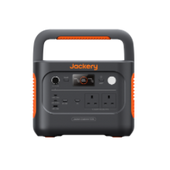
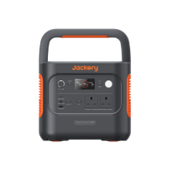
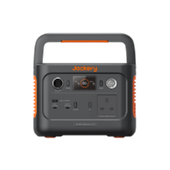
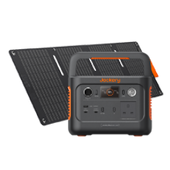
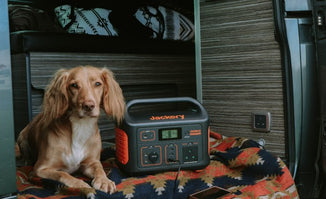
Tiny houses in the UK often range from 100 to 400 square feet. Traditional off-grid solar setups require bulky lead-acid batteries, charge controllers, and complex wiring that eat up precious floor space. The Jackery Portable Power Stations (like the Explorer 2000 Plus) combine the inverter, battery, and controller into a single compact box. Unlike fixed systems, these require no permanent wiring, which is ideal if you are renting land or have a mobile tiny house.

Final Touches: The last step is to add any finishing touches you want. This could mean installing gutters, adding landscaping, or creating a porch or deck. No matter what you choose, make sure it improves your home's value and curb appeal. If you don't know how to do it well, contact an electrician to help you.
Jackery Solar Generators for Tiny Houses
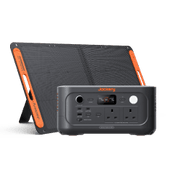
If you're looking to build a tiny house in the UK, getting reliable off-grid or backup electricity is a major practical issue. Space constraints, planning restrictions, and isolated sites frequently make it too costly or impractical to connect to the grid in the usual way. Portable solar generator systems are a good way to power lights, appliances, and other essential systems without building permanent infrastructure.
As of 2026, here is why a Jackery Solar Generator is considered an ideal power solution for a tiny home in the UK. A common myth is that solar doesn't work in the UK. Jackery has optimised its 2026 lineup to handle low-light conditions.
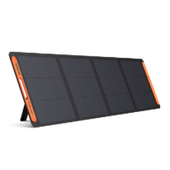
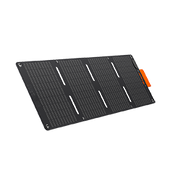
The Jackery SolarSaga panels use Interdigitated Back Contact (IBC) technology, which offers higher efficiency (up to 25%) and better performance on overcast days compared to standard panels.
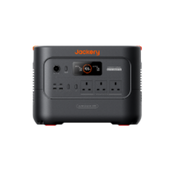
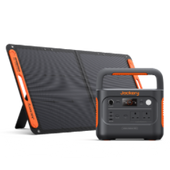
Jackery Solar Generator 3000 v2
The Jackery Solar Generator 3000 v2 is an exceptional choice for tiny houses in the UK, particularly those looking to live off-grid or establish a reliable backup system.
By upgrading to LiFePO4 (LFP) battery chemistry and an ultra-compact design, Jackery has created a high-capacity power hub that addresses the two biggest constraints of tiny house living: limited space and durability.

Compact & Lightweight: The Jackery Explorer 3000 v2 is approximately 35% smaller and significantly lighter (27kg) than its predecessor. This is critical for tiny homes where every square inch matters and weight management is vital for mobile foundations.
High-Output Capacity: With a 3,600W continuous output and a 7,200W surge, it can handle nearly 99% of UK household appliances. This includes power-hungry essentials like electric kettles, induction hobs, and hair dryers that smaller units struggle to run.
10-Year Lifespan: The automotive-grade LFP battery is rated for over 4,000 charge cycles. For a full-time tiny house dweller, this translates to a decade of reliable daily use before the battery capacity even drops to 70%.
Silent & Indoor Safe: Unlike gas generators, it produces zero emissions and operates as quietly as a library (27dB in silent mode). You can keep it tucked away in a kitchen cupboard or under a bench without noise or safety concerns.
UK-Specific Design: The UK model is equipped with 230V~13A UK sockets, ensuring direct compatibility with your existing British appliances without needing bulky adapters.
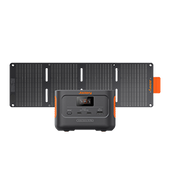
Jackery Solar Generator 2000 Plus
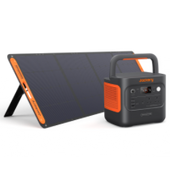
While all Jackery models are popular, the Explorer 2000 Plus is often cited as the "Goldilocks" solution for full-time tiny house living in the UK. It moves beyond being a "portable battery" and acts more like a modular home energy system.

High Power Output for "British Comforts": Unlike smaller units that struggle with heating elements, the 2000 Plus features a 3000W continuous AC output (with a 6000W surge). In the UK, electric kettles typically pull 2000W-3000W. The 2000 Plus can handle a standard UK kettle, toaster, or hair dryer-appliances that would instantly trip smaller 1000W or 1500W generators.
Extreme Scalability for Dark Winters: The biggest challenge for UK off-grid living is the lack of daylight between November and February. The 2000 Plus is expandable from 2kWh to 12kWh (by adding up to 5 Battery Pack 2000 Plus units). You can start with the base 2kWh unit for summer and "add-on" extra batteries in winter to store more power when the sun does occasionally shine, effectively "banking" energy for several days of grey weather.
A typical UK tiny house uses roughly 3–5kWh per day. Expanding to just one extra battery pack (4kWh total) can get you through a full 24 hours of heavy usage without any solar input.
Efficiency in Low-Light (IBC Technology): When paired with the SolarSaga 200W panels, the system uses IBC (Interdigitated Back Contact) solar cells. These panels are up to 25% efficient and perform significantly better in the "diffused" light common in the UK. They can generate up to 50% more power in overcast conditions than traditional PERC panels.
Longevity and Safety (LiFePO4): For a permanent residence, you need a battery that lasts years, not months. The 2000 Plus uses LiFePO4 (Lithium Iron Phosphate) chemistry. It is rated for 4,000+ charge cycles before hitting 70% capacity. If you charge/discharge it every single day, it will still last over a decade.
Common Mistakes to Avoid When Planning or Constructing a Tiny Home
People who want to build a tiny house in the UK often don't realise how difficult it is to navigate the legal, design, and construction issues that arise. Even though small houses seem simple, most UK planning regimes still see them as residences. This means that errors made early on may lead to enforcement action, financial losses, or denial of approval.
Pitfall One: Assuming Tiny Homes Do Not Need Planning Permission
Many people mistakenly think that a tiny home doesn't need planning permission because it's small or easy to move. If you use a little house for living, including sleeping, cooking, or washing, it is typically considered a dwellinghouse under UK planning rules. This implies that the same planning rules apply as for a regular dwelling, such as access, appearance, drainage, and long-term use.
Pitfall Two: Buying Land Without Checking Its Development Status
Another common error is buying land without checking to see whether it can be used for residential construction. There are typically tight rules on what may be built on land in the countryside or Green Belt areas.
Just because a house is modest doesn't mean it's okay. Many people who apply for land after buying it are turned down because it is outside the settlement's borders or violates municipal planning guidelines. Before you buy anything, do your research to avoid costly, frustrating mistakes.
Pitfall Three: Relying on Mobility to Avoid Regulation
Some builders think that putting a small house on wheels means they don't have to follow any planning rules. But if the construction remains in one area for a long time or is used as a permanent home, it might still be considered development under planning regulations.
Local authorities look at how the building is utilised, not how it was constructed. This means that long-term occupancy might lead to action even if the residence can be moved.
Pitfall Four: Starting Construction Before Permission Is Granted
It is a big mistake to start building before getting formal permission. You may even demolish well-designed small dwellings if they were constructed without permission. When planning selections, you have to consider how the site will affect the surrounding area, how easy it will be to access roads, and the environment. Building first and applying later greatly raises the chance of being turned down.
How Much Does It Cost to Build Your Own Tiny House?
Tiny dwellings are becoming more popular as an alternative to regular housing. They appeal to individuals who want to live a simpler, more eco-friendly lifestyle. The cost of building a tiny house varies greatly, ranging from £20,000 to £70,000, or around £1,500 to £2,000 per square metre, depending on materials, manpower, and bespoke features.
How Much Does It Cost To Hire Professionals?
When building a house, specialists bring expertise and efficiency, ensuring the process runs smoothly and safely. Labour expenses may vary substantially depending on the type of project and the tradesmen involved. Electricians, plumbers, and carpenters, for example, specialise in distinct areas of building, and their charges reflect this.
Electricians often charge between £40 and £60 per hour, while plumbers charge between £30 and £50 per hour. Carpenters normally charge between £20 and £40 per hour. These expenses may pile up, particularly for large or complex projects that require significant participation from multiple tradesmen.
Material Selections Influences House Building Costs
Choosing the correct materials for your construction project is an important phase that affects the total cost of constructing a home.
Different materials offer varying degrees of durability, aesthetic appeal, and energy efficiency, which affect both upfront and long-term maintenance costs. Here's a table of common construction materials and their prices:
|
Material Type |
Cost per Unit |
|
Timber |
£25 - £100 per square metre |
|
Brick |
£35 - £100 per square metre |
|
Concrete |
£40 - £70 per cubic metre |
|
Insulation |
£5 - £20 per square metre |
|
Roofing Tiles |
£20 - £60 per square metre |
(Source: My Builder)
Hidden Costs in Tiny Home Building
Building a home entails more than just the obvious construction costs. Various hidden charges can significantly affect your entire budget. Understanding these expenses is critical for successful project management and financial planning.
Here are some extra charges to consider:
Land purchase or rental: Prices vary greatly depending on location and size.
Planning permissions may be time-consuming and expensive, depending on municipal rules.
Utility connections: Essential utilities such as water, power, and sewage increase expenditures.
Interior Furnishings: Appliances, furniture, and fixtures increase total costs.
Site preparation: Clearing and levelling land may result in extra expenditures.
Always add a 10%-15% contingency budget to cover unexpected costs throughout the construction process.
Construction Costs
Understanding construction processes is critical for determining total construction costs, whether for a typical or small home. Each step not only reflects a different portion of the construction process but also incurs distinctive fees that, when added together, form the total cost of building a small home.
FAQs
The following are frequently asked questions about building a tiny house in the UK.
1. Are tiny houses legal in the UK?
Yes, small dwellings are legal in the UK, but only if they are used appropriately and in the right place. In the UK, a compact home on wheels is normally considered a caravan as long as it fits size and mobility requirements.
But if it is utilised for activities such as sleeping, cooking, and washing, it may still be considered a residence under planning standards. This implies that you usually need authorisation to build, especially if the small home will be used for a long time.
2. Can you buy land and put a tiny house on it in the UK?
You can purchase land and put a small home on it in the UK, but you normally need planning clearance first. Just because you own the property doesn't mean you have the right to live there. Local councils consider factors such as land use, location, access, drainage, and environmental effects when deciding on applications.
Many parcels of farmland or countryside are severely controlled, so even if the structure is tiny, it may not be allowed to be used as a home.
3. Do you pay council tax on a tiny home?
The amount of council tax you have to pay depends on how you utilise the small house. You usually have to pay council tax on a property, whether you live there permanently or rent it out.
It may not be taxed separately if the small house is utilised as additional living space on the same property as an existing residence. Some municipal governments may not charge for vacation or short-term housing, but this is not always the case. It is usually best to check with the council immediately.
4. Can you live in the woods legally in the UK?
In the UK, it is usually illegal to live in the woods without authorisation. Most woods are owned by private people, and you normally need permission from the landowner and planning permission to live there for a long time.
With authorisation, you may be able to camp for a short time, but building a permanent home, even a small cottage, would usually be considered development and would require planning permission. Conservation areas and protected landscapes have even more rules.
Final Thoughts
For anyone considering building a tiny house, long-term success depends on legal understanding, efficient design, and realistic budgeting. Tiny homes are free and good for the environment, but you still need to get permission to build them, ensure they are safe, and find the right location.
Energy independence is also crucial, especially for households off the grid or on the move. The Jackery Solar Generator 3000 v2 and Jackery Solar Generator 2000 Plus are both flexible power sources that work well with small living spaces. Building a tiny house in the UK may be a secure, legal, and gratifying housing option if you plan ahead and make smart decisions.


