












































Developed by British company Naked Energy, VirtuPVT is a hybrid photovoltaic-thermal collector. It converts sunlight into electricity while capturing heat that would otherwise be lost, allowing one roof area to produce two useful forms of energy.
Unlike a conventional flat PVT panel, it houses photovoltaic cells and a thermal absorber within an evacuated borosilicate glass tube. The vacuum reduces heat loss, while an integrated reflector directs sunlight towards the absorber.
VirtuPVT is primarily designed for commercial, industrial and multi-residential buildings with substantial, recurring demand for hot water or process heat. However, combined output does not automatically make PVT better than standard PV. Its suitability depends on energy demand, operating temperature, available space, installation cost and how consistently both heat and electricity can be used. This guide examines those factors within the UK market.
|
Key Takeaways: |
|
What Is a PVT Solar Panel, and What Is VirtuPVT?
A photovoltaic-thermal, or PVT, collector combines a photovoltaic layer that generates electricity with a thermal circuit that removes and uses heat. Instead of allowing most of the absorbed solar heat to dissipate into the air, the system transfers it to a circulating fluid for hot water, space heating, process heat or heat-pump support.
When comparing hybrid solar panels, readers should distinguish between three measurements:
- Electrical output: Power is stated in kilowatts electrical (kWe), while the electricity generated over time is measured in kilowatt-hours electrical (kWh).
- Thermal output: Heat-producing capacity is stated in kilowatts thermal (kWth), while delivered heat is measured in kilowatt-hours thermal (kWhth).
- Combined useful output: The usable electrical and thermal energy produced together. This figure is meaningful only when the building can use both outputs.
The main photovoltaic thermal panels differ in how they collect and retain heat:
|
Question |
Simple answer |
|
What is an uncovered PVT panel? |
A PV module with a heat absorber but no insulated transparent cover. It normally supplies lower-temperature heat or acts as a heat source for a heat pump. |
|
What is a glazed PVT panel? |
A collector with a transparent cover that retains more heat. The additional glazing can reduce the amount of light reaching the PV cells and raise their operating temperature, affecting electrical output. |
|
What is an evacuated PVT collector? |
A collector that places the absorber and PV components inside an insulating vacuum tube, reducing heat loss to the surrounding air. |
|
Which type is VirtuPVT? |
The VirtuPVT solar collector is an evacuated tubular design incorporating monocrystalline PV cells, a thermal absorber and an integrated reflector. |
|
Is VirtuPVT the same as VirtuHOT? |
No. VirtuPVT produces electricity and heat, whereas VirtuHOT is a solar-thermal collector intended for higher-temperature heat and produces no electricity. |
How Does VirtuPVT Generate Heat and Electricity?
VirtuPVT produces solar heat and power through two connected but separate energy paths. The electrical side works like solar PV, while the thermal side circulates fluid to carry captured heat into the building.

The process follows five main steps:
- Sunlight enters the tube. Solar radiation passes through the transparent borosilicate glass surrounding the internal absorber.
- The reflector redirects light. An integrated reflector directs additional sunlight towards the absorber surface, helping the collector use radiation that would otherwise pass between or around its active components.
- PV cells generate electricity. Monocrystalline photovoltaic cells bonded to the absorber convert part of the incoming light into direct-current electricity.
- The thermal circuit collects heat. Solar radiation heats the absorber and PV cells. A circulating fluid removes part of this heat instead of allowing it all to escape into the surrounding air.
- Heat enters the building’s thermal system. The warmed water-glycol mixture travels through a heat exchanger, transferring energy to a hot-water cylinder, buffer tank or process-heating circuit. The fluid then returns to the collectors to repeat the cycle.
Each component has a distinct role:
|
Component |
Purpose |
|
PV cells |
Convert sunlight into DC electricity. |
|
Aluminium and copper absorber |
Collect heat and transfer it efficiently to the fluid circuit. |
|
Evacuated glass tube |
Reduces conductive and convective heat loss to the outdoor air. |
|
Reflector |
Directs more available sunlight towards the absorber. |
|
Hydraulic manifold |
Distributes and collects fluid across connected tubes. |
|
DC cabling and inverter |
Carry DC electricity and convert it into usable alternating-current electricity. |
|
Pump station and controls |
Regulate fluid circulation according to collector and storage temperatures. |
|
Thermal store |
Holds captured heat until hot water, heating or an industrial process requires it. |
Removing heat from the absorber can also limit excessive PV-cell temperatures, which may support electrical performance because solar cells generally become less efficient as they grow hotter. However, there is no universal electricity uplift. The result depends on solar irradiance, fluid temperature, circulation rate, ambient conditions and how the control system balances electrical and thermal production.
VirtuPVT Specifications: What Do the Figures Actually Mean?
VirtuPVT figures must be read with their test conditions. A peak rating describes performance at a defined moment; it does not predict annual output for a particular UK roof. The following data comes from Naked Energy’s current product information and the VirtuPVT Solar Keymark certificate issued in October 2024.
|
Specification |
Current figure and what readers should understand |
|
PV-cell technology |
Monocrystalline PERC cells laminated to the absorber. This is the cell technology used to generate electricity. |
|
Electrical efficiency |
Naked Energy describes the cells as 22% efficient. This is a cell figure and should not automatically be treated as the efficiency of the complete collector or roof array. |
|
Peak electrical output |
74 Wp per tube, or 370 Wp for five tubes. This is nominal DC capacity under standard electrical testing, not annual electricity generation. |
|
Peak thermal output |
Up to 277 Wth per tube under the stated “blue-sky” test conditions. Thermal output falls as the required fluid temperature rises relative to the outdoor temperature. |
|
Useful heat temperature |
Heat production at up to 75°C. This is an upper capability, not a promise that every installation will deliver 75°C continuously. |
|
Maximum operating pressure |
600 kPa, equivalent to 6 bar. Pipework, valves, pumps and expansion control must be designed for the hydraulic system. |
|
Test flow rate |
The Solar Keymark test used 0.025 kg/s per m² of gross collector area. Project flow rates must follow the approved hydraulic design rather than copying a test value. |
|
Heat-transfer fluid |
A water-glycol solution circulates through the closed collector loop. It is separate from household hot water or process fluid and transfers heat through a heat exchanger. |
|
Dimensions and area |
One tube is 2,165 × 300 × 260 mm with a gross area of 0.65 m². A five-tube array has a gross area of 3.25 m². Structural design must also use current weight, mounting and load data supplied for the project. |
|
Certification |
Solar Keymark thermal testing, plus IEC 61215:2016 and IEC 61730:2018 certification for the PV element. Certification confirms testing against defined standards; it does not guarantee site-specific yield. |
“Combined efficiency” adds useful heat to electrical output. It therefore cannot be compared directly with a conventional PV module’s electrical efficiency. Annual assessment should report electrical kWh and useful thermal kWh separately, using the actual location, orientation, operating temperature and demand profile.

Is VirtuPVT Better Than Ordinary PV or Solar Thermal?
Before comparing them, it helps to separate the three technologies:
- VirtuPVT is an evacuated hybrid collector that produces electricity through PV cells and captures heat through a fluid circuit.
- Conventional PV uses photovoltaic modules to generate electricity but does not collect heat for the building.
- Solar thermal heats circulating fluid for domestic hot water, space heating or industrial processes but does not generate electricity.
The right choice depends less on headline efficiency than on which energy the building needs and when it can use it.
|
Factor |
VirtuPVT |
Conventional PV |
Solar thermal |
|
Main output |
Electricity and heat |
Electricity |
Heat |
|
Roof-space use |
High combined output where both outputs are used |
Strong electrical output per installed pound |
Strong thermal output |
|
Best demand profile |
Regular electricity plus hot-water or process-heat demand |
Any building with useful electricity demand |
Buildings with substantial hot-water or process-heat demand |
|
System complexity |
Both electrical and hydraulic systems |
Mainly electrical |
Mainly hydraulic |
|
Heat storage required |
Usually |
No |
Usually |
|
Export potential |
Electricity only |
Electricity |
None |
|
Summer overheating or stagnation |
Requires suitable heat use, storage and thermal protection |
Not a hydraulic issue |
Requires suitable thermal design |
|
Typical maintenance |
PV checks plus fluid, pump, pressure and control checks |
Relatively low, with electrical and mounting inspections |
Fluid, pumps, controls, pressure and storage checks |
|
Best UK candidates |
Hotels, pools, hospitals, flats, food production and other heat-intensive sites |
Most homes and businesses |
Heat-intensive buildings with sufficient roof space |
|
Main limitation |
Higher design complexity and value depends on using both outputs |
Does not directly provide renewable heat |
Heat is less versatile and cannot be exported through the electricity grid |
Are PVT panels better than PV?
Not automatically. A VirtuPVT solar collector can recover more total useful energy per square metre than a PV-only module because it produces both electricity and heat. This can be valuable on a roof with limited space and a steady demand for hot water or process heat.
However, heat that cannot be used or stored has little financial value. A conventional PVT vs PV comparison must therefore assess usable annual output, not simply combined peak capacity. For many UK houses, offices and warehouses, ordinary PV may be cheaper, easier to install and more flexible because electricity can serve appliances, charge a battery or be exported.
Which is more efficient, solar thermal or PV?
Solar thermal normally converts a larger share of incoming sunlight into usable heat than PV converts into electricity. Yet the two outputs are not equivalent. Electricity can power many devices, charge storage and enter the grid, while solar heat must be used locally at a suitable temperature.
Consequently, higher thermal efficiency does not automatically mean greater savings or a shorter payback period. The best technology is the one whose output most closely matches the building’s actual energy demand.
Does VirtuPVT Work in the UK Climate?
VirtuPVT can operate in the UK because solar collectors respond to solar radiation, not outdoor warmth alone. A bright winter day can produce useful energy even when the air is cold, while a warm but heavily overcast day may provide less. Local irradiance, shading, orientation and system temperature are therefore more informative than average air temperature.
The evacuated tube is particularly relevant in cool or windy weather. Removing most of the air around the absorber reduces conductive and convective heat loss, helping retain collected heat. The PV cells also continue generating electricity from diffuse light passing through cloud, although their output falls as the available solar irradiance decreases.
Thermal performance depends strongly on the temperature difference between the collector and the outdoor air. Producing 30°C fluid when the air is 15°C is easier than maintaining 70°C when the air is 5°C. This is why low-temperature hot-water preheating, swimming pools and heat-pump support can yield more usable heat than a process requiring a consistently high delivery temperature.
The certified performance figures illustrate this relationship. For the Solar Keymark reference climate of Würzburg, one VirtuPVT tube was modelled to produce 204 kWh of annual thermal energy at a mean fluid temperature of 25°C, falling to 95 kWh at 50°C and 33 kWh at 75°C. These are standardised comparison figures, not forecasts for a UK installation.
Seasonal mismatch remains important for any PVT solar panel UK project. Space-heating demand is greatest during the darker winter months, while the highest solar output usually arrives in spring and summer. A cylinder or buffer tank can move heat from midday to later in the day, but ordinary thermal storage does not carry summer energy into winter.

Which UK Buildings Are Best Suited to VirtuPVT?
The strongest case for virtu pvt is usually a building that consumes electricity and useful heat throughout the year. Property type is only a starting point: two hotels of similar size may have very different results if one operates continuously while the other closes for part of the year. Hourly energy demand, required temperature and available storage matter more than the building label.
|
Application |
Why it may suit VirtuPVT |
Main point to check |
|
Hotel |
Guest rooms, kitchens and laundry can create year-round hot-water and electricity demand. |
Daily load profile, occupancy variation and thermal-storage volume |
|
Leisure centre or swimming pool |
Pools provide a large, relatively low-temperature heat load that may accept solar heat for long operating periods. |
Pool schedule, ventilation losses and heat-exchanger design |
|
Hospital or care facility |
Continuous occupancy can produce dependable hot-water and power demand. |
Resilience, backup capacity and hygiene-temperature requirements |
|
Block of flats or student accommodation |
Centralised hot-water systems can concentrate demand from many occupants. |
Communal plant design, metering, ownership and billing arrangements |
|
Food and drink facility |
Processing, cleaning and refrigeration can create simultaneous heat and electricity demand. |
Whether the required process temperature matches the collector output |
|
Office |
Lighting, computing and ventilation create daytime electricity demand. |
Whether there is enough hot-water or summer heat demand |
|
Detached home |
Technically possible where both outputs can be used. |
Installed cost, specialist availability, cylinder space and heat utilisation |
The Swansea Active Office provides a smaller UK reference. Its VirtuPVT array was rated at 2.4 kWp electrical and 9.6 kWp thermal, supplying both energy streams to a two-storey research office. However, it was created as an energy-positive demonstration building, so its design should not be treated as a standard commercial-office template.
When may VirtuPVT be a poor fit?
These photovoltaic thermal panels may be less suitable where:
- Hot-water or process-heat demand is low or irregular.
- There is little room for a cylinder or buffer tank.
- The proposed collector area is heavily shaded.
- The roof is approaching replacement.
- No efficient hydraulic route exists between the roof and plant room.
- The project only needs electricity.
- Low-cost conventional PV can already use the roof economically.
A feasibility study should therefore begin with at least 12 months of electricity and heat data, ideally broken into monthly or half-hourly demand.
Roof, Plant-Room and Installation Requirements
A roof with good sunlight is not enough to make a PVT solar panel UK project viable. The feasibility study must follow the complete energy route—from solar radiation reaching the collector to electricity entering the distribution board and useful heat reaching the intended load.
VirtuPVT can be installed on flat roofs, pitched roofs and façades, but each arrangement requires a site-specific layout. Orientation, tube position and absorber angle affect solar capture, while shading from parapets, plant equipment and adjacent rows can reduce output. The design must also leave safe access for installation, inspection and replacement.
The survey should cover the following areas:
|
Area |
What must be checked |
|
Structure and mounting |
Collector, frame, fluid and ballast loads; wind uplift; fixing points; self-ballasted versus mechanically fixed design |
|
Roof condition |
Waterproofing, drainage, remaining roof life and effects on the existing roof warranty |
|
Collector layout |
Orientation, absorber angle, shading, row spacing and maintenance access |
|
Hydraulic route |
Pipe length, diameter, insulation, elevation and resulting heat loss |
|
Plant room |
Space for the thermal store, heat exchanger, pump station, expansion vessel and safety controls |
|
Electrical route |
DC cable path, inverter location, isolation, distribution-board capacity and export control |
|
Existing heating |
Connection to boilers, heat pumps, hot-water systems, process equipment and building-management controls |
Long pipe runs can consume plant-room space and lose heat before it reaches the store. Pumping electricity must also be included in the energy model. The thermal store should be sized from the building’s demand pattern rather than simply from collector capacity.
UK approvals and documentation
Solar equipment may qualify as permitted development, but limits and conditions apply. Low-profile equipment is not automatically exempt from planning checks. Listed buildings, conservation areas, sensitive elevations and some flat-roof installations require additional attention. Rules also differ across England, Scotland, Wales and Northern Ireland, so the relevant local planning authority should be consulted.
Building Regulations considerations include structural safety, weather resistance, fire performance, electrical work and hot-water-system safety. The electrical generation must follow the applicable DNO connection process—commonly G98 for qualifying smaller installations or G99 where its limits are exceeded.
Where exported electricity will receive Smart Export Guarantee payments in Great Britain, the applicant generally needs MCS certification or an accredited equivalent, together with a meter capable of half-hourly export readings.
At handover, obtain electrical test results, hydraulic pressure and flow records, control settings, system drawings, warranties, operating instructions and separate commissioning records for the electrical and thermal systems.

Costs, Savings and Payback: How Should a VirtuPVT Proposal Be Assessed?
A reliable public PVT panel cost UK figure is difficult to provide for VirtuPVT. The system is generally designed for a particular commercial building and quoted as a complete heat-and-power project, rather than sold at a simple retail price per collector. Two arrays with the same number of tubes may have very different installed costs because of roof access, pipe length, thermal storage and integration with existing plant.
A quotation should separate the following items:
|
Cost category |
What it may include |
|
Collectors and mounting |
VirtuPVT tubes, reflectors, frames, ballast or mechanical fixings |
|
Hydraulic distribution |
Manifolds, insulated pipework, valves and water-glycol fluid |
|
Pump station and controls |
Circulation pumps, sensors, control unit, expansion vessel and safety equipment |
|
Thermal storage |
Hot-water cylinder, buffer tank or alterations to an existing store |
|
Heat exchange |
Heat exchanger and connections to hot water, heating or process equipment |
|
Electrical system |
Inverter, DC and AC cabling, isolation, metering and distribution-board work |
|
Building work |
Structural reinforcement, waterproofing, roof repairs and plant-room alterations |
|
Professional services |
Surveying, energy modelling, structural design, commissioning and DNO application |
|
Site access |
Scaffolding, crane hire, lifting equipment and temporary protection |
|
Ongoing costs |
Monitoring, inspections, glycol testing, pump servicing and component replacement |
Savings must be calculated from the two useful outputs separately:
Annual gross value=(useful electricity×avoided electricity price)+(useful heat×displaced heat cost)
The heat price should reflect the fuel or technology actually displaced. For example, one thermal kWh does not necessarily avoid one kWh of purchased electricity: a heat pump may have produced that heat using considerably less electrical energy.
From the gross value, subtract pumping electricity, maintenance, distribution losses, finance costs and the value assigned to heat that cannot be used. Electricity exported rather than consumed should also be valued at the applicable export rate, not the higher import tariff.
Every supplier proposal should state:
- Modelled annual electrical and useful thermal yields
- Monthly output profiles for both energy streams
- Target delivery and storage temperatures
- Assumed percentage of generated heat actually used
- Existing fuel or heating technology displaced
- Electrical and thermal degradation assumptions
- Pumping and maintenance allowances
- Self-consumption and export assumptions
- Simple payback and discounted payback or net present value
Unused summer heat must not be counted as a saving. A proposal forecasting 100,000 kWh of generation but only 65,000 kWh of usable heat should base its financial benefit on the latter figure. Comparing quotations on useful delivered energy, rather than collector count or combined peak efficiency, gives a more credible view of payback.
Can VirtuPVT Work with Battery Storage and Jackery SolarVault 3 Pro Max?
VirtuPVT produces two energy streams that require different storage technologies:
- An electrical battery stores electricity from the PV cells.
- A hot-water cylinder or buffer tank stores captured thermal energy.
- An electrical battery cannot directly store the heat carried by the collector’s water-glycol circuit.
A potential arrangement would operate as follows:
- VirtuPVT generates DC electricity, which a suitable solar inverter converts to AC.
- The building consumes available solar electricity first.
- Compatible surplus electricity may charge an AC-coupled battery through the building’s electrical system.
- Separately, the thermal circuit transfers heat to a cylinder, buffer tank or process-heating system.

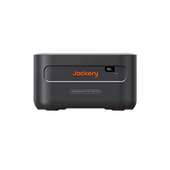
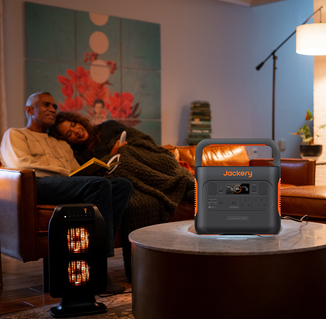
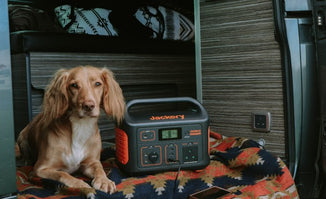
The Jackery SolarVault 3 Pro Max is one example of a modular LFP home-energy storage system. The current UK product information lists up to 2,500 W of AC-coupling capacity, while storage starts at 2.52 kWh and can expand to 15.12 kWh within one tower. Its energy-management functions can use metering data to coordinate charging and discharging according to solar surplus, household demand and tariff settings. It may therefore be relevant to a suitable UK property seeking to increase self-consumption of VirtuPVT’s electrical output or retain selected backup capacity.
However, the two products should not be described as directly compatible without a system designer confirming the complete arrangement. Checks should include:
- Solar-inverter topology and AC connection method
- Single-phase or three-phase supply
- Smart-meter and current-transformer placement
- Export limitation and DNO requirements
- Communication between meters, controls and battery
- Battery power and capacity relative to the electrical surplus
- Protection, isolation and circuit design
A home battery does not address surplus summer heat. Commercial VirtuPVT projects may also require a larger three-phase or building-scale battery rather than a domestic system.
Backup power is another separate design decision. A standard grid-connected battery must disconnect safely from the public network during an outage.
Only a correctly designed backup output, changeover arrangement and selected essential-load circuit can continue operating. Battery ownership alone does not mean that VirtuPVT, the heating plant or the entire building will remain powered during a blackout.
FAQs
The following are the frequently asked questions about the PVT panels in the UK:
Are PVT panels better than PV?
PVT panels can collect more total useful energy per square metre because they produce electricity and heat. However, they are not automatically better. A building must have regular demand for the captured heat, sufficient thermal storage and suitable hydraulic connections. Where electricity is the main requirement, conventional PV is usually simpler, less expensive and easier to maintain.
What is a PVT solar panel?
A photovoltaic-thermal, or PVT, solar panel combines PV cells with a thermal absorber. The PV cells generate electricity, while fluid circulating behind or around them carries captured heat to a cylinder, buffer tank or heat process. These hybrid solar panels therefore produce two separate energy streams from the same collector area.
Who is the biggest solar panel manufacturer in the world?
The answer depends on whether “biggest” means annual shipments, production capacity, revenue or cumulative deliveries. In InfoLink’s completed 2025 module-shipment ranking, JinkoSolar and LONGi were jointly ranked first, each shipping within the 80–90 GW range after US-facility volumes were included. Rankings can change annually and do not establish which product is best for a particular UK installation.
Which is more efficient, solar thermal or PV?
Solar thermal normally converts a greater share of incoming sunlight into heat than PV converts into electricity. However, electricity is more versatile: it can power equipment, charge a battery or be exported. Solar heat must be used locally and at a suitable temperature. Compare usable kWh, costs and demand matching rather than efficiency percentages alone.
What is the 33% rule for solar panels?
There is no universal UK law stating that panels may cover only 33% of a roof. Online references often mix several unrelated ideas:
- Oversizing a PV array by roughly one-third relative to its inverter.
- Roof-access provisions from US fire codes.
- A rough assumption about average solar output.
None should be applied automatically. UK designers must follow the inverter manufacturer’s DC limits, electrical standards, structural calculations, fire requirements and the relevant planning rules.
Can VirtuPVT heat a building throughout winter?
VirtuPVT can contribute heat during winter, but it should not be assumed to meet the complete load. Shorter days, lower irradiance and a larger difference between collector and required fluid temperatures reduce thermal yield. A site-specific model must compare monthly output with demand, while a boiler, heat pump or other source normally covers low-solar periods and peak loads.
Can VirtuPVT provide hot water without a boiler or heat pump?
It may supply most or all of the hot-water demand during favourable sunny periods if the system and thermal store are correctly sized. It cannot guarantee continuous hot water throughout the year. Backup heating is usually retained to cover poor weather, peak consumption and any final temperature increase required for hot-water hygiene.
Is VirtuPVT suitable for an ordinary UK house?
It is technically possible, but the financial case may be weaker than for a hotel, pool or apartment building with continuous hot-water demand. A household considering a PVT solar panel UK installation needs enough roof and cylinder space, a practical pipe route and access to suitable designers and installers.
The quotation should be compared with conventional PV, a heat pump, solar thermal and separate PV-plus-thermal options. For many houses, PV alone may offer a simpler route; VirtuPVT becomes more attractive when both electricity and heat can be used consistently.
Final Thoughts
Before choosing virtu pvt, follow a demand-led decision process:
- Measure at least 12 months of electricity and heat consumption.
- Identify the required heat temperatures and hourly demand pattern.
- Survey the roof structure, orientation, shading and routes to the plant room.
- Model electrical generation and useful thermal output separately.
- Compare VirtuPVT with conventional PV, solar thermal and separate-system alternatives.
- Check planning, structural, Building Regulations, electrical and DNO requirements.
- Obtain an itemised quotation covering maintenance, component replacement and energy-price assumptions.
- Assess battery capacity and thermal-storage volume independently.
VirtuPVT’s main advantage is not that it makes a PV panel universally “more efficient”. Its value lies in producing two useful energy streams from constrained roof space. Where a UK building has consistent electricity demand and can consume heat at a suitable temperature, the technology may offer a strong use of the available area. If much of the thermal output would be wasted, conventional PV may remain the simpler and more rational choice.


