


































The tiny house movement has long been popular in the United States, and it is also gaining traction in the United Kingdom. Tiny dwellings might be attractive, efficient, and environmentally friendly, but they are not free from planning regulations.
Remember that the planning system considers a building a dwelling if it can be used for living, cooking, and sleeping. Therefore, seek expert planning counsel as soon as feasible.
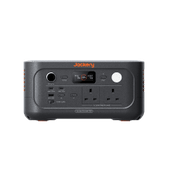
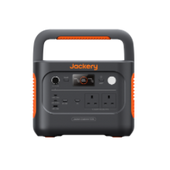
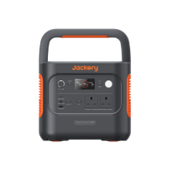
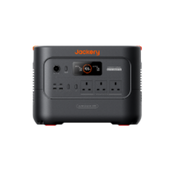
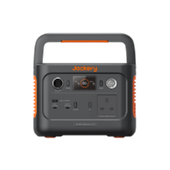
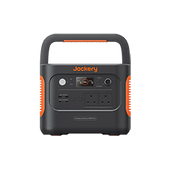
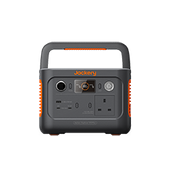
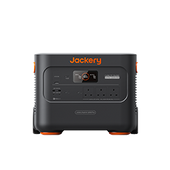
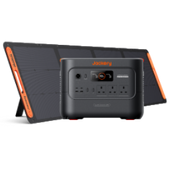
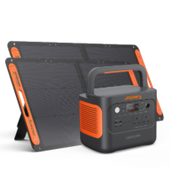
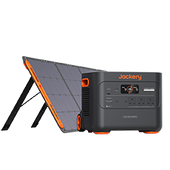
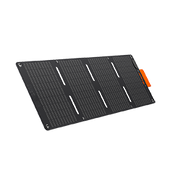
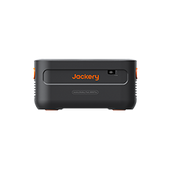
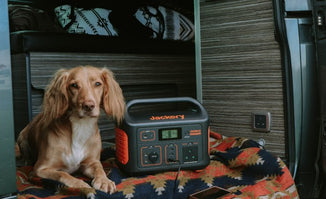
Furthermore, before creating a tiny house in the UK, examine the spatial layout, electricity and water connections, and waste management. The Jackery Solar Generator 3000 v2 and Jackery Solar Generator 2000 v2 are options for supplying green energy to tiny residences.
|
Key Takeaways: |
|
What Is a Tiny House?
The 2018 International Residential Code (IRC) defines small homes as residences with a floor size of 400 square feet (37 square metres) or less, excluding the house loft. Because most tiny homes are built on wheels, the UK government treats them legally as caravans or mobile homes, given their practical, compact design and transportability.
If you want a small, movable home, you need to be aware of several guidelines. A normal automobile license requires a mobile home to be no more than 2.55m wide and 7m long. However, if you want anything a little larger that you can travel on the road, you must alter your permit to a category C1E for anything longer than 7m; even with this permission, the mobile house cannot be wider than 2.55m.
If you're creating your own small home, check the IRC to ensure that everything complies with your local building regulations. However, most small home firms provide both self-building kits and pre-made tiny houses, so you don't have to worry about legal size. This is an intriguing choice, but you may need to pay for shipping expenses.
How Big is a Tiny House?
The 2018 International Housing Code (IRC) defines a tiny house as a dwelling with a floor size of no more than 400 square feet (37 square meters) (excluding the attic).
However, considering that the minimal living space criterion for dwellings in the UK planning guidelines is 37 square meters (for a single-room, single-story dwelling for one person), the UK planning system becomes somewhat difficult.
Because most tiny houses are on wheels, the UK government considers them to be a form of travel trailer or mobile home, as they are compact, fully functional and moveable.
What Is the Significance of a Tiny House?
Tiny houses come in a variety of shapes, sizes, and styles, but they all have one thing in common: they reduce living space to the necessities. Tiny houses are more than just a reduction in living area; they represent a way of life. Tiny houses have become a societal trend as people reject consumerism in favour of a simpler, happier lifestyle.

Is a Tiny House Legal in the UK?
Yes, tiny houses are lawful in the UK. A travel trailer is legally defined as a small house on a trailer or as moveable (for example, erected on a temporary foundation and transportable by truck). If a tiny home does not have a trailer, it may be defined as a granny/outbuilding/compact house, or it may still be called a travel trailer, as the word does not include residential buildings that "must" include a trailer.
Tiny houses, regardless of their classification, are permitted in the UK. But only if it follows planning requirements.
Does Building a Tiny House Require a Planning Permit?
In the United Kingdom, building tiny houses is subject to certain laws. Planning authorisation is necessary in practically every scenario.
If your tiny house is located on an outbuilding of the main house and is only utilised for auxiliary functions (for example, as a guest room or office on occasion), it may be considered a Category E authorised development. However, once someone begins using it as their primary residence, it is no longer ancillary; it becomes an auxiliary or independent dwelling, requiring planning clearance.
Simply put, if a tiny house is used for living purposes—sleeping, cooking, or washing—it is classified as Category C3 (residential), just like any other dwelling. However, planning permission is not necessary if all of the following conditions are satisfied:
|
Condition 1 |
You are building a single-storey outbuilding in your premises (e.g., your backyard). |
|
Condition 2 |
Your selected building does not feature a balcony, platform (raised more than 300 mm from the ground) or veranda. We have ensured that our wooden structures featuring veranda are not raised more than 300 mm from the ground. |
|
Condition 3 |
The roof of the building is up to 4 m in height (double-pitched) or up to 3 m in height (single-pitched). The eaves must be up to 2.5 m in height. |
|
Condition 4 |
The ridge height is up to 2.5 m (if the house is built within 2 m of the boundary) or 4 m (if the house is built more than 2 m from any boundary). |
|
Condition 5 |
The newly built structure will be used for non-residential purposes only (e.g., lounging, storage, or remote working). |
(Source: www.quick-garden.co.uk)
The information provided above is solely for reference. The best option is to contact your local planning official or a planning advisor in your area; they will provide more information.
Do Tiny Houses Need to Pay Municipal Tax?
If your small house is your primary dwelling and is built on rented or privately held property, you must pay municipal taxes. However, there are several cases where you do not have to pay municipal tax for tiny residences, such as the following two:
Situation 1: If the tiny house is used as a vacation rental or second home while your primary abode is elsewhere, no municipal tax is required.
Situation 2: If the small house is erected in your garden and utilised by family members as additional living space (e.g., an outbuilding), no municipal tax is required because the main house already pays the applicable taxes.
Where Is the Right Place to Put or Build a Tiny House?
A tiny house cannot alter the nature of the ground it sits on and must be built inside the house site. It cannot be constructed outside the house site, such as outside the front door or the full "yard." Here are the best locations for tiny houses in different situations: (Source: www.thetinyhousing.co)

Farmland
If you want to use the house as a land management station, obtaining planning permission is easier. Agricultural land development license can be obtained for farms larger than 5 hectares for the construction of "outbuildings," allowing you to live in a tiny house for up to 5 years while the new outbuildings are erected.
Private Woodland
Furthermore, if you have a genuine cause to use your house as a shed on private land—for example, if you use your house as an attached farm building for a forestry project—you can most certainly use your small house as a full-time residence and storage space with no legal ramifications.
Private Land
If you intend to use your tiny house on private land other than your primary residence, you may do so for up to 28 days per year without obtaining a planning permit. This might be especially useful if you use your tiny house as a vacation home or backyard guesthouse.
Note*: For all planning permission enquiries, please contact your local planning office directly; they will be able to provide the best advise. Make sure you document everything in writing.
Who Is a Tiny House Suitable for?
Tiny houses, despite their modest size, are attracting an increasing number of people looking for alternatives to traditional housing due to their low cost, high efficiency, and environmental friendliness. Tiny houses are especially appropriate for the following groups:
Those Who Follow a Minimalist Lifestyle
Tiny houses are also an appealing choice for people looking to simplify their lives, reduce material ownership, and live a simpler, more environmentally friendly, and closer-to-nature off-grid lifestyle. Moving into a tiny house is more than simply a housing option; it is also a reflection of one's lifestyle. One of the most significant advantages is that there is no mortgage load.
Singles and Young Professionals
Housing prices in large cities such as London are excessively high for young individuals just starting out in their careers, those with unpredictable salaries, and recent graduates.
Building a one-of-a-kind home becomes extremely enticing, especially when the cost is minimal. Buying or renting a tiny house is not only less expensive than paying high rentals over time, but it also promotes independent living skills.
Considerations and Solutions for Building a Tiny House
Aside from planning permits and site selection, it's critical to first determine the type of tiny house you want. Before building or purchasing a ready-made tiny house, you should consider the following key factors.

Determining Size, Layout, and Space Planning
Tiny houses exist in a variety of sizes, so you'll need to evaluate your daily life and practical demands before making a decision. This includes whether you need room for remote work or to pursue hobbies. Would you rather live somewhere without public facilities or near them? Your responses will help determine size, layout, and, most importantly, comfort. The most frequent sizes include:
20 feet: compact and easy to transport; suitable for single use.
24 feet: An ideal size for couples with innovative storage.
28 feet or more: Larger plans are ideal for families or long-term housing.
Connecting to Electricity
Tiny dwellings in the garden (such as granny rooms) can be connected to the mains electricity supply. Ensure that your current system can handle the additional demand without overloading the circuitry.
A separate utility account and connection can be established for detached residences (this is more complex and typically requires authorisation). Any significant electrical work must follow Building Code Part P and be certified by a competent electrician.
If your small house is far from current infrastructure, a solar power system (such as the Jackery Solar Generator 3000 v2 or 2000 v2) is a potential solution.
Water Connections
Water connections vary depending on whether you are extending existing pipes or applying for a new connection from the water company. New water connections require clearance from the local water utility and may result in connection fees. If your tiny house is far from current infrastructure, a rainwater harvesting system could be a practical solution.
Installing a Waste Management System
Waste management in tiny houses presents unique challenges. Three viable alternatives are:
Option 1: connect to the existing sewage system (needs consent from the water company)
Option 2: Installing a septic tank (subject to UNEP restrictions and may need planning clearance)
Option 3: Composting toilets or other off-grid options (subject to environmental regulations)
Jackery Solar Generators for Tiny Houses
In the UK, with the rise of tiny houses and sustainable lifestyles, providing stable, clean, and independent energy support for small yet fully functional homes has become a core concern for residents.
Jackery, leveraging its technology in portable energy storage and solar power systems, has tailored efficient, safe, and intelligent green energy solutions for tiny houses.
Among them, the Jackery Solar Generator 3000 v2 and Jackery Solar Generator 2000 v2, with their superior performance and adaptability to various scenarios, have become the preferred energy systems for tiny houses. The core advantages of these two products will be analysed in detail below.
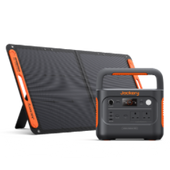
Jackery Solar Generator 3000 v2
The core advantages of the Jackery Solar Generator 3000 v2 are as follows:

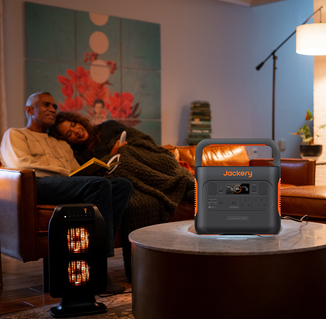
Large Capacity + Powerful Output to Meet the Power Needs of the Whole House: The Jackery Solar Generator 3000 v2 has a large-capacity 3072Wh battery capacity, which can support the continuous power supply of a tiny house for about a whole day without the need for mains power. It supports a continuous output power of 3600W (7200W peak power), which can simultaneously run common household appliances such as refrigerators, microwave ovens, and lighting systems.
Millisecond-Level UPS Switching Ensures Worry-Free Power Outages: The Jackery Solar Generator 3000 v2 features a built-in UPS with a switching speed of less than 20ms. It automatically supplies power during mains power outages, ensuring the continuous operation of critical equipment such as routers, security systems, and medical devices, achieving zero-impact power outages. This is particularly suitable for remote work or home-based elderly care scenarios.
High-Efficiency Solar Charging for True Energy Self-Sufficiency: The Jackery Solar Generator 3000 v2 supports 1000W solar input (MPPT intelligent tracking), fully charging in just 3.5 hours on a sunny day. It maximises solar energy utilization by prioritizing stored solar power over grid power, reducing dependence on the grid and lowering electricity bills by 22% through solar charging.
Safe and Reliable, Designed Specifically for Homes: The Jackery Solar Generator 3000 v2 uses a CTB (Cell-to-Body) structure design, making the battery more robust and compact. It uses advanced lithium iron phosphate batteries with a cycle life of up to 10 years (enjoying up to 4,000 charge cycles), high temperature resistance, and anti-degradation, far exceeding ordinary lithium batteries.
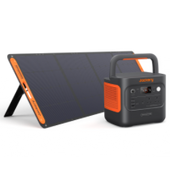
Jackery Solar Generator 2000 v2
The core advantages of the Jackery Solar Generator 2000 v2 are as follows:

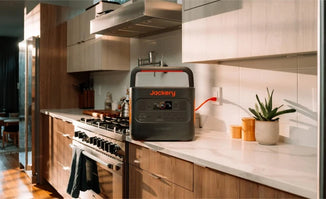
High-Density Energy, Compact Size with High Power: The Jackery Solar Generator 2000 v2 has a capacity of 2042Wh, which is 41% smaller (Explorer 2000 v2: 13.2 × 10.4 × 11.5 inches) and 35.6% lighter (Explorer 2000 v2: 38.6 lbs) than the industry standard. It is especially suitable for small houses with limited space and can be easily embedded in cabinets or corners without taking up living space.
Powerful Output Covering Everyday Power Needs: The Jackery Solar Generator 2000 v2 boasts a 2200W output, sufficient to power most appliances in a tiny house, including TVs, washing machines, rice cookers, laptops, and lighting. It also features two AC power outlets, one 18W USB-A port, and two USB-C ports (100W + 30W), allowing simultaneous charging of multiple devices.
Lightning-Fast Charging, Say Goodbye to Waiting: The Jackery Solar Generator 2000 v2 can perform emergency charging (AC) via the Jackery App, charging from 0% to 100% in just 1.33 hours, far exceeding the charging speed of traditional generators. It also supports multiple charging modes: solar (400W solar input: 5.5 hours to fully charge), car charging, and AC power, adapting to various scenarios.
Durable and Ultra-Quiet: The Jackery Solar Generator 2000 v2 has passed the rigorous IEC60068-3-3 seismic test, proving its durability even in a magnitude 9 earthquake. Furthermore, a silent charging mode can be activated via the Jackery app, with noise levels ≤30dB, making it ideal for tiny houses and indoor use without causing disturbance.
How Much Does a Tiny House Cost?
Tiny houses have attracted considerable attention due to their low cost and sustainability. However, the costs vary depending on the construction process, materials, location, and configuration. Here are some costs related to tiny houses:
How Much Does a Prefabricated Tiny House Cost?
Prefabricated tiny houses are manufactured in a factory and delivered to a specific location for assembly. Their advantages include fast building cycles, regulated quality, and modern design, making them ideal for purchasers who value efficiency and ease. A prefabricated, move-in-ready tiny house costs between £35,000 and £60,000. However, this is not your only option. You can also purchase:
A Trailer Bed: These trailers can be used as the foundation for your home. Space is limited to 16 to 25 feet in length and 7 to 8 feet in breadth. However, you should anticipate paying only £3,500-£5,000 for the initial construction of your ideal home.
Ready-to-Use Tiny Houses: If you don't want to build your own tiny house, you can buy a prefabricated, towable one. These are ready to use immediately. Depending on the size, a mini-home might cost between £35,000 and £65,000.
How Much Does a Self-Built Tiny House Cost?
A self-built small house is one that an individual or team designs, sources, and builds. While more difficult, it may be fully customised to your specific requirements and provides greater flexibility in material and labour selection to reduce costs. In most cases, the average cost ranges between £12,000 and £15,000.
This usually pertains to container dwellings, modular homes, or converted vans. If you wish to cut expenditures in this area, consider employing second-hand materials, simple structures (such as modified shipping containers or timber frames), and simple interior design. For those refurbishing smaller properties, a tiny house can be built for as little as £6,500, making it a cost-effective solution.

Is a Tiny House Worth It?
In recent years, tiny houses in the UK have become increasingly popular. But are tiny houses genuinely worth buying? The following comparison of their benefits and drawbacks provides buyers with a sensible reference.
Advantages of Tiny Houses
The main advantages of tiny houses are:
Low Price Threshold: Tiny houses are substantially less expensive than flats in the same region, lowering down payment requirements and loan thresholds.
Significantly Reduced Cost of Living: Smaller areas use less heating, lighting, and water, resulting in lower energy expenditures than in standard residences.
Promoting a Minimalist Lifestyle: Limited space forces people to keep only what they absolutely need, saying goodbye to mindless material accumulation and minimising time spent on cleaning and chores.
Opportunities for Sustainable Living: Tiny dwellings require fewer building materials, which reduces carbon emissions during construction. When combined with technology such as solar panels, rainwater collecting systems, and green roofs, they achieve energy independence and resource recycling.
Disadvantages of Tiny Houses
Aside from the obvious benefits, tiny houses pose significant hazards and challenges:
Crowded Living Space: The compact size limits space, making it difficult to accommodate many people. It is unsuitable for long-term family living, scenarios with pets, or visitors.
Difficult Resale: The possible buyer base is limited, primarily to specialised categories (such as single young adults). Future resales may be at risk of price inversion or long-term emptiness.
Lack of Privacy and Social Space: Tiny houses often feature open or semi-open floor plans with no separate guest rooms. Furthermore, narrow walls and inadequate sound insulation contribute to severe noise pollution.
In conclusion, a tiny house is not appropriate for everyone. For example, it is unsuitable for folks who require great living comfort or a separate gym space. However, it is worth purchasing for people who are prepared to sacrifice room in exchange for a low-burden, high-freedom, and ecologically responsible lifestyle.
FAQs
The following are frequently asked questions about the tiny houses in the UK.
1. Are tiny houses legal in the UK?
Of course. If a tiny house is installed on a trailer or is transportable, it is considered a travel trailer. If a tiny house does not have a trailer, it may be classified as a granny/outbuilding/compact home, or even a travel trailer.
Regardless of classification, tiny houses are permitted in the UK. However, whether a tiny house has wheels, it will most certainly require planning permission to be considered a legal construction.
2. Can you buy land and put a tiny house on it in the UK?
Yes, but only if it complies with planning requirements, such as receiving planning approval or having a current legal use.
3. How much do Tiny Homes cost in the UK?
A prefabricated, move-in-ready tiny house costs between £35,000 and £60,000. If you opt to build one yourself, the cost will be around £12,000-£15,000. This includes the cost of materials and labour.
4. Do you need planning permission for a tiny home in the UK as a primary residence?
Yes. When someone starts using the tiny house as their primary residence, it is no longer considered an accessory use, but rather a supplemental or independent living use that requires planning clearance.
Final Thoughts
The most prevalent reasons people select tiny houses are environmental, economic, and a desire for more freedom and time. A minimalist lifestyle benefits the environment by limiting the number of household items and reducing resource use.
Economically, tiny houses are not only economical but also significantly reduce energy costs. For example, they can lessen their reliance on the grid by generating electricity with solar power systems (the Jackery Solar Generator 3000 v2 and Jackery Solar Generator 2000 v2 are recommended).


