






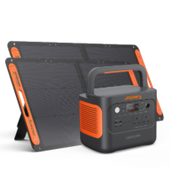
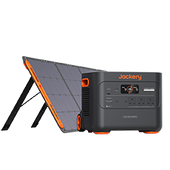

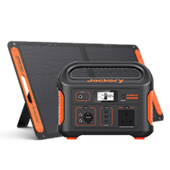
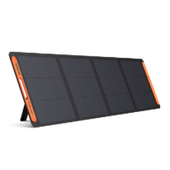
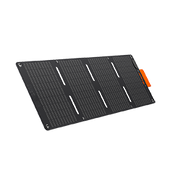
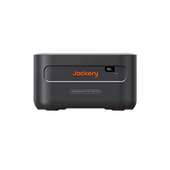
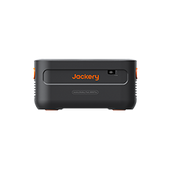

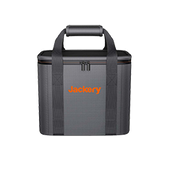
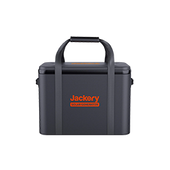





























With fluctuating energy prices in the UK, many households want to optimise their electricity costs through energy storage systems, but the high cost of solar installations often deters them. However, installing home battery storage in the UK doesn't necessarily require solar panels. Through price arbitrage strategies, you can charge from the grid during off-peak hours and use the stored power during peak times.
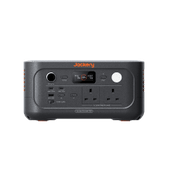
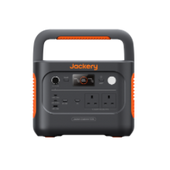
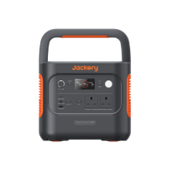
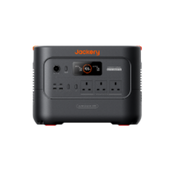
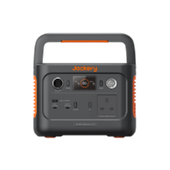
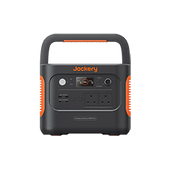
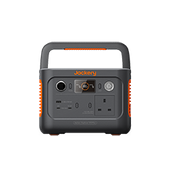
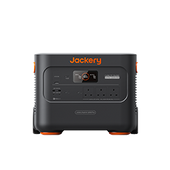
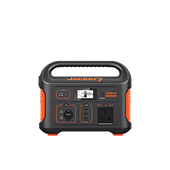
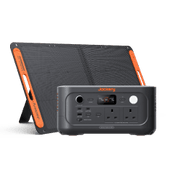
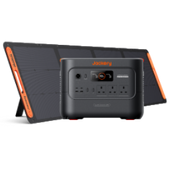
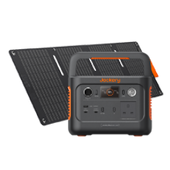
Consider the Jackery Explorer 3000 v2 or Explorer 2000 v2 – flexible and practical solutions requiring no complex construction, ideal for apartments and townhouses, and a smart move for home energy management, cost reduction, and ensuring emergency power supply.
|
Key Takeaways: |
|
Home Battery Storage UK without Solar: Is It Feasible? How Does It Work?
Yes, home battery storage in the UK without solar panels is not only feasible, but also growing popular among UK residents. Storage batteries, also known as battery energy storage systems (BESS), can store electricity from a range of sources, including the grid and renewables such as wind and hydroelectric power.
Their principal function is to store power for later consumption, regardless of where it originates. Most people utilise grid charging because it is simple and effective. This strategy is also known as grid-based energy shifting, load shifting, or peak shaving.
How Does a Home Battery System Work Without Solar?
A solitary home battery storage in the UK without a solar system draws electricity from the grid, usually during off-peak hours when energy prices are cheaper. Here's an explanation of how it works:
- Charging: The battery charges utilising grid electricity during low-cost periods, such as nighttime, under tariffs such as Economy 7 or Octopus Go.
- Storage: The energy storage inverter converts the grid's alternating current (AC) to direct current (DC) and stores it in the battery cells.
- Discharging: During peak hours, when electricity rates are higher (for example, in the evenings), the battery provides stored power to your home, minimising the need to draw from the grid.
- Backup Power: Some house batteries (such as the Jackery Explorer 3000 v2 or 2000 v2) include a UPS mode that operates automatically during power outages to keep important appliances like lights, Wi-Fi, and refrigerators working.

How Much Home Battery Storage Capacity Is Needed without Solar?
Choosing the appropriate battery capacity is mostly determined by your household's electricity usage patterns and needs. Battery capacity is measured in kilowatt-hours (kWh), and typical sizes for household battery storage in the UK without solar range from 4 to 13.5 kWh. Here are some common battery capacities required:
Small Homes (1-2 Bedrooms): 4-5 kWh Recommended
In modest residences for singles or couples, the primary electricity usage is concentrated on morning and evening lighting, computer activity, and refrigerator running. A capacity of 4-5 kWh is usually sufficient to meet basic electricity requirements from morning to evening. This capacity means that you do not need to purchase electricity from the grid during peak electricity pricing.
Medium-Sized Families (3-4 bedrooms): 5-8 kWh Recommended
These families usually have fluctuating electricity usage, with appliances like washing machines and dishwashers operating in the evening. A 5-8 kWh capacity provides a sufficient buffer, managing basic loads while allowing for occasional high-power appliance use during peak pricing periods without draining the battery completely.
Large or High-Energy-Consuming Families: 10-13.5 kWh Recommended
If you have a large family or own an electric vehicle (EV), 5-8 kWh may not be enough in the winter. These households require at least 10 kWh of storage to meet their daily demands for hot water, cooking, and entertainment without relying on solar power by charging a full tank overnight.
|
Home Type |
Recommended Capacity (kWh) |
Typical Use Cases |
|
Small Home (1-2 bedrooms) |
4–5 |
Basic lighting, small appliances, backup |
|
Medium Home (3-4 bedrooms) |
5–8 |
Average daily consumption (~9.3 kWh/day) |
|
Large or High-Demand Home |
10–13.5 |
EV charging, heavy appliances, long backup duration |
(Source: avebattery)
How Large a Capacity of Home Battery Storage is Needed as an Emergency Backup Power Source?
While large-scale, long-term blackouts are rare in the UK, localised grid outages do occur. Following a power outage, the capacity of your house battery storage directly affects your power survival time.
Maintaining Basic Survival Needs: If all you need is to keep the refrigerator from thawing, the Wi-Fi connection from failing, and a few vital LED lights working, a 2-5 kWh battery should suffice. For this low-load scenario, consider the 2042Wh Jackery Explorer 2000 v2 and the ultra-high-capacity 3072Wh Jackery Explorer 3000 v2.
Maintaining a Normal level of Living: If you anticipate to be able to watch TV, microwave food, or even take a hot shower while the power is off, your instantaneous power demand and total electricity use will increase. In this situation, 10-13.5 kWh is the basic minimum.

Home Battery Storage UK without Solar: How Much Does It Cost?
The cost of home battery storage in the UK without solar varies depending on the battery size and installation complexity. A storage battery (5kWh-10kWh) costs between £3,000 and £7,000. Larger systems may cost £10,000 or more.
It is often more expensive than a solar and battery installation because the inverter and labour costs are not factored in. Installation normally costs between £500 and £1,500, depending on whether extra gear, such as an inverter, is required.
Here are the costs for many standard capacities of home battery storage in the UK without solar electricity.
|
Battery Capacity |
Cost |
|
5–7 kWh |
£3,000 to £5,000 |
|
8–10 kWh |
£4,000 to £7,000 |
|
10–15 kWh |
£6,000 to £9,000 |
(Source: kilowatts.uk)
Can You Get A Grant For Home Batteries Without Solar Panels?
There are numerous solar panel grants and plans that supply solar and battery systems, but none that include free standalone storage batteries. However, two major strategies can greatly reduce your expenses and make installation more affordable:
0% VAT
You will not have to pay VAT for standalone batteries or solar and battery systems due to government subsidies that have been extended until 2027. This eliminates the regular 20% tax on your purchase and installation, saving you thousands of dollars upfront, regardless of whether you have solar panels or not.
Warm Homes Local Grant
The Warm Homes Local Grant program provides financing for low-income homes to install energy-saving measures, specifically solar panels and battery storage. If you meet the income and home efficiency requirements, your local government may fund a significant percentage of your costs.
Home Battery Storage UK without Solar: Electricity Cost Savings and Payback Period
Investing in battery storage can result in significant cost savings by optimising electricity consumption and decreasing dependency on expensive grid power. The following is an analysis of the electricity cost reductions and payback period for home battery storage in the UK without solar power.
How Much Can You Save Each Year with Home Battery Storage UK without Solar?
For households that do not use solar energy, every cent saved comes from the difference in electricity bills. This saving is primarily due to flexible time-of-use pricing.
For example, during off-peak hours at night, the price can be as low as 7.5 pence per kilowatt-hour, yet at peak hours during the day, it can reach 28 pence or higher. Households can greatly lower their daily electricity bills by charging batteries at a low cost overnight and replacing pricey grid electricity during the day.
Annual savings typically range between £150 and £400. (Source: Kilowatts.uk). The exact savings will vary depending on the household's actual electricity consumption, the price differential between the chosen electricity plan, and the battery's dispatch efficiency.
What is the Payback Period for Home Battery Storage UK without Solar?
While some optimistic estimates predict a payback period of 6-9 years, a more realistic and reliable estimate is 10-15 years (Source: Kilowatts.uk), taking into account the actual performance and potential dangers during the device's lifecycle. While saving hundreds of pounds per year, the payback period for pure battery systems is often long, owing to the following factors:
- High up-Front Costs: A high-quality 10kWh battery system can cost £6,000 or more to install.
- Lack of Free Energy: Users of solar power can charge their batteries for free, but you must pay for electricity at night.
- Battery Capacity Degradation: After 10 to 15 years of usage, a battery's real storage capacity usually drops to 70% to 80% of its original capacity.
- Electricity Price Fluctuation Risk: If wholesale energy prices fall or peak-valley price gaps narrow in the future, arbitrage earnings will be reduced, extending the payback period.
Is Home Battery Storage UK without Solar Right for You?
Installing home energy storage batteries in the UK, even without solar panels, is becoming more appealing by 2026. if this strategy is ideal for you is mostly determined on your electricity usage habits, living situation, and if you have time-of-use (TOU) pricing.

High Electricity Consumption Users
The fundamental value of energy storage batteries is electricity price arbitrage. High electricity consumption indicates that you use a lot of electricity during peak hours (usually 4:00 PM to 7:00 PM). If your yearly electricity consumption surpasses 4,000 kWh, batteries can help you move this costly peak demand to off-peak hours, when costs are one-third or lower.
With Dynamic/TOU Contracts
Energy companies provide a variety of dynamic/TOU packages, including extremely low pricing late at night or when grid load is low. Your battery system can be programmed to charge automatically during certain times and discharge during peak hours, resulting in cheap costs for high utilisation.
For example, the Jackery Explorer 3000 v2 lets consumers to choose their own charging schedules via the Jackery App, avoiding peak electricity prices and saving up to 15% on their annual electricity expenses.
Limited or Constrained Roof Space
For individuals who cannot install solar panels, independent battery storage is the greatest option for obtaining energy independence and reducing electricity expenses. It is weather-resistant, runs solely on off-peak electricity rates, and does not require valuable roof space. Battery systems can be put in garages, beneath stairs, or even against external walls without changing the appearance of the home.
In conclusion, if you match the above conditions, particularly if you have access to time-of-use pricing, home energy storage batteries are a highly worthwhile investment in the UK, even without solar power. They can considerably lower your electric expenses and offer you with energy security.
Jackery Portable Power Stations for Homes
Limited by living conditions, installation approvals, or initial budgets, not everyone can afford an expensive whole-house solar storage system. In this case, the Jackery Explorer 3000 v2 or 2000 v2 becomes an excellent entry-level option for ordinary families exploring energy independence.
For those living in apartments, townhouses, or simply looking to reduce peak electricity bills without damaging their home structure, this is not just an emergency power source, but also a smart manager for arbitrage in home electricity prices.
You can charge it at night during off-peak electricity rates in the UK and switch to battery power during peak daytime hours, thus significantly optimizing daily home operating costs without needing a single solar panel.
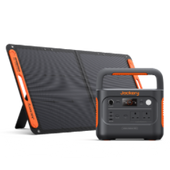
Jackery Explorer 3000 v2 Portable Power Station
This model boasts an impressive 3kWh battery capacity and powerful output, making it ideal for high-power households or users who need to cope with prolonged power outages. Its key advantages are as follows:

Large Capacity and Powerful Drive: It features a massive 3072Wh battery capacity and supports a continuous power output of 3600W (peak up to 7200W). This means that even without solar charging, it can easily power air conditioners, microwaves, and high-powered induction cookers, enough to support a large family's basic needs during a power outage.
Revolutionary Lightweight Design: Despite its large capacity, it utilises advanced CTB (cell-to-casing) technology, resulting in a 47% smaller size and a 43% lighter weight (approximately 59.5 lbs) compared to similar products. It is currently the lightest 3kWh energy storage device in its class globally, easily carried by one hand or moved around the room even by users with less strength.
Millisecond-level Uninterruptible Power Supply (UPS): With a built-in UPS, it automatically and seamlessly switches to battery power within 20 milliseconds when mains power is suddenly interrupted. This ultra-fast response effectively protects sensitive electronic devices running in your home (such as desktop computers, servers, NAS storage, etc.) from power outages, ensuring continuous operation.
Superior Off-Grid Standby Performance: Equipped with microamp-level "ultra-low self-discharge" self-management technology, it retains up to 95% of its charge after 365 days of full-charge storage. For users who do not rely on solar power and primarily use mains power for backup, this ensures the battery is always ready for emergencies, eliminating concerns about long-term inactivity leading to battery depletion.
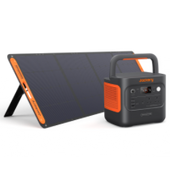
Jackery Explorer 2000 v2 Portable Power Station
If you are looking for higher cost-effectiveness or have relatively limited living space, the Explorer 2000 v2 is a perfect entry-level solution balancing performance and price. Its main advantages are as follows:

Ultra-fast Mains Power Recharge Capability: For scenarios without solar panels and relying entirely on wall outlets for charging, it features extremely powerful fast charging technology. Using an AC wall outlet, it can be charged to 100% in approximately 1.7 hours, and fully charged in approximately 1.33 hours with the "Emergency SuperCharge" mode activated.
This means you can take full advantage of the extremely short off-peak electricity window in the UK late at night to quickly store energy and significantly reduce electricity costs.
Ultra-Compact and Portable: As one of the most compact 2kWh backup power supplies on the market, its CTB structure maximises space utilization by 59%, comparable to a medium-sized printer (13.2 × 10.4 × 11.5 in). It weighs 35.6% less than the industry standard (approximately 38.6 lbs). This compact design allows it to easily fit into cabinets, under beds, or in a corner of a balcony, taking up virtually no valuable living space.
Reliable Home-Grade Battery Life: With a robust 2042Wh capacity and 2200W AC output power (4400W peak power), it's sufficient to power most essential household appliances, such as refrigerators, routers, lighting systems, coffee makers, and various power tools. In the event of a sudden power outage, it serves as a solid safeguard for ensuring the basic living order of a household.
Quiet and Safe Operating Environment: Compared to traditional fuel generators, it maintains a minimal noise level during operation (42dB AC, 30dB DC), making it virtually imperceptible and ideal for providing quiet power support in bedrooms, studies, or apartment buildings. Furthermore, the lithium iron phosphate battery boasts stable chemistry and has passed multiple international safety certifications (FCC, SGS, and TÜV certifications), ensuring greater peace of mind for indoor use.
Is Home Battery Storage UK Without Solar Better than a Full Solar System?
In the UK, there is no clear "better" option between standalone home energy storage batteries (without solar electricity) and full solar systems. They're more like two solutions for various energy requirements and living environments. Understanding their fundamental distinctions will allow you to make the right decision.
Installation Flexibility
If roof space is limited, or if solar panels are ineffective owing to orientation, shade, or other factors, battery storage without solar electricity is unquestionably a more practical option. It requires no roof space and may be installed in a garage or storage area, making it the only option for space-constrained users seeking smart electricity.
Solar systems, on the other hand, have strict criteria for the physical characteristics of the house; if the roof architecture is poor, the power generation efficiency after installation may be much lower than projected, limiting the system's cost-effectiveness.
Upfront Investment
In terms of initial investment, freestanding energy storage systems are substantially less expensive because they do not require pricey solar panels, brackets, or intricate roof construction. However, this concept is totally based on arbitrage at off-peak electricity prices, and its economic benefits are directly constrained by the energy supplier's time-of-use pricing policy.
In contrast, while full solar systems require a significant initial investment, they can provide electricity at no cost through self-consumption.
Energy Independence
Standalone solar storage batteries continue to rely on the national grid for power, failing to attain real energy independence. However, installing a comprehensive solar system converts you into a power producer, directly harvesting solar energy and reducing your reliance on the grid. This means that even during regional grid failures or energy crises, solar systems are more resilient.
|
Aspects |
Standalone Battery |
Complete Solar + Battery System |
|
Initial Costs |
Low (no rooftop installation required) |
High (includes roof structure, panels, inverter, and batteries) |
|
Installation Barriers |
Extremely low |
High (requires roof orientation, load-bearing capacity, etc.) |
|
Energy Sources |
Grid dependence (charged via off-peak electricity rates) |
Self-consumption (clean electricity generated by sunlight) |
|
Economic Returns |
Price arbitrage (buy during off-peak hours, use during peak hours) |
Reduced electricity purchase costs + electricity sales revenue (SEG) |
|
Energy Independence |
Low (still requires grid connection) |
High (can achieve a certain degree of self-sufficiency) |
|
Carbon Footprint Impact |
Smaller (grid electricity still contains fossil fuels) |
Significantly reduced (uses self-generated green electricity) |
The above information is for reference only and is used only as a comparison between home battery storage UK without solar and a full solar system.
In conclusion, if you want a solution that is unaffected by weather, simple to install, and fully capitalises on time-of-use pricing, home battery storage UK without solar is more appealing and practical than a full solar system that is limited by roof conditions and sunlight.
FAQs
The following are the frequently asked questions about the home battery storage UK without solar.
1. Can I install a home battery without solar panels?
Yes, you can install a home battery system without solar panels to act as a grid-tied backup power generator. These "standalone" batteries charge directly from the power grid, allowing you to store electricity during off-peak hours (when it is less expensive) and use it during peak times or power outages.
2. How long will a 5kWh battery power a house?
A 5kWh battery can power a typical UK household (consuming 9.3 kWh per day) for around 9.5 hours, providing it is fully charged. The duration varies according on usage; high-energy appliances such as EVs or heating reduce runtime. To put this into context, it can meet the majority of a medium-sized home's evening and overnight needs.
3. Why are people getting rid of their solar panels?
People typically remove solar panels for roof repairs, the end of the system's 25-30 year lifespan, decreasing efficiency, or to upgrade to higher-efficiency technology. While solar adoption is increasing, some homes are removing them due to poor initial design, high maintenance costs, or changing net metering laws that make older systems less cost-effective.
4. Why are people against BESs?
People are primarily opposed to Battery Energy Storage Systems (BESS) because of safety concerns about fire threats, particularly "thermal runaway," which can emit toxic smoke and is difficult for fire departments to suppress.
Final Thoughts
In summary, stand-alone energy storage systems and traditional photovoltaic systems each have their advantages, but for UK households seeking high cost-effectiveness, with limited living space, or unable to undertake large-scale renovations, it is the best solution for achieving energy intelligence.
The Jackery Explorer 3000 v2 and 2000 v2 successfully eliminate the technical barriers to energy transition through their superior performance. No matter you're looking to hedge against peak electricity bills or enhance your home's power resilience, home battery storage UK without solar is a solid investment worthwhile.


